
Ayr Saline Gel vs Natural Alternatives: Best Dry Nose Relief
Table of Contents
- Ayr Saline Gel vs Natural Alternatives: A Quick Comparison
- What Makes Saline Gels Different from Natural Oil-Based Moisturizers
- Best Nasal Spray for Dry Nose Relief: Product Breakdown
- Xylitol Nasal Spray Benefits: Why This Ingredient Matters
- How to Treat Dry Nasal Passages Naturally
- How to Choose Your Nasal Moisturizer: A Decision Framework
- Frequently Asked Questions
Last Updated: September 16, 2026
Ayr Saline Gel vs Natural Alternatives: A Quick Comparison
If you've been reaching for Ayr Saline Gel to soothe a dry, irritated nose, you're not alone. Dry nasal passages are common among people in low-humidity environments, CPAP users, and allergy sufferers. But is a saline gel the only option? At Profounda Health & Beauty, we've studied how different moisturizers interact with the nasal mucosa.
What Makes Saline Gels Different from Natural Oil-Based Moisturizers
Saline gels and natural oil-based moisturizers work through fundamentally different mechanisms.
The nasal mucosa has three functional layers
Your nasal lining has a watery periciliary fluid layer beneath the cilia, a mucus layer on top, and the epithelium underneath. Normal mucociliary clearance depends on all three staying in balance. When the periciliary layer thins, cilia stop beating effectively, mucus thickens, and you get crusting, irritation, and congestion even when nothing is blocked.
What a saline gel actually does
A saline gel delivers water and sodium chloride into that periciliary layer. Salt concentration matters:
- Isotonic saline (roughly 0.9% sodium chloride, matching your body's fluid balance) is the gentlest option for routine hydration. It restores the fluid layer without pulling water out of the tissue.
- Hypertonic saline carries a higher salt load. It draws fluid out of swollen tissue osmotically, which is why it can help with congestion, but it can also sting a nose that is already dry and cracked.
- Hypotonic saline sits below body balance. It prioritizes moisture retention over osmotic pull, which is why formulas built on it tend to feel less drying with repeated use.
What oil-based and honey-based moisturizers actually do
Oil-based products work on the surface, not in the tissue. Sesame oil is largely linoleic and oleic acid, fatty acids that form an occlusive film over the anterior nostrils, slowing transepidermal water loss and blocking irritants (pollens, dust, dry HVAC air). Honey-based sprays add a humectant dimension, pulling ambient moisture toward the tissue while the sugar content hinders bacterial adhesion.

The decision rule that follows from the mechanism
| Your dominant symptom | Underlying problem | Better match |
|---|---|---|
| Dry, clear nose; low humidity; CPAP or oxygen use | Depleted periciliary fluid layer | Isotonic or hypotonic saline gel |
| Dry plus stuffy; post-nasal drip; allergy-driven | Fluid loss plus mucus thickening and bacterial adhesion | Xylitol-enhanced saline gel or spray |
| Crusting, scabbing, recurrent nosebleeds | Barrier failure at the anterior vestibule | Oil-based or honey-based moisturizer |
| Burning or stinging with every product | Epithelial sensitivity, often to preservatives | Preservative-free, aloe-free, fragrance-free gel |
Most guides skip this distinction, yet it's the most useful thing to know before buying: it tells you whether you're treating a hydration problem or a barrier problem.
Best Nasal Spray for Dry Nose Relief: Product Breakdown
The best nasal spray for dry nose relief depends on whether your dryness comes from environmental triggers or a barrier problem. Here are the options worth considering.
| Product | Price | Key Ingredients | Best For |
|---|---|---|---|
| Rhinase Allergy Relief Nasal Gel | $18.32 | Dual salt (sodium + potassium), pH 6.2 | CPAP users, swimmers, sensitive noses |
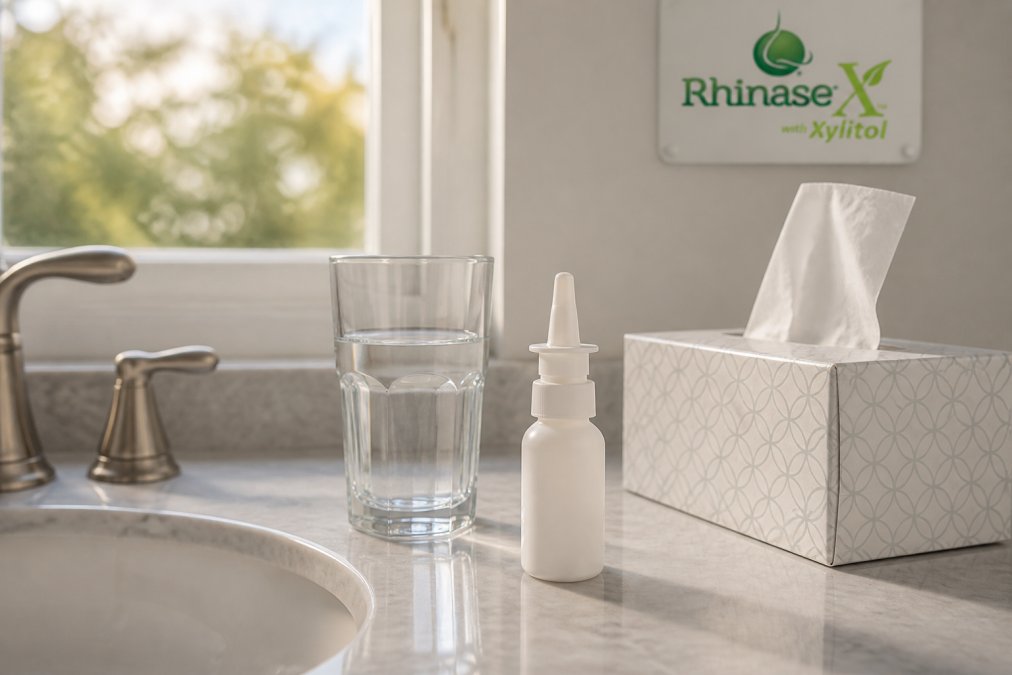
| Rhinase X Nasal Gel with Xylitol | $18.12 | Xylitol, dual wetting agents, hypotonic | Congestion, post-nasal drip, kids |
| Xynase Saline Spray with Xylitol | $11.79 | Saline, xylitol, non-GMO | Allergies, sinus pressure, all ages |
| NaturePro Sesame Oil Spray | $15.00 | 100% pharmaceutical-grade sesame oil | Severe dryness, crusty buildup |
| Nasal Nectar Honey Spray | $15.95 | Real honey, pH balanced | On-the-go relief, sensitive noses |
Rhinase Allergy Relief Lubricating Nasal Gel
This is the gel we recommend first for nasal dryness from low humidity, swimming, or CPAP and oxygen therapy. Its dual salt formulation (sodium and potassium) plus two wetting agents moisturize the nasal cavity efficiently. The pH sits at 6.2, balanced to avoid the stinging many saline products cause. It's free from aloe, dyes, and fragrances, so it suits sensitive noses where rhinitis symptoms flare easily. Doctor recommended and safe for daily use.

Rhinase X Soothing Nasal Gel with Xylitol
Rhinase X adds natural xylitol to the gel format for post-nasal drip and congestion. The xylitol helps stop bacteria from adhering to the nasal walls, and the hypotonic formula (sodium plus potassium) moisturizes without the drying effect of salt-heavy sprays.
Xynase Natural Saline Nasal Spray with Xylitol
For allergy sufferers who want a spray rather than a gel, Xynase combines saline and xylitol in a 0.75 fl oz bottle. It's non-GMO, gluten-free, and free of fillers or flow agents. The xylitol nasal spray benefits are twofold: extended hydration and support for allergen clearance. The spray tip fits small noses, and it's non-habit forming.
Sesame Oil Nasal Spray and Honey-Based Nasal Nectar
If your problem is a dry nose with crusting or bleeding rather than congestion, an oil-based option can outperform a gel. NaturePro Sesame Oil Spray uses 100% pharmaceutical-grade, fully refined sesame oil to lubricate severely dry passages and shield against irritants. It's non-medicated and safe for daily use. Nasal Nectar takes a different route with real honey: odor-free, pH balanced, and steroid-free, and usable alongside cold, allergy, and sinus medications.
Xylitol Nasal Spray Benefits: Why This Ingredient Matters
Xylitol is a sugar alcohol your body already produces in small amounts. Added to a saline solution, it does two things: draws and holds moisture in the mucus membrane, extending relief compared to plain saline, and interferes with bacteria sticking to the nasal mucosa, supporting allergen clearance and reducing conditions that lead to sinusitis flares.
How to Treat Dry Nasal Passages Naturally
"Natural" gets used loosely in nasal care, a plant-derived ingredient, a preservative-free formula, or a homemade rinse. Those aren't interchangeable, and one carries a safety risk most guides don't mention.
Rhinase Allergy Relief Lubricating →
Start with the trigger, not the product
Most people jump straight to a spray and skip this step, which is why relief doesn't stick. Work through the environmental causes first:
- Run a humidifier in bedrooms and workspaces, especially during heating season. Aim for 30-50% relative humidity; above 50% invites mold, which is its own irritant.
- Increase water intake. The nasal mucosa is one of the first tissues to show dehydration.
- Check your HVAC filter and consider a MERV 11 or higher filter if you have seasonal allergies.
- Avoid overusing decongestant sprays. Rebound congestion after more than three days of use is well documented and makes the original dryness worse.
- For CPAP users, raise the heated humidifier setting and clean the mask and tubing on the schedule your device manufacturer specifies.
- Track seasonal allergy patterns and start moisturizing before symptoms peak, not after.
The DIY saline question most guides avoid
Homemade saline is the most common "natural" recommendation online, and the one with the clearest safety caveats.
Natural ingredients worth knowing, and who should avoid them
Not every plant-derived ingredient suits every nose. A short sensitivity guide:
- Aloe vera: soothing for most, but a known sensitizer for a minority of users. If a product stings on first use, aloe is a common culprit.
- Glycerin: an effective humectant, but in high concentrations it can feel sticky and, in very dry air, pull moisture from the tissue rather than the environment.
- Xylitol: generally well tolerated; the main caution is for pets, since even small amounts are toxic to dogs.
- Honey: naturally antibacterial and humectant, but not appropriate for infants under one year due to botulism risk, and not for anyone with a pollen allergy.
- Essential oils (eucalyptus, menthol, camphor): these can feel cooling but are irritants to nasal epithelium with repeated use. They are not a substitute for saline.
- Preservatives (benzalkonium chloride, benzyl alcohol): the most common cause of stinging in sensitive noses. Preservative-free single-use vials or gels avoid the issue.
A natural routine that actually holds
A sequence that works for most people with environmental dryness:
- Morning: isotonic or hypotonic saline gel to restore the fluid layer.
- Midday: a few ounces of water and a check on indoor humidity.
- Evening: saline gel again if the nose feels dry, or a thin layer of an oil-based product at the nostril rim if crusting is the main complaint.
- Overnight: humidifier running, especially in winter or in air-conditioned bedrooms.
Do not use a homemade saline rinse with tap water, and do not add essential oils to a rinse you intend to put in your nose. The nasal epithelium is far more permeable than skin, and ingredients that are safe topically are not automatically safe intranasally. If you have a compromised immune system, a recent sinus surgery, or a history of sinus infections, talk to your clinician before starting any rinse routine.
How to Choose Your Nasal Moisturizer: A Decision Framework
- Dry and clear nose, low humidity or CPAP: Start with a dual-salt saline gel like Rhinase Allergy Relief. It adds water and supports the nasal mucosa without additives.
- Dry and congested, with drip or itch: Choose a xylitol gel or spray. Rhinase X or Xynase address both hydration and bacterial adhesion.
- Crusting, bleeding, or severe dryness: Go oil-based. Sesame oil or honey-based sprays create a moisturizing barrier that gels don't.
- Sensitive nose, reacts to everything: Look for preservative-free, fragrance-free, aloe-free formulas. The fewer additives, the lower the risk of ingredient sensitivity.
- Child or frequent user: Prioritize steroid-free, non-habit-forming options.
The most common mistake is using a medicated decongestant spray for routine dryness. These cause rebound congestion that makes the original problem worse, and they're not designed for daily use. If you've been using one for more than three days, that's a sign to switch to a saline or xylitol product.

The isotonic versus hypertonic distinction matters too. Isotonic matches your body's salt balance and is gentler for daily use. Hypertonic formulas carry more salt, help with congestion, but may sting a dry nose. Hypotonic formulas like Rhinase X prioritize moisture retention.
Frequently Asked Questions
What are some alternatives to Ayr saline gel?
If you are looking beyond Ayr saline gel, several options exist. Natural oil-based moisturizers like sesame oil nasal spray provide a protective barrier for severe dryness. Xylitol-enhanced saline gels and sprays offer long-lasting hydration and help stop bacteria from adhering to nasal walls. Honey-based nasal sprays are another gentle, steroid-free option. The best choice depends on whether you need a thick gel for overnight relief or a light spray for daytime use.
Can you use Ayr saline gel every day?
Yes, most saline gels are safe for daily use because they contain no steroids or habit-forming medications. However, if you have chronic sinusitis, frequent nosebleeds, or require a gel more than three times a day for weeks, talk to a doctor. Some people develop sensitivity to preservatives in multidose bottles. Choosing a preservative-free or naturally preserved formula can reduce that risk for daily, long-term use.
What is the best natural nasal lubricant for dry passages?
The best natural nasal lubricant depends on your specific dryness level. For mild dryness, a saline spray with xylitol offers gentle hydration. For severe crusting or nosebleeds, a sesame oil-based spray creates a moisturizing barrier that lasts longer. Honey-infused sprays are another natural option. Look for products that are steroid-free, fragrance-free, and pH balanced to avoid irritation. A gel formula often works best for overnight use.
How do saline gels compare to natural oil-based nasal moisturizers?
Saline gels use salt solutions with wetting agents to hydrate and thin mucus, making them ideal for congestion and daily dryness. Oil-based moisturizers like sesame oil coat the nasal lining with a protective barrier, which helps with severe dryness, crusting, and nosebleeds. Gels absorb more quickly; oils stay on the surface longer. Some people use a gel during the day and an oil at night. Neither type contains steroids, so both are drug-free options.
Are there drug-free alternatives for chronic nasal dryness?
Yes, several drug-free alternatives exist for chronic nasal dryness. Saline gels and sprays with xylitol hydrate without medication. Sesame oil nasal sprays provide a natural lubricating barrier. Honey-based sprays soothe and moisturize. All of these are non-habit-forming and steroid-free. For chronic cases, a doctor may also recommend a humidifier or treating underlying conditions like allergies. Always check with a healthcare provider if dryness persists beyond a few weeks.