

Best Nasal Spray for Dry Nose Relief: 2026 Guide
Table of Contents
- What Causes Nasal Dryness, and Why the Right Spray Matters
- Best Nasal Spray for Dry Nose Relief: Top Picks Compared
- Nasal Gel vs Nasal Spray for Dryness: Which Format Works Best?
- Ingredient Deep-Dive: Xylitol, Glycerin, Hyaluronic Acid, and Aloe Vera
- How to Use Saline Nasal Spray Correctly for Maximum Relief
- How Often Can You Use Saline Spray Safely?
- How to Choose the Right Nasal Spray for Your Situation
- Conclusion
Last Updated: August 10, 2026
What Causes Nasal Dryness, and Why the Right Spray Matters
Nasal dryness occurs when the mucous membranes lining the nasal passages lose adequate moisture, causing irritation, crusting, and discomfort. The nasal mucosa depends on a thin moisture layer to trap airborne particles, filter allergens, and maintain healthy sinus function. When that barrier breaks down, you experience dryness, burning, nosebleeds, and congestion that decongestants cannot fully resolve. According to American Academy of Otolaryngology patient education resources, chronic nasal dryness is one of the most commonly reported nasal complaints in primary care settings.
Below, we break down the top product picks, explain the ingredient science, and give you a clear framework for choosing the right spray for your specific situation.
Environmental Triggers: Dry Air, CPAP Machines, and Seasonal Allergies
Dry air is the most common trigger. Indoor heating during winter and air conditioning in summer drop relative humidity significantly, pulling moisture from nasal passages with every breath. For CPAP users, continuous pressurized airflow compounds the problem by forcing air through nasal passages faster than the body's natural humidification capacity, leaving the nasal mucosa raw and irritated.
Seasonal allergies add another layer. The inflammatory response to pollen, dust mites, and pet dander damages the mucosal lining over time, making it less effective at retaining hydration. High-altitude environments, long-haul flights, and occupational exposure to dry or dusty air are additional triggers.
The practical implication: a spray that works for allergy-related dryness may not be the best choice for a CPAP user. Format, formulation, and frequency all need to match the cause.
Best Nasal Spray for Dry Nose Relief: Top Picks Compared
The best nasal spray for dry nose relief depends on your specific trigger, ingredient preferences, and whether you need a drug-free or medicated solution.
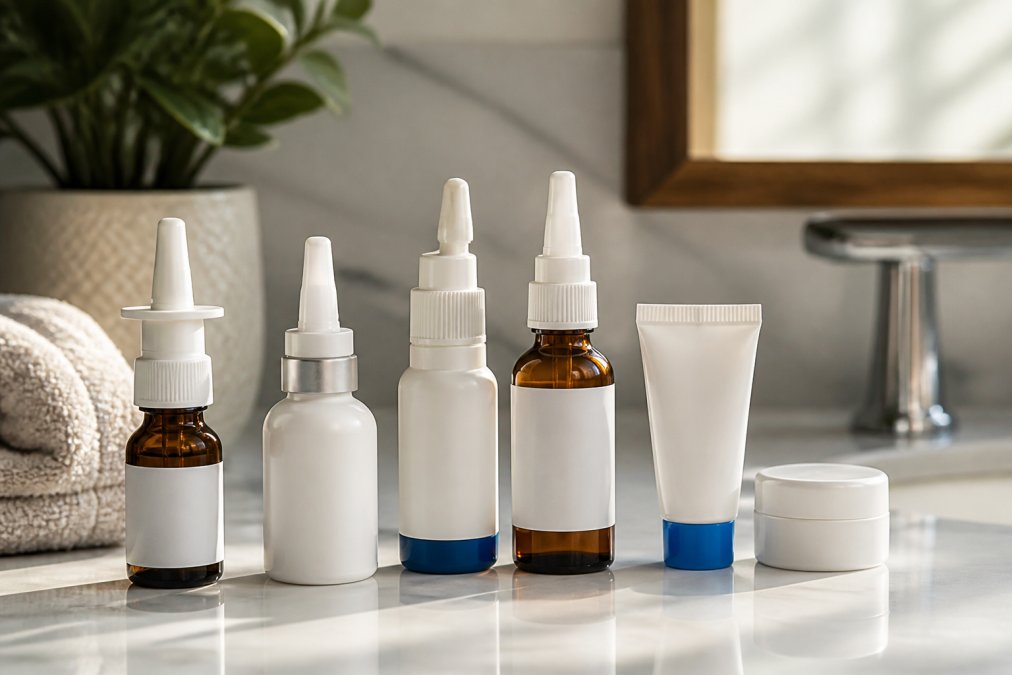
Quick Picks:
- Best Overall: Rhinase Nasal Mist and Gel, doctor-recommended, xylitol-enhanced, dual-format
- Best Gentle Daily Mist: NaturePro Saline Nasal Mist, isotonic, preservative-free, suitable for all ages
- Best for Congestion + Dryness: Rhinase x Value Combo Pack
- Best for Allergy-Driven Dryness: SinuCleanse Allergy & Sinus Sterile Saline Nasal Mist, sterile, preservative-free, allergy-focused
- Best for Severe Allergy Symptoms: Flonase / Nasacort Allergy 24HR Nasal Spray, corticosteroid-based, 24-hour coverage
1. Profounda Health & Beauty Rhinase X Nasal Mist and Gel, Best Overall
The Profounda Health & Beauty line is the top pick for anyone dealing with chronic nasal dryness, CPAP-related irritation, or recurrent nosebleeds. Its key differentiator is a dual-format system pairing a hydrating mist with a wetting agent gel, covering both immediate relief and sustained overnight moisture.
Most saline sprays contain only sodium chloride and water. Profounda's formulations include natural xylitol, a sugar alcohol with documented antimicrobial properties that interferes with bacterial adhesion to the nasal mucosa, reducing the likelihood of secondary infections in already-irritated passages. The gel format is particularly valuable for nighttime use, coating and protecting the nasal lining for longer periods than sprays.
What works: Doctor-recommended and steroid-free. The drug-free formulation means it can be used as frequently as needed without rebound congestion risk.
Best for: CPAP users, chronic dryness sufferers, nosebleed-prone individuals, and parents seeking a pediatric-safe, drug-free option.
2. Ayr Saline Nasal Mist, Best Gentle Daily Mist
Ayr is a straightforward isotonic saline solution that mimics the body's natural fluid concentration, delivering a fine, consistent mist without burning or stinging. It's preservative-free, non-medicated, and safe for all ages.
The isotonic concentration is deliberate. Hypertonic sprays draw moisture out of tissues through osmosis, which can be effective for congestion but harsh for already-dry passages. Ayr's isotonic formula adds moisture without that osmotic pull, making it better suited to pure dryness relief.
What works: Gentle enough for daily use across all age groups. Affordable and widely available.
Best for: Families needing a simple, daily hydration spray for all ages.
3. Breathe Right Sparkling Saline Nasal Rinse Spray, Best for Congestion + Dryness
Breathe Right's Sparkling Saline is CO2-infused, creating microbubbles that deliver a mild fizzing sensation and help flush mucus and irritants more thoroughly than a standard mist. The formula is drug-free, preservative-free, and non-drowsy. The pressurized canister sprays from any angle, making correct application easier.
What works: The CO2 infusion provides a refreshing sensation while effectively clearing congestion and moisturizing simultaneously. Safe for daily use by both adults and children.
Best for: People dealing with both nasal congestion and dryness simultaneously.
4. SinuCleanse Allergy & Sinus Sterile Saline Nasal Mist, Best for Allergy-Driven Dryness
SinuCleanse takes a targeted approach to allergy-related nasal dryness. The formula is natural, drug-free, and preservative-free, made in an FDA-registered facility. The key advantage is sterility: many saline sprays are not truly sterile, which matters when nasal passages are already inflamed and more susceptible to irritation.
What works: Effective for year-round allergy symptoms. Gentle enough for sensitive sinuses and children. Compatible with other medications.
Best for: Allergy sufferers, particularly those with sinusitis or ear congestion secondary to nasal inflammation.
5. Nasacort Allergy 24HR Nasal Spray, Best for Severe Allergy Symptoms
Nasacort contains triamcinolone acetonide, a corticosteroid that reduces nasal inflammation over 24 hours. It's non-drowsy, alcohol-free, and has no scent or harsh taste. This medicated option targets the allergic inflammation that causes congestion, sneezing, and itching rather than dryness itself.
What works: Genuinely effective for severe allergy symptoms. Full relief typically develops after about a week of consistent daily use.
What to know: Corticosteroid nasal sprays are appropriate for ages 12 and up, not for young children. Nasacort does not replace a moisturizing spray for CPAP users or people with dryness unrelated to allergies.
Best for: Adults and teenagers with moderate to severe seasonal or perennial nasal allergies.
Comparison Table: Best Nasal Sprays for Dry Nose Relief
Product |
Type |
Drug-Free |
Preservative-Free |
Best For |
|---|---|---|---|---|
Profounda Health & Beauty |
Mist + Gel |
Yes |
Yes |
Chronic dryness, CPAP users, nosebleeds |
Ayr Saline Nasal Mist |
Isotonic mist |
Yes |
Yes |
Daily family hydration |
Breathe Right Sparkling Saline |
CO2-infused mist |
Yes |
Yes |
Congestion + dryness combined |
SinuCleanse Allergy & Sinus |
Sterile saline mist |
Yes |
Yes |
Allergy and sinus dryness |
Nasacort Allergy 24HR |
Corticosteroid spray |
No |
N/A |
Severe allergy symptoms, ages 12+ |
Nasal Gel vs Nasal Spray for Dryness: Which Format Works Best?
Nasal gel and nasal spray address dryness through different mechanisms. Sprays deliver a fine mist that coats the nasal passages quickly, providing immediate hydration. Gels create a thicker, longer-lasting barrier on the nasal mucosa that resists evaporation.
For daytime use, sprays are more practical. For overnight use, particularly for CPAP users or people in very dry environments, gels provide sustained protection that a mist cannot match. Gel is particularly valuable for patients with recurrent nosebleeds because the thicker formulation keeps the anterior nasal septum continuously moisturized.
The practical approach: use a mist during the day for quick relief and a gel at night for sustained hydration.
Ingredient Deep-Dive: Xylitol, Glycerin, Hyaluronic Acid, and Aloe Vera
Not all saline sprays are equal. The supporting ingredients determine how well the spray moisturizes, soothes, and protects the nasal mucosa over time.
Xylitol is a naturally occurring sugar alcohol that attracts and retains moisture while interfering with bacterial adhesion to mucosal surfaces. This makes xylitol-containing sprays particularly useful for people prone to sinus infections following periods of nasal dryness.
Glycerin is a humectant that draws water from the surrounding environment into the skin and mucous membranes, extending the moisturizing effect beyond the initial application.
Hyaluronic acid is a molecule naturally present in the body's connective tissues and mucous membranes. It holds many times its weight in water, making it one of the most effective hydrating agents available for severe or chronic dryness.
Aloe vera brings anti-inflammatory and soothing properties to nasal formulations. For passages already irritated by allergies or dry air, aloe vera can reduce burning and support tissue recovery.
According to National Institutes of Health research on nasal moisturization, maintaining adequate nasal mucosal hydration is directly linked to the effectiveness of the nose's natural filtration and immune defense functions.
How to Use Saline Nasal Spray Correctly for Maximum Relief
Correct application technique makes a meaningful difference in how much relief a saline spray delivers. Many people direct the mist toward the nasal septum rather than along the nasal passage, which reduces coverage.

Step-by-step application:
- Blow your nose gently before applying to clear excess mucus.
- Hold the bottle upright and insert the tip just inside the nostril, angling it slightly toward the outer wall of the nose, away from the septum.
- Close the opposite nostril with a finger and breathe in gently through the nostril being treated as you spray.
- Breathe out through your mouth.
- Repeat on the other side.
- Avoid blowing your nose immediately after application; allow the solution to coat the nasal passages for at least a minute.
For gel products, a small amount applied just inside each nostril with a clean fingertip is sufficient. A slight forward head tilt keeps the mist where it needs to be rather than running down your throat.
How Often Can You Use Saline Spray Safely?
Saline nasal spray can be used as often as needed throughout the day without risk of dependency or rebound congestion. This is one of the clearest distinctions between drug-free saline sprays and medicated decongestant sprays, which should not be used for more than three consecutive days.
Most people find that two to four applications per day manages chronic dryness effectively. CPAP users often benefit from applying a saline mist or gel immediately before putting on their mask and again in the morning after removing it.
How to Choose the Right Nasal Spray for Your Situation
Choosing the best nasal spray for dry nose relief requires matching the product to your specific trigger.
Situation |
Recommended Type |
Key Ingredient to Look For |
|---|---|---|
CPAP or oxygen therapy use |
Mist + gel combination |
Xylitol, glycerin |
Chronic dryness, low humidity |
Isotonic mist or gel |
Glycerin, hyaluronic acid |
Seasonal allergies with dryness |
Sterile saline mist |
Preservative-free saline |
Severe allergy symptoms |
Corticosteroid spray |
Triamcinolone acetonide |
Recurrent nosebleeds |
Gel format |
Xylitol, aloe vera |
Pediatric use |
Drug-free isotonic mist |
Preservative-free, isotonic |
Non-Habit Forming vs. Medicated Sprays: What the Difference Means
Non-habit forming sprays are saline-based, drug-free formulations that hydrate and soothe without affecting the nasal mucosa's natural physiology. They can be used indefinitely without side effects.
Medicated sprays fall into two main categories. Corticosteroid sprays like Nasacort reduce inflammation and are appropriate for allergy management but require consistent daily use. Decongestant sprays containing oxymetazoline provide rapid congestion relief but cause rebound congestion if used for more than three consecutive days. The FDA guidance on over-the-counter nasal decongestant sprays specifically addresses this risk in consumer labeling requirements.
If dryness is your primary complaint, start with a drug-free, saline-based option. Reserve medicated sprays for allergy or congestion management.
When to See a Doctor for Nasal Dryness
Most nasal dryness responds well to over-the-counter saline sprays and environmental adjustments like adding a humidifier. See a doctor if you experience nosebleeds more than twice per week or that do not stop within 20 minutes, nasal dryness accompanied by facial pain, pressure, or fever, crusting so severe that it blocks the nasal passage, dryness that does not improve after two to three weeks of consistent saline use, or any nasal symptom following recent nasal surgery or trauma.
According to Mayo Clinic information on nosebleed causes and treatment, recurrent nosebleeds in adults warrant evaluation to rule out structural issues or underlying conditions.
Choosing the right nasal spray starts with understanding what's actually driving your dryness. For chronic sufferers, CPAP users, and anyone dealing with recurrent nosebleeds, a basic saline mist often isn't enough. Profounda Health & Beauty's doctor-recommended, drug-free mist and gel system combines natural xylitol with advanced saline formulations to deliver both immediate relief and sustained nasal hydration. Add the Profounda Health & Beauty Nasal Mist and Gel to your cart and experience the difference a purpose-built formulation makes.
Frequently Asked Questions
What nasal spray is best for a dry nose?
Drug-free, isotonic saline sprays are the first choice for nasal dryness. They replenish moisture in the nasal passages without any side effects or rebound congestion. Formulas that add glycerin, hyaluronic acid, or natural xylitol provide longer-lasting hydration than plain sodium chloride alone. For overnight or severe dryness, a nasal gel delivers a thicker coating that stays in contact with the nasal mucosa longer. Doctor-recommended, preservative-free options are safest for daily use.
Are saline nasal sprays safe for daily use?
Yes. Isotonic saline nasal sprays are non-habit forming and drug-free, so they can be used multiple times per day without causing dependency or rebound dryness. Because they contain no steroids or decongestants, there are no contraindications for long-term daily use in most adults and children. Preservative-free formulas are the gentlest choice for frequent application. If symptoms persist beyond two weeks despite regular saline use, consult a physician to rule out an underlying condition.
Can nasal sprays cause more dryness?
Plain saline and moisturizing nasal sprays do not cause dryness. Rebound dryness and irritation are associated with medicated decongestant sprays containing oxymetazoline or xylometazoline, especially when used beyond three consecutive days. Corticosteroid sprays can occasionally cause mild nasal dryness or crusting as a side effect. Switching to a drug-free, isotonic or hypertonic saline spray eliminates this risk entirely and actively supports nasal mucosa hydration.
How often can you use saline spray for dry nose relief?
Most saline nasal sprays can be used two to six times per day, or as frequently as needed, because they contain no active drugs. There is no clinical upper limit for isotonic saline use. CPAP users, people in very dry environments, and allergy sufferers often benefit from applying a saline mist before bed and upon waking, plus additional applications throughout the day. Follow the label instructions for pediatric use, and check with a pharmacist if you are using other nasal medications at the same time.
Is a nasal gel or nasal spray better for severe dryness?
For severe or overnight dryness, a nasal gel is more effective because its thicker consistency coats and protects the nasal mucosa for longer than a mist. Sprays are better for quick, on-the-go hydration and for flushing out allergens and irritants during the day. Many people use both: a saline mist during the day and a gel at night. If crusting, nosebleeds, or significant irritation are present, starting with a gel formulation provides faster, more sustained relief.
This article was written using GrandRanker