

How to Soothe Nasal Dryness From CPAP
Table of Contents
- Why CPAP Causes Nasal Dryness and Irritation
- Using a Heated Humidifier and Adjusting CPAP Heated Humidifier Settings
- Choosing the Best Nasal Moisturizer for CPAP Users
- Step-by-Step Guide to CPAP Nasal Congestion Relief
- Environmental Factors That Worsen Nasal Dryness
- Cleaning and Maintenance to Prevent Irritation
- What to Avoid: Common Mistakes That Make Dryness Worse
- Conclusion
Last Updated: August 12, 2026
Why CPAP Causes Nasal Dryness and Irritation
CPAP delivers pressurized air through your nasal passages, stripping moisture from delicate nasal tissue. Your nasal mucosa needs humidity to stay healthy, but CPAP air is often unhumidified, pulling moisture directly from your tissues. After weeks or months of nightly therapy, many users experience nasal congestion, sinus irritation, and dryness.
This isn't a sign that CPAP therapy isn't working, it's a signal that your equipment needs adjustment. Nasal dryness from CPAP is one of the most preventable and treatable side effects. According to clinical sleep medicine guidelines, addressing equipment-related nasal irritation improves therapy compliance significantly. When patients feel comfortable wearing their mask, they're more likely to use it consistently, which controls your sleep apnea.
Using a Heated Humidifier and Adjusting CPAP Heated Humidifier Settings
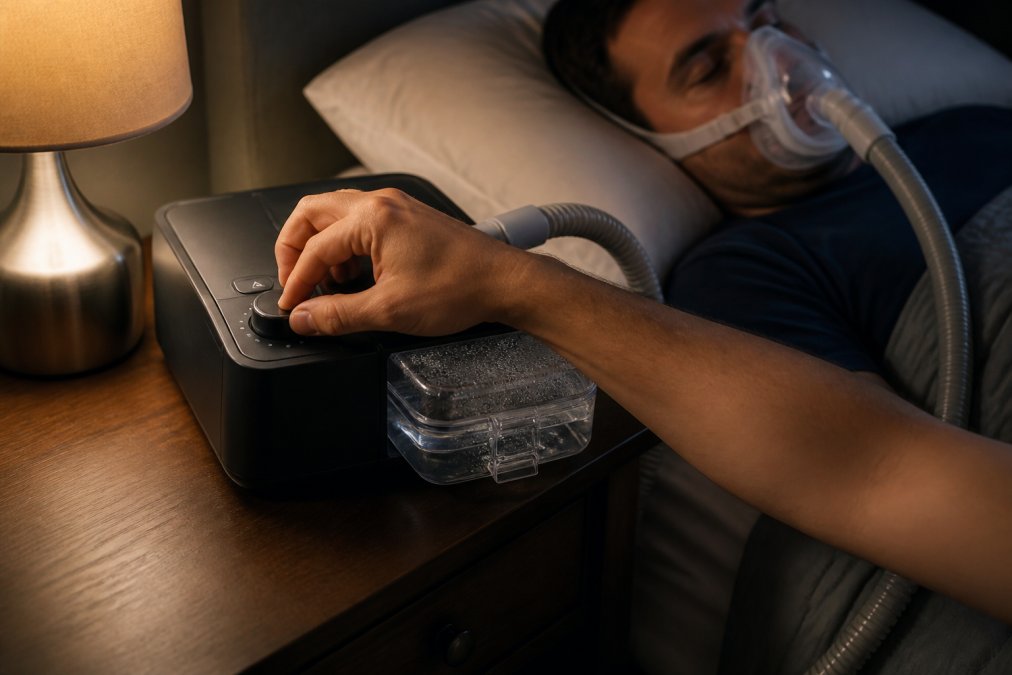
A heated humidifier is the first line of defense against nasal dryness. Most modern CPAP machines include a built-in humidifier chamber that warms and moisturizes air before it reaches your nasal passages.
Starting With Humidity Levels
Start conservatively at level 3 or 4 on your machine's humidity scale. After three to five nights, assess how your nose feels when you remove the mask. If you still experience dryness, increase by one level. Continue until you find the sweet spot where your nasal passages feel comfortable and moist without congestion or rainout (condensation inside tubing).
Ideal humidity varies by climate. Arid regions may need settings of 6 to 8, while humid climates might need 2 to 3. If you run a separate bedroom humidifier, you may need less heat from your CPAP humidifier to avoid over-humidification.
Benefits of Heated Tubing
Heated tubing prevents condensation by maintaining air temperature throughout its journey from machine to mask. This keeps moisture intact when it reaches your nose. Users who add heated tubing often find they can increase humidity settings without experiencing rainout, delivering more effective moisture to nasal passages. Many report reduced need for supplemental nasal moisturizers, though combining both approaches often provides the best results.
Choosing the Best Nasal Moisturizer for CPAP Users
Even with optimized humidifier settings and heated tubing, many CPAP users benefit from adding a topical nasal moisturizer.
Nasal Gels vs. Saline Sprays
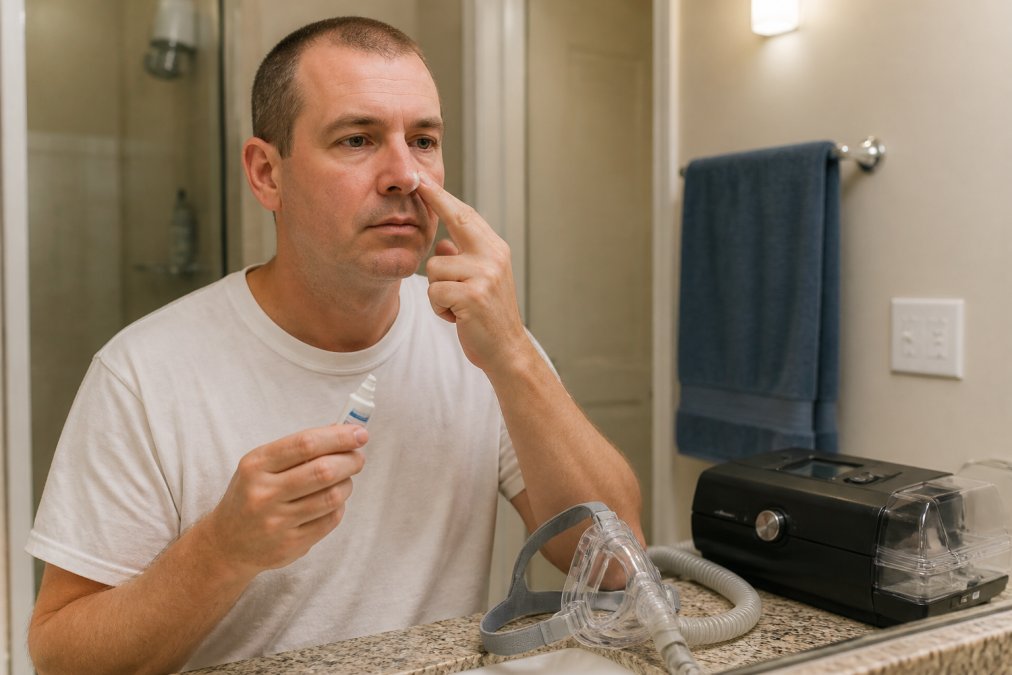
Saline sprays deliver a fine mist that reaches deeper into nasal passages and sinuses, ideal for daytime use. Apply two to three times daily, especially after removing your CPAP mask in the morning.
Nasal gels provide longer-lasting moisture by adhering to the nasal mucosa and creating a protective barrier. Apply just before putting on your mask to create a moisturized foundation for the night. Many CPAP users find combining both formats works best: apply gel before therapy at night, then use saline spray during the day.
Why Xylitol-Based Formulas Work
Xylitol is a natural sugar alcohol that draws moisture into nasal tissues and helps retain it. Unlike petroleum-based products that interfere with mask seals, xylitol-based moisturizers provide effective hydration without drawbacks. Xylitol also has antimicrobial properties that help prevent secondary infections in irritated nasal passages.
At Profounda Health & Beauty, we've formulated nasal care products with dual-salt saline and xylitol specifically for CPAP users. The Rhinase Allergy Relief Lubricating Nasal Gel is steroid-free, drug-free, and designed for nightly use.

Step-by-Step Guide to CPAP Nasal Congestion Relief
Follow these steps consistently for at least two weeks before adjusting your strategy.
Step 1: Apply Nasal Moisturizer Before Therapy
Thirty minutes before bed, apply a small amount of nasal gel (about pea-sized) inside each nostril and gently massage it in. This pre-therapy application creates a moisture-rich environment before CPAP airflow begins, significantly reducing irritation and dryness.
Step 2: Use Saline Nasal Sprays During the Day
Upon removing your mask each morning, rinse your nasal passages with saline spray. Use again in the afternoon around 2 to 3 PM to maintain moisture throughout your waking hours. Consistent daytime hydration prevents progressive dryness and reduces sinus irritation.
Step 3: Maintain Proper Mask Fit and Seal
A poorly fitting mask forces higher air pressure, which strips more moisture from nasal passages. Check your mask fit weekly to ensure a snug seal. If air leaks around edges, adjust headgear straps gradually. If leaking persists, your mask cushion may need replacement.
Environmental Factors That Worsen Nasal Dryness
Your bedroom's ambient humidity directly impacts your CPAP humidifier's effectiveness. Winter heating systems dry out indoor air dramatically. If your bedroom stays at 20% humidity, even a high humidifier setting may not provide adequate moisture. Consider running a separate bedroom humidifier to raise ambient humidity to 40 to 50%.
Air conditioning in summer creates similar problems. If you use AC at night, keep your bedroom at 65 to 70 degrees Fahrenheit, cold enough for comfortable sleep but not so cold that it creates extreme dryness.
Your hydration status matters too. Dehydration reduces your body's ability to produce adequate mucus, worsening nasal dryness. Drink water consistently throughout the day, aiming for at least eight glasses daily.
Cleaning and Maintenance to Prevent Irritation
Clean your humidifier chamber weekly with warm water and mild soap. Use distilled water in your humidifier chamber; tap water contains minerals that accumulate and irritate nasal tissue.
Inspect tubing monthly for discoloration or mold growth. If you notice dark spots or musty smell, replace immediately. Replace your mask cushion every one to three months to maintain proper seal integrity and reduce pressure intensity on nasal passages.
What to Avoid: Common Mistakes That Make Dryness Worse
Avoid medicated decongestants like oxymetazoline. These provide temporary relief but create rebound congestion, trapping you in dependency. Stick to saline-based options instead.
Don't use petroleum-based products inside nasal passages, they degrade mask cushion material and interfere with seals. Avoid setting your humidifier to maximum levels from the start; this leads to rainout and excess moisture that causes congestion. Start low and increase gradually.
Don't skip your pre-therapy nasal moisturizer application. Make it non-negotiable, apply before every therapy session.
Nasal dryness from CPAP doesn't have to be permanent. By optimizing your humidifier settings, using heated tubing, and adding a quality nasal moisturizer to your routine, you can eliminate this discomfort and improve therapy compliance. Profounda Health & Beauty's steroid-free, drug-free nasal care solutions are specifically formulated for CPAP users. The Rhinase Allergy Relief Lubricating Nasal Gel and saline spray combination provides dual-action relief. Get started with Profounda Health & Beauty and experience the comfort that makes nightly CPAP therapy feel effortless.

Frequently Asked Questions
How do I know if my CPAP heated humidifier settings are too high or too low?
If humidity is too low, you'll experience nasal dryness, sinus irritation, and nosebleeds. If it's too high, you may see condensation in the tubing or feel moisture in your mouth. Start at a low setting (around 2 or 3 on most machines) and increase by one level every few nights until you feel comfortable without excess moisture. The ideal humidity level varies by person and climate, what works in winter may need adjustment in summer.
Can a heated tube help with CPAP nasal dryness?
Yes, heated tubing maintains moisture in the air as it travels from the humidifier to your mask, reducing condensation loss and keeping the air warmer and more humid at the nasal passages. This is especially helpful in cold climates or for people sensitive to temperature changes. Heated tubing works best when paired with a humidifier set to an appropriate level, as it prevents the cooling and drying that occurs with standard tubing.
Is it normal to have nasal dryness while using a CPAP machine?
Yes, it's very common. CPAP therapy delivers pressurized air that can dry out the nasal mucosa, especially if humidity levels are too low or your mask seal is too tight. Nasal dryness from CPAP affects many users and is manageable through humidifier adjustments, saline nasal sprays, and nasal moisturizers. If dryness persists despite these adjustments, talk to your sleep medicine provider about your settings or mask type.
What makes a nasal moisturizer specifically suited for CPAP users?
The best nasal moisturizer for CPAP users combines saline hydration with moisture-retention ingredients like xylitol, which helps restore the nasal mucosa's natural protective layer. CPAP-specific formulas are steroid-free and designed to work alongside therapy without interfering with mask seal or air pressure. They address both the dryness and irritation caused by continuous positive airway pressure, and many are safe for daily use and compatible with children's therapy.
This article was written using GrandRanker