

How to Use Saline Spray for Infants: Step-by-Step
Table of Contents
- Why Saline Spray Works for Infant Nasal Congestion
- Saline Spray for Newborns: Safety and Age Considerations
- Step-by-Step: How to Apply Saline Spray or Drops to Your Infant
- How to Use Baby Saline Drops Versus Spray
- How Often to Use Saline Nasal Spray for Babies
- Using Saline Spray While Baby Is Sleeping
- Common Mistakes to Avoid
- Keeping Equipment Clean and Sterile
- Frequently Asked Questions
Last Updated: October 6, 2026
Why Saline Spray Works for Infant Nasal Congestion
Saline spray for infants is one of the safest, most effective ways to clear nasal passages without medication.
Unlike decongestants or steroids, saline contains only salt water, mimicking the body's natural fluids so passages stay moist and irritation-free.
Congestion happens when mucus thickens or swelling narrows the nasal passage, triggered by cold viruses, dry air, or allergies.
At Profounda Health & Beauty, we recommend NaturePro saline as the first line of defense for infant congestion.
Saline Spray for Newborns: Safety and Age Considerations
Saline spray for newborns is safe from day one.
Newborns breathe through their noses, not their mouths. Blocked nasal passages create real distress. Saline clears them gently without side effects.
Plain saline solutions are the gold standard for infants under 12 months.
Age-appropriate technique matters: newborns need one to two drops per nostril, while older infants can tolerate a light spray.
Step-by-Step: How to Apply Saline Spray or Drops to Your Infant
Gather Your Supplies
Have everything ready before you start:

- Sterile saline drops or spray designed for infants
- A clean bulb syringe or nasal aspirator (optional, for clearing mucus afterward)
- A soft cloth or tissues
- Warm water to rinse equipment
Check the label for "safe for infants" or "newborn-safe."
If using a bulb syringe, clean it with warm soapy water and let it air dry completely before each use. Moisture breeds bacteria.
Position Your Baby Correctly
Position matters for safe, effective application. Lay your baby on their back with their head tilted slightly backward, placing a small rolled towel under their shoulders for support.
Never force your baby's head back sharply. A gentle tilt is enough. Your baby should feel secure and comfortable.
For very young infants, lay them across your lap with their head on your forearm for control while keeping them relaxed.
Apply the Right Amount
For newborns and babies under six months, one to two drops per nostril is plenty.
For babies six months and older, use two to three drops per nostril, or one short spray burst per nostril.
Insert the dropper tip or spray nozzle gently into the nostril opening. Don't push it deep.
Apply to one nostril at a time. Wait a moment, then do the other side.
Wait for the Saline to Work
After applying saline, wait 30 to 60 seconds so it can loosen mucus and reduce swelling.
You'll see mucus start to drain from the nostril. Some babies cough it up.
Don't rush to suction immediately. Let the saline do its job first. Patience brings better results than forcing the issue.
Your baby might seem uncomfortable during this waiting period. This is normal.
Clear Loosened Mucus with a Bulb Syringe
After waiting, use a bulb syringe to gently remove loosened mucus: squeeze the bulb completely, insert the tip into the nostril opening, then slowly release.
The suction pulls out mucus that's now thin and easy to remove. Do this gently.
Use the syringe once or twice per nostril. More than that causes irritation. If mucus remains, wait another 30 seconds and repeat.
For newborns, skip the syringe entirely if saline alone clears the passage. Many newborns don't need suctioning.
How to Use Baby Saline Drops Versus Spray
Drops and spray are not interchangeable, they deliver saline differently, suit different ages, and require different technique. Choosing the wrong format is a common reason parents say "saline didn't work."
Saline Drops: Controlled, Quiet, Best for Newborns
Drops come in a squeeze bottle or a vial with a dropper. You control the exact volume, one drop at a time. That control matters most in the first three months, when a newborn's nasal passages are roughly the width of a pencil lead and a forceful spray can startle or irritate them.
Technique for drops:
- Lay your baby flat on their back with the head tilted slightly back, or hold them across your lap with the head on your forearm.
- Rest your free hand on their forehead so they can't turn suddenly.
- Squeeze one drop into the nostril opening, do not insert the tip past the opening.
- Wait a few seconds, then do the other side.
Drops are also better at night, since the squeeze is nearly silent and less likely to wake a sleeping infant.
Saline Spray: Faster Coverage, Better for Older Babies
Spray delivers a fine mist that coats more of the nasal lining in one motion, reaching further back than a single drop, helpful when mucus is thick or spread across the passage. The trade-off is less control over volume and a hiss that can startle a young baby.
Technique for spray:
- Position your baby the same way, flat, head slightly back, one hand steadying the head.
- Aim the nozzle toward the back of the head, not straight up the nostril. Angling slightly outward follows the natural curve of the passage.
- Use one short burst per nostril. A long press floods the passage and sends saline down the throat, which triggers coughing.
- Wipe the nozzle with a clean tissue after use and replace the cap.
Which to Choose by Age
Age |
Preferred format |
Why |
|---|---|---|
0-3 months |
Drops |
Precise volume, quiet, less startling |
3-12 months |
Drops or gentle spray |
Most babies tolerate a light spray by now |
12 months+ |
Spray |
Faster coverage, easier to use on a moving baby |
Read the Label Before You Buy
The delivery format matters less than what's inside the bottle. For an infant, the product should be plain sterile saline, typically 0.65% sodium chloride, matching the body's natural fluid concentration (isotonic). Check for:
Xynase® Natural Saline Nasal Spray with Xylitol (0.75 fl oz) - Gentle →
- No medication. Avoid anything labeled decongestant, antihistamine, or with oxymetazoline or phenylephrine. These are not for infants.
- No added ingredients beyond saline unless a clinician has okayed them. Some products add xylitol or preservatives; plain saline is the safest default for newborns.
- Include both potassium and Sodium salts to work efficiently with your bodies natural way to moisturize The sodium potassium pump present in most cells controls the flow of water in and out of a cell.
- Sterile and unopened. Once a bottle is opened, follow the label's discard guidance, many saline products should be replaced within a few months, and any bottle that looks cloudy or discolored should be thrown out.
- Infant or newborn labeling. Adult saline products can carry higher salt concentrations or additives that irritate tiny passages.
FDA guidance on over-the-counter nasal decongestants and infants
How Often to Use Saline Nasal Spray for Babies
Frequency depends on congestion severity and your baby's age.
For moderate congestion, increase to three to four times daily.
During colds or heavy congestion, use saline spray up to five or six times per day.
Never use saline spray more than once every hour; nasal passages need time to recover.
Watch your baby's response. If congestion improves after two applications, stick with that frequency.
If stuffiness lasts longer than a week, contact your pediatrician.
Using Saline Spray While Baby Is Sleeping
You can use saline spray while your baby sleeps, but approach it carefully.
If your baby is deeply asleep, gently tilt their head to one side.
However, if your baby wakes during application, stop and try again when they're calm.
Some parents apply saline just before bedtime instead. This clears the nose while the baby is awake and cooperative.
For newborns, use drops instead of spray at night.
Common Mistakes to Avoid
Most saline problems come down to a handful of fixable errors. Below are the mistakes that matter most, plus what to do when the usual approach isn't working.
Technique Mistakes
Using too much saline. More liquid does not clear mucus faster.
Skipping the waiting period. Rushing straight to suction defeats the purpose.
Applying saline to an upset baby. A crying, struggling infant resists and makes insertion harder.
Using adult products or expired saline. Adult formulas may have different salt concentrations or additives.
Forgetting to clean equipment. A dirty bulb syringe or aspirator reintroduces bacteria.
When Your Baby Resists, Sneezes, or Coughs
These reactions are normal and usually mean the saline is working.
- Sneezing is the body's way of moving loosened mucus out. Let it happen; wipe the nose and continue if needed.
- Coughing often means a little saline ran down the back of the throat. It is not dangerous. Sit your baby upright for a moment and let them settle.
- Crying or turning away means stop and try again later. Forcing it makes the next attempt harder. Try a different position, some babies do better held upright against your chest.
- Saline did not relieve congestion. Wait 30 to 60 seconds, then try gentle suction. If the nose is still blocked, do not keep spraying. Give the passages a break and try again in a few hours.
When to Seek Medical Care
Saline handles ordinary stuffiness but doesn't treat everything. Contact a clinician if you notice any of the following:
- Difficulty breathing, flaring nostrils, grunting, ribs pulling in with each breath, or pauses in breathing.
- Fever in a baby under three months, or a fever that lasts more than a day or two in an older infant.
- Signs of dehydration, fewer wet diapers, dry mouth, no tears when crying, or unusual sleepiness.
- Poor feeding, refusing to eat or unable to feed because the nose is blocked.
- Symptoms that worsen or last more than about a week, or congestion that keeps coming back.
American Academy of Pediatrics guidance on newborn and infant fever
Keeping Equipment Clean and Sterile
Clean equipment prevents infections.
Rinse thoroughly under running water. Any soap residue irritates your baby's nose.
Air dry completely on a clean cloth.
Store the syringe in a clean, dry container away from dust and contamination.
For saline bottles, keep the cap tightly sealed.
Replace saline bottles every few months after opening.
If you notice cloudiness, discoloration, or odor in your saline, discard it immediately.
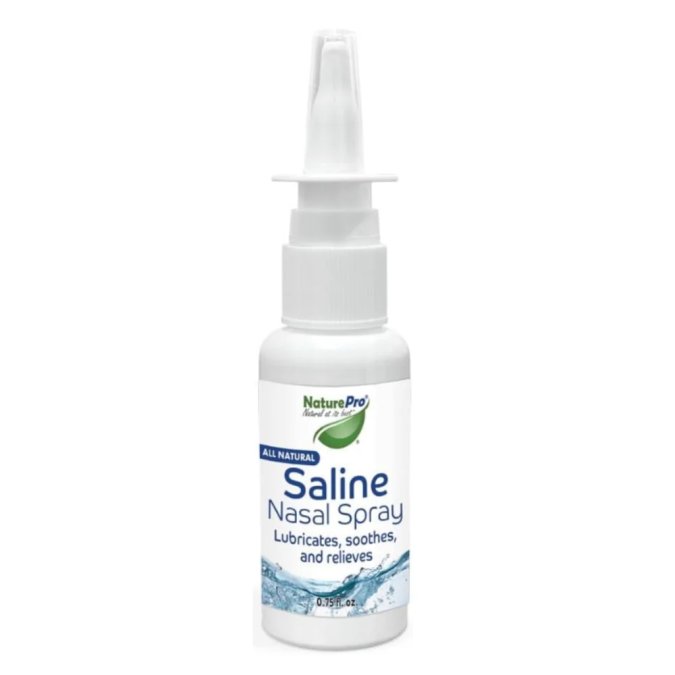
Infant nasal congestion responds quickly to saline spray when you use the right technique. Profounda Health & Beauty's Xynase Natural Saline Nasal Spray with Xylitol offers doctor-recommended relief with added xylitol for longer-lasting moisture, all without steroids or chemicals.
Frequently Asked Questions
Is saline spray safe for infants and newborns?
Yes, saline spray is safe for infants of all ages, including newborns. Unlike medicated nasal sprays or decongestants, saline spray contains only salt water and poses no risk of dependency or adverse effects. Saline spray is drug-free and steroid-free, making it an ideal first-line treatment for nasal congestion in infants. Always use sterile, plain saline formulated specifically for babies, and follow application instructions carefully.
How often can you use saline spray for a baby?
Saline spray can be used multiple times daily as needed, typically two to three times per day or more frequently during cold or allergy season. You can use it before feeding, sleeping, or whenever your baby shows signs of nasal congestion. Monitor your infant's comfort and adjust frequency based on congestion severity.
Should I use a nasal aspirator after saline spray?
Yes, using a bulb syringe or nasal aspirator after saline spray is an effective way to remove loosened mucus. Wait 30 to 60 seconds after applying saline to allow it to loosen the mucus, then gently suction each nostril. Avoid over-suctioning. Gentle suction removes the mucus that saline has loosened, making it easier for your baby to breathe and feed.
Can I use saline spray while my baby is sleeping?
You can apply saline spray to a sleeping infant, but it's generally easier and safer to do so when your baby is awake or semi-awake. If your baby is deeply asleep, waking them briefly allows you to position them properly and ensure the spray is applied correctly. If you choose to apply saline while your baby sleeps, use the back-lying position and apply only one to two drops per nostril to minimize discomfort.