

Preventing Post Nasal Drip at Night: 7 Steps
Table of Contents
- Why Post Nasal Drip Worsens When Lying Down
- Step 1: Elevate Your Head and Upper Body
- Step 2: Stay Hydrated Throughout the Day
- Step 3: Use a Humidifier to Maintain Moisture
- Step 4: Apply Saline Nasal Spray for Post Nasal Drip
- Step 5: Identify and Manage the Underlying Cause
- How to Stop Sinus Drainage in Your Throat Before Bed
- Postnasal Drip Treatment: When to Seek Medical Help
- Frequently Asked Questions
Last Updated: October 10, 2026
Why Post Nasal Drip Worsens When Lying Down
Preventing post nasal drip at night starts with understanding why it gets worse when you lie down. When you're upright, gravity helps drain mucus down your throat naturally. Lie down, and that drainage reverses. Mucus pools in your nasal passages and throat instead of flowing where it should.
Your body produces mucus constantly. The problem isn't the mucus itself, it's that lying flat changes how your body handles it. Your sinus drainage slows and nasal passages feel more congested.
This is why so many people with sinus drainage when lying down wake up coughing or with a scratchy throat. The mucus has been collecting for hours. Understanding this mechanism is the first step toward real relief.
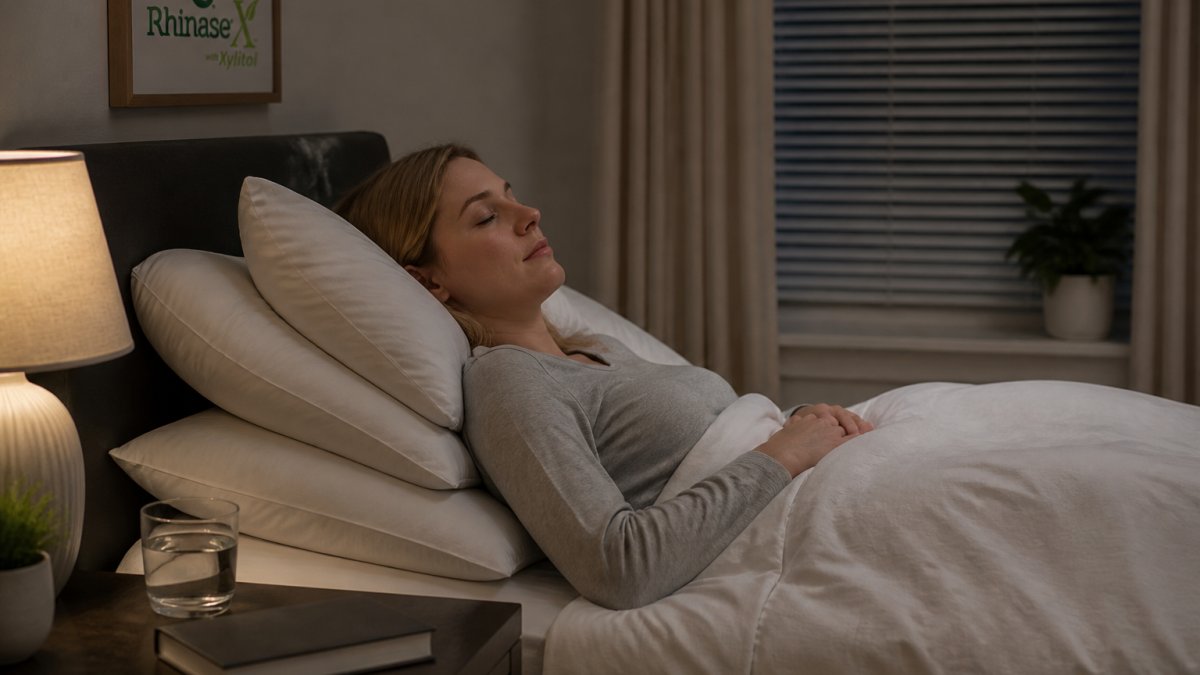
Step 1: Elevate Your Head and Upper Body
The single most effective fix for preventing post nasal drip at night is elevation. Sleep with your head and upper body raised at a 30- to 45-degree angle. This mimics the upright position where gravity still works in your favor.
Use extra pillows stacked so your head, neck, and shoulders stay elevated, or use a wedge pillow under the mattress. The goal is consistent elevation throughout the night.
Elevation reduces pooling and allows mucus to drain naturally down your throat while you sleep, the way it does during the day.
Step 2: Stay Hydrated Throughout the Day
Thin mucus flows more easily than thick, sticky mucus. Hydration is the simplest way to thin your mucus naturally.
Drink water consistently during the day, aiming for at least eight glasses. Drink most of your water before evening to avoid bathroom trips at night.
Water, herbal tea, broth, and water-rich fruits and vegetables count toward hydration. Avoid caffeine, alcohol, and sugary drinks, which dehydrate or worsen congestion.
Step 3: Use a Humidifier to Maintain Moisture
Dry air worsens nasal drainage. A humidifier adds moisture to keep nasal passages from drying out, but proper setup and maintenance are essential.
Measuring and Setting Humidity
Aim for 40 to 50 percent relative humidity. Use an inexpensive digital hygrometer to monitor levels. If humidity is below 30 percent, a humidifier will help. If it's already above 50 percent, adding more moisture may worsen congestion or encourage mold growth.
Choosing a Humidifier Type
Cool-mist humidifiers are quieter and use less energy; warm-mist models feel soothing but use more electricity. Either type works equally well for post nasal drip relief, choose based on personal preference and room temperature.
Maintenance and Water Safety
Clean your humidifier every two to three days. Use distilled water, not tap water, minerals in tap water build up inside the device and irritate nasal passages. Distilled water costs $1-$3 per gallon.
Empty the tank after each use and rinse with fresh water. Weekly, soak removable parts in a 1:1 white vinegar and water solution for 15 minutes. Replace filters every 30-60 days per manufacturer guidelines.
If you notice a musty smell or visible mold inside the humidifier, discard it and start fresh. Mold spores can trigger allergies and worsen post nasal drip.
Placement and Overnight Use
Place your humidifier 3 to 6 feet from your bed to distribute moisture evenly. Run it for your full sleep duration. If you wake stuffy, the device may not be running long enough, humidity may be too low, or the room may exceed the humidifier's capacity.
When a Humidifier Isn't Enough
Step 4: Apply Saline Nasal Spray for Post Nasal Drip
Use saline spray 15 to 30 minutes before bed to clear nasal passages and keep them moist. It flushes thick mucus, moisturizes tissue, and reduces inflammation. Apply gently as directed on the bottle.
For lasting relief from nasal dryness and postnasal drip treatment, the Rhinase X Nasal Mist Spray combines a dual wetting agent formula with natural xylitol. Unlike basic saline sprays, this formulation is specifically designed to moisturize and protect your nasal passages throughout the night. The hypotonic formula works with your body's natural moisture control, making it ideal for preventing post nasal drip at night without steroids or medications.
If you prefer a gel, the Rhinase X Soothing Nasal Gel provides longer-lasting coverage. Apply it before bed for extended moisture and comfort. Many people use the spray during the day and the gel at night for complete coverage.
Step 5: Identify and Manage the Underlying Cause
Finding the underlying cause lets you address the root problem, not just symptoms. Use this symptom-based guide to identify your cause and choose targeted management.
Symptom-Based Cause Identification
Is your drainage seasonal or tied to specific environments?
If symptoms worsen during spring or fall, around pets, or in dusty spaces, allergies are the likely culprit. Allergic post nasal drip typically includes itching in the nose or throat, sneezing, and watery eyes. The mucus is usually clear or slightly cloudy.
Management: Reduce allergen exposure by using allergen-proof pillow and mattress covers, washing bedding weekly in hot water, vacuuming with a HEPA filter, and keeping pets out of the bedroom. Consider over-the-counter antihistamine nasal sprays (such as azelastine) or oral antihistamines taken 30 minutes before bed.
Is your mucus thick, discolored, or foul-smelling?
Thick, yellow, green, or brown mucus suggests bacterial or viral infection. You may also have facial pain, pressure over the sinuses, or a fever. This pattern typically develops over a few days and is often preceded by a cold or upper respiratory infection.
Management: This requires medical evaluation. A doctor can determine whether you have acute sinusitis (which may need antibiotics) or a viral infection (which typically clears on its own in 7-10 days).
Do you have heartburn, a sour taste in your mouth, or worse symptoms when lying flat?
Acid reflux can trigger post nasal drip by irritating your throat and nasal passages. Reflux-related drainage often feels worse immediately after eating and when you first lie down. You may also belch, feel bloated, or have chest discomfort.
Management: Avoid large meals within three hours of bedtime. Skip spicy, fatty, citrus, and tomato-based foods at dinner. Limit alcohol and caffeine after 2 p.m. Elevate your head 30-45 degrees (as described in Step 1) to prevent stomach acid from flowing backward.
Did your symptoms start suddenly after a cold or flu?
Viral infections cause temporary post nasal drip that usually clears within 7-14 days. The mucus is typically clear or slightly yellow, and you may have a cough, sore throat, or congestion.
Management: Use the elevation, hydration, and humidifier steps in this article. Saline spray and steam inhalation provide comfort. Most viral post nasal drip resolves without treatment.
Are your symptoms worse in winter, in heated indoor spaces, or in very dry climates?
Low humidity (below 30 percent relative humidity) dries out your nasal passages, triggering excess mucus production as your body tries to compensate. This pattern is common in winter when heating systems run constantly.
Management: Use a humidifier to raise bedroom humidity to 40-50 percent (see Step 3 for details). Drink more water throughout the day. Use saline nasal spray or gel to add moisture directly to your nasal passages. These measures typically bring relief within 3-5 days.
Are your symptoms triggered by smoke, perfume, strong odors, or air pollution?
Environmental irritants can inflame your nasal passages and trigger excess mucus. This pattern often improves quickly when you remove the trigger.
Management: Identify and avoid the irritant. If it's cigarette smoke, ask household members to smoke outside or consider air purifiers with activated charcoal filters. If it's perfume or cleaning products, switch to unscented alternatives.
Many people have multiple contributing factors. Address the most obvious cause first, then add additional steps if symptoms persist. Keep a simple log noting time of day, severity, mucus color and thickness, and triggers to track progress and share with your doctor.
How to Stop Sinus Drainage in Your Throat Before Bed
Start 30 minutes before bed: (1) Use saline spray to clear nasal passages. (2) Drink warm herbal tea like chamomile or ginger. (3) Gargle with salt water for 30 seconds. (4) Apply nasal gel if you use one. (5) Get into your elevated sleeping position.

Postnasal Drip Treatment: When to Seek Medical Help
Know when to see a doctor.
Seek medical attention if:
- Symptoms persist for more than two weeks despite trying these steps
- Mucus is thick, discolored, or bloody
- You have facial pain or pressure in your sinuses
- You're coughing up mucus constantly
- You have fever or chills
- Drainage is affecting your sleep despite elevation and humidification
A doctor can identify the underlying cause and recommend nasal steroids, antibiotics, allergy testing, or saline irrigation.
The combination of elevation, hydration, humidity, and a good saline spray solves the problem for many. For those needing extra support, the Rhinase X Combo Pack provides both spray and gel in one purchase, giving you complete nasal care for day and night. The dual-action approach addresses dryness and drainage together, making it especially useful for persistent post nasal drip.
| Step | Timing | Frequency | Expected Result |
|---|---|---|---|
| Elevate head | Every night | Nightly | Reduced pooling, better drainage |
| Stay hydrated | Throughout day | Daily | Thinner mucus, easier flow |
| Use humidifier | During sleep | Nightly | Less dryness, less irritation |
| Apply saline spray | Before bed | Nightly | Clear passages, moisturized tissue |
| Identify cause | As needed | Once | Targeted management of root issue |
| Bedtime routine | 30 min before sleep | Nightly | Minimal symptoms, better sleep |
Preventing post nasal drip at night doesn't require expensive treatments or prescriptions. Elevation, hydration, humidity, and saline care address the problem at its source. If symptoms persist beyond two weeks or worsen despite these steps, schedule an appointment with your doctor to rule out infection or allergies. For reliable, drug-free relief designed specifically for nasal dryness and drainage, Profounda Health & Beauty offers doctor-recommended solutions that work with your body's natural moisture balance. Start with our Rhinase X products and experience the difference professional-grade nasal care can make.
Frequently Asked Questions
What causes post nasal drip to worsen when lying down at night?
When you lie flat, gravity stops draining mucus from your nasal passages into your stomach. Instead, it pools in your throat and sinuses, triggering coughing and throat clearing. Sinus drainage when lying down also happens because blood flow to your nasal passages increases horizontally, causing tissues to swell. Elevating your head prevents this pooling and allows gravity to help drain mucus naturally.
Can saline nasal spray for post nasal drip really help at night?
Yes. Saline nasal spray moisturizes nasal passages and thins mucus, making it easier to drain. Using a saline spray before bed reduces congestion and the urge to clear your throat during sleep. The Rhinase X Nasal Mist Spray ($17.00) contains natural xylitol and dual wetting agents that provide long-lasting hydration without steroids, helping you sleep without disruption.
How do I stop sinus drainage in my throat before sleeping?
Clear sinus drainage 30 minutes before bed using a saline rinse or spray to flush out mucus. Then elevate your head on 2-3 pillows to prevent pooling. Avoid eating or drinking 2-3 hours before sleep, especially triggers like spicy foods, alcohol, or fatty meals that worsen drainage. Keep your bedroom humidity between 40-50% using a humidifier to prevent drying that worsens symptoms.
When should I see a doctor about postnasal drip treatment?
Seek medical evaluation if postnasal drip lasts more than 10 days, is accompanied by fever or facial pain, produces green or bloody mucus, or disrupts sleep despite home care. Your doctor can identify underlying causes like allergies, sinus infections, or reflux that may need specific treatment beyond environmental adjustments and saline care.