

Why Children Get Nosebleeds at Night: Causes & Fixes
Table of Contents
- Why Children Get Nosebleeds at Night
- Common Causes of Nosebleeds in Children
- How to Stop a Child's Nosebleed: Step-by-Step
- A Nighttime Response Checklist for Caregivers
- How to Prevent Nosebleeds in Children
- When to Seek Medical Care for a Child's Nosebleed
- Conclusion
- Frequently Asked Questions
Last Updated: October 21, 2026
Why Children Get Nosebleeds at Night
Most childhood nosebleeds happen while kids sleep, and the reason comes down to air and anatomy. This guide from Profounda Health & Beauty explains why children get nosebleeds at night, how to stop one fast, and how to prevent the next one.
The short answer: dry air dries out the nasal lining overnight, and a child's nasal blood vessels sit close to the surface. Add a finger up the nose at 2 a.m., and bleeding starts.
Below, we walk through the causes, a step-by-step response plan, and when a nosebleed needs a doctor.
Night nosebleeds are common and rarely serious. Blood flow to the head changes when a child lies flat, and the nasal lining dries out during long hours of sleep. Both make fragile blood vessels easier to break.
Epistaxis is the medical term for a nosebleed. In children, it usually starts in the front of the nose, where the nasal mucosa is thin and packed with small vessels.
Dry Air and the Nasal Lining
Bedroom air is often the culprit. Heating systems and air conditioning pull moisture out of the air, and that dry air pulls moisture from the nasal lining.
Dryness leaves the nasal mucosa cracked and irritated. Dry mucus forms crusts, and when a child rubs or scratches, the crust tears away and takes a blood vessel with it.
Sleep Habits That Trigger Bleeding
Sleep itself sets up the conditions. Lying flat sends more blood to the head and nasal blood vessels. Kids also rub their faces, press into pillows, and pick at crusts without waking up.
Mouth breathing makes it worse. A child with a stuffy nose breathes through the mouth, which dries the nasal passages further overnight.
Common Causes of Nosebleeds in Children
The causes of nosebleeds in children are mostly mechanical and environmental. Most cases trace back to one of four triggers: dryness, fingers, irritation, or injury.
Nose Picking, Rubbing, and Nasal Injury
Nose picking is the classic cause. Kids pick, rub, and touch the nose constantly, often in their sleep. Each scratch can reopen a healing vessel.
A small foreign object lodged in the nose can also cause bleeding, especially in toddlers. So can a bump during play or a hard blow to the face.
Colds, Sinus Infections, and Allergies
Colds, sinus infections, and allergies all irritate the nasal lining. Congestion leads to frequent blowing, and hard nose blowing can rupture a vessel.
Allergies add another layer. Swelling and itching make kids rub their noses more, and some allergy medications dry out the passages.
- Colds and sinus infections: irritation plus constant wiping
- Allergies: swelling, itching, and rubbing
- Dehydration: thicker mucus and drier tissue
How to Stop a Child's Nosebleed: Step-by-Step
Here is how to stop a child's nosebleed in under 15 minutes, using the steps most pediatric guidance recommends:
- Stay calm and reassure your child.
- Have your child sit upright, not lie down.
- Lean the head slightly forward.
- Pinch the soft part of the nose, below the bony bridge.
- Hold continuous pressure for 10 minutes without checking.
- Breathe through the mouth during that time.
- Release slowly and check whether bleeding has stopped.
The two most common mistakes are tilting the head back and releasing pressure too early. Both keep the bleeding going.
Swallowed Blood vs. Dangerous Bleeding
Leaning back sends blood down the throat. That swallowed blood can cause nausea and vomiting, which looks alarming but is not the bleeding itself.
Watch for these signs that need medical attention:
- Bleeding that continues past 20 minutes of steady pressure
- A large volume of blood, or a child who looks pale or dizzy
- Bleeding after a head injury or a fall
- Frequent recurrent nosebleeds, week after week
A Nighttime Response Checklist for Caregivers
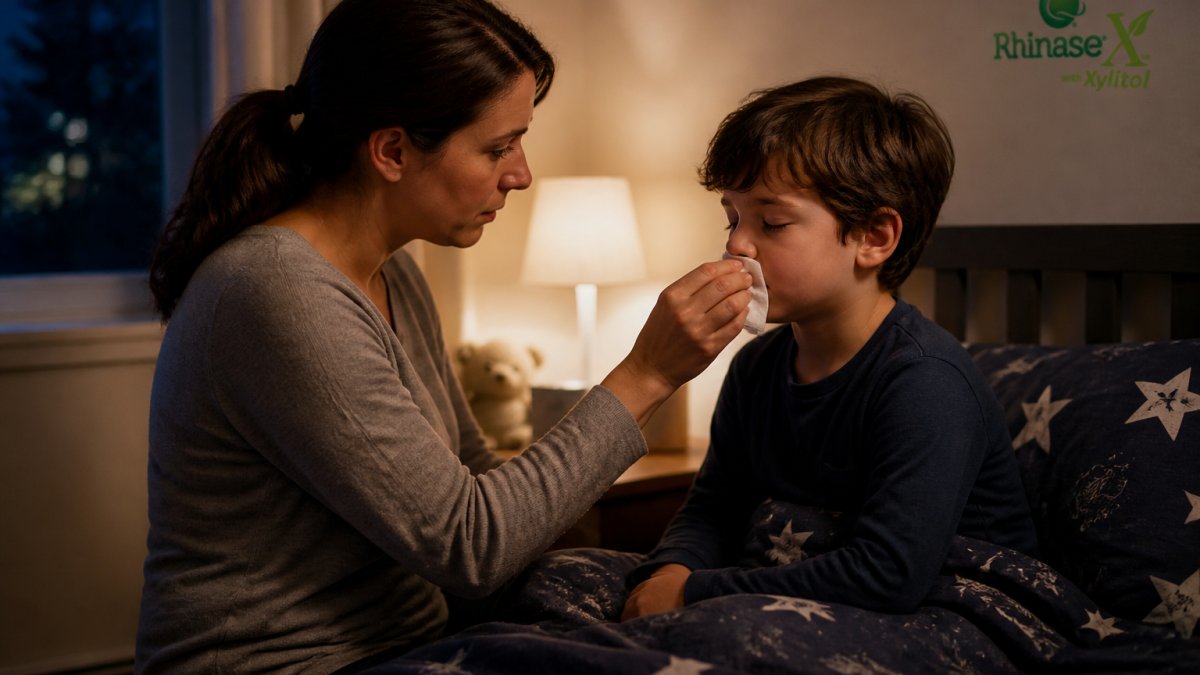
A 2 a.m. nosebleed is mostly a logistics problem: the child is half asleep, the room is dark, and everyone is startled. The goal is to get the child upright, apply steady pressure, and keep them calm long enough for the clot to form. Most practitioners find that a rehearsed sequence works better than improvising in the moment.
Before you touch the child
- Turn on a dim light rather than a bright overhead, so the child is not startled awake.
- Grab a tissue or a small bowl and a clock or phone timer.
- Take one slow breath yourself. Children mirror adult calm, and a frightened child who pulls away restarts the bleeding.
Waking and positioning a sleepy child
- Sit the child upright on the edge of the bed or in a chair, not flat on the pillow.
- Have them lean the head slightly forward so blood drains out of the nose rather than down the throat.
- Keep the child's chin down and the body relaxed; do not let them tip the head back.
- If the child is very young, sit them on your lap facing forward and support the back of the head with your free hand.
Applying pressure correctly
- Pinch the soft, fleshy part of the nose, below the bony bridge, between thumb and forefinger.
- Hold continuous pressure for a full 10 minutes. Do not release to check, and do not let the child peek.
- Have the child breathe through the mouth and spit any blood into a tissue or bowl rather than swallow it.
- Talk quietly during the wait: count down the minutes, tell a short story, or describe what you are doing. Naming the steps helps a frightened child cooperate.
After the bleeding stops
- Release pressure slowly and check whether bleeding has stopped.
- Keep the child quiet for 30 minutes: no rough play, no bending over, no blowing the nose.
- Offer a cool drink of water to clear the taste of blood.
- Note the time, how long the bleeding lasted, which nostril bled, and anything that seemed to trigger it.
If bleeding continues
- If bleeding is still active after 20 minutes of steady pressure, seek medical advice.
- If the child looks pale, dizzy, or weak, or if bleeding followed a head injury or fall, get emergency care.
- If bleeding stops and restarts repeatedly through the night, treat it as a recurrence worth a call to the child's clinician.
That written note matters. A pattern of recurrent nosebleeds is the detail a doctor needs to judge whether something else is going on.
How to Prevent Nosebleeds in Children
Prevention comes down to moisture and gentle habits. The goal is to keep the nasal lining soft and intact so vessels do not crack, especially during the long dry hours of sleep.
Bedroom air and humidity
- Run a cool-mist humidifier at night and keep the bedroom door open for airflow.
- Aim for comfortable, not tropical: a room that feels damp or shows condensation on windows is too humid and can encourage mold.
- Clean the humidifier regularly, following the manufacturer's instructions, so it does not spread mold or bacteria.
- Avoid overheating the room. Warm, dry air dries the nasal lining faster than cool air.
- Keep heating vents and space heaters pointed away from the child's face and bed.
Moisturizing the nasal passages
- A thin layer of nasal gel inside the nostrils keeps the nasal lining hydrated through the night.
- Saline spray can soften crusts before they are removed, so they do not tear away a healing vessel.
- Apply moisturizer before bed rather than after a bleed starts; the goal is to prevent the crack, not treat it.
This is where Rhinase fits naturally. Rhinase Dry Nose Relief Lubricating Nasal Gel is doctor recommended, steroid-free, and drug-free. It uses two wetting agents plus two types of salt to hold moisture in the nasal cavity. It contains no aloe, dyes, or fragrances, and its pH of 6.2 is balanced to avoid stinging.

For families who want both steps in one, the Rhinase Nasal Care Combo Pack pairs the gel with a saline spray for full nasal care.
Habits that reduce recurrence
- Keep fingernails short and filed smooth.
- Encourage gentle nose blowing, one nostril at a time, rather than hard blowing.
- Offer water through the day to keep mucus thin.
- Use a saline spray to soften crusts before removing them, rather than picking.
- Keep the child's bedroom free of obvious irritants such as strong scents or smoke.
Tracking recurrence
A simple log helps a clinician judge whether prevention is working. Note the date, time, which nostril bled, how long it lasted, roughly how much blood there was, and anything that seemed to trigger it, such as a cold, dry weather, or nose picking. Bring the log to a routine visit if nosebleeds happen often, interfere with sleep, or appear alongside easy bruising or bleeding elsewhere.
When to Seek Medical Care for a Child's Nosebleed
Call a doctor if bleeding lasts more than 20 minutes despite steady pressure, or if your child loses a lot of blood and looks pale, weak, or dizzy. Get emergency care after a head injury.
Book a routine visit if nosebleeds happen often, interfere with sleep, or appear alongside easy bruising or bleeding elsewhere. Those signs can point to a clotting issue or another underlying cause worth checking.
Conclusion
Nighttime nosebleeds are frightening to wake up to, but most are a simple mix of dry air and small fingers. A calm response, steady pressure, and a more humid bedroom handle the majority of cases.
For the prevention side, Profounda Health & Beauty makes doctor-recommended, drug-free nasal care built for exactly this problem. Our Rhinase gel and mist line moisturizes the nasal passages without steroids, so the lining stays soft through the night.

Ready to stop the cycle? Add Rhinase to your cart and give your child a quieter night's sleep.
Frequently Asked Questions
Why do children get nosebleeds while sleeping?
Most nighttime nosebleeds come from dry air in the bedroom, which dries out the nasal lining and makes the small blood vessels inside the nose fragile. Lying flat also changes blood flow to the head, and kids often rub or pick their nose in their sleep. Colds, allergies, and sinus infections add to the irritation. Keeping the bedroom humid and moisturizing the nasal passages before bed reduces how often this happens.
How do you stop a child's nosebleed at night?
Sit your child upright and lean them slightly forward so blood drains out instead of down the throat. Pinch the soft part of the nose, just below the bony bridge, and hold continuous pressure for 10 minutes without checking. Keep the room calm and dim. If bleeding continues past 20 minutes of steady pressure, or your child looks pale or dizzy, seek medical care. A saline spray or nasal gel after the bleeding stops can help prevent a repeat.
Can dry air cause nighttime nosebleeds in children?
Yes. Dry air, especially from heating systems in winter or air conditioning in summer, pulls moisture from the nasal lining. That lining cracks, and the fragile blood vessels near the surface break easily. A bedroom humidifier set around 40 to 50 percent humidity, plus a doctor-recommended moisturizing nasal gel before bed, helps keep the nasal passages hydrated and less likely to bleed.
How many nosebleeds are too many for a toddler?
One or two occasional nosebleeds are common and usually not a concern. Talk to your pediatrician if your toddler has more than one nosebleed a week, if bleeding takes longer than 20 minutes to stop, or if nosebleeds happen alongside easy bruising, fatigue, or bleeding from other areas. Recurrent nosebleeds can point to chronic dryness, allergies, or an underlying issue worth checking.