

Xylitol Nasal Spray for Allergies: Benefits & Usage
Table of Contents
- How Xylitol Nasal Spray Works for Allergy Relief
- Key Benefits of Xylitol Nasal Spray for Allergy Sufferers
- How to Use Xylitol Nasal Spray Correctly
- Xylitol vs. Saline Nasal Spray: What's the Difference
- Xylitol Nasal Spray Side Effects and Safety
- Why Choose a Xylitol-Based Solution Over Steroids
- Conclusion
Last Updated: August 15, 2026
How Xylitol Nasal Spray Works for Allergy Relief
Xylitol nasal spray functions through a dual mechanism that distinguishes it from conventional decongestants. Unlike steroid sprays that suppress immune response, xylitol creates an environment where allergens and bacteria struggle to establish themselves in your nasal passages. The compound works as a natural humectant, drawing moisture into the nasal mucosa while simultaneously disrupting pathogen adhesion to the mucosal lining.

When you inhale allergens, your immune system overreacts, causing swelling, excess mucus production, and congestion. Xylitol interrupts this process at the cellular level by inhibiting bacterial adhesion, meaning fewer pathogens can colonize your nasal passages and trigger secondary infections that compound allergic symptoms. According to research on xylitol's antimicrobial properties from the National Institutes of Health, xylitol reduces biofilm formation, the sticky bacterial matrix that protects pathogens from your immune system.
Xylitol also restores ciliary function, those tiny hair-like structures in your nasal passages that sweep mucus and debris out. Allergies and dry air paralyze these cilia. Xylitol rehydrates the nasal mucosa, allowing cilia to resume their natural clearing action. This is why many users report relief from both congestion and post-nasal drip.
Key Benefits of Xylitol Nasal Spray for Allergy Sufferers
Congestion reduction without rebound effect. Traditional decongestants like pseudoephedrine work by constricting blood vessels. Stop using them, and your body compensates by dilating vessels even more, rebound congestion. Xylitol avoids this entirely by reducing swelling through hydration and pathogen inhibition, not vasoconstriction.
Relief from chronic rhinitis symptoms. Xylitol's anti-inflammatory properties target underlying chronic inflammation. The moisturizing effect reduces the dryness that triggers itching and sneezing.
Allergen clearance acceleration. Xylitol helps your body expel allergens faster by restoring ciliary function and improving mucus viscosity.
Prevention of secondary infections. Allergies create an environment where bacteria thrive. Xylitol's antimicrobial properties reduce bacterial colonization, which means fewer sinus and ear infections.
Many users report that their allergy medications become more effective when combined with xylitol spray. When your nasal passages are better hydrated and less inflamed, topical and systemic allergy medications penetrate more effectively and work faster.
How to Use Xylitol Nasal Spray Correctly
Step-by-Step Application Technique
The difference between effective nasal spray use and wasted doses comes down to technique. Most people apply nasal spray incorrectly, preventing the solution from reaching the inflamed tissue where it needs to work.
Step 1: Prepare your nasal passages. Gently blow your nose to clear excess mucus. If congestion is severe, use a saline rinse first to loosen secretions. Wait two to three minutes before applying xylitol spray.
Step 2: Assume the correct head position. Tilt your head forward slightly, about 20 degrees, so your forehead is slightly lower than your chin. Do not tilt your head back, as this sends the spray down your throat instead of into your nasal passages.
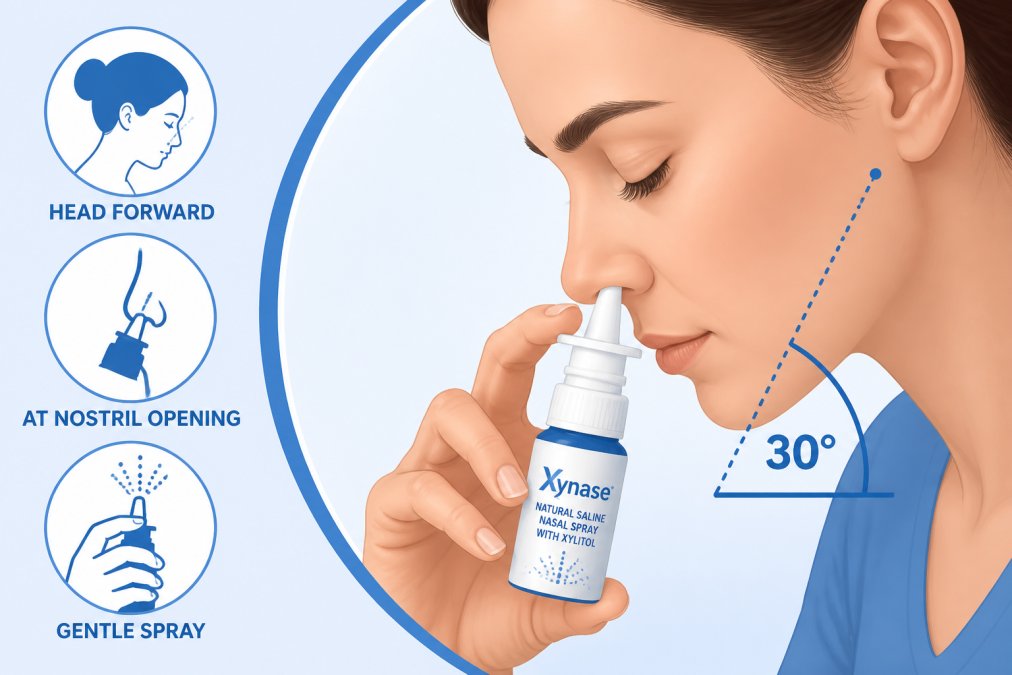
Step 3: Insert the spray nozzle correctly. Place the nozzle just inside your nostril, aimed toward the back wall of your nasal cavity, not toward the septum. This directs the spray across the maximum surface area of inflamed tissue.
Step 4: Activate with a single, controlled squeeze. Press the spray bottle firmly but not aggressively. One full depression delivers the appropriate dose.
Step 5: Maintain position for 30 seconds. After spraying, keep your head tilted forward for 30 seconds to allow the xylitol solution to coat your nasal passages.
Step 6: Repeat in the other nostril. Follow the same sequence for the opposite side. One spray per nostril is the standard dose.
Frequency and Duration
For acute allergy symptoms: Use one to two sprays per nostril, two to three times daily during high pollen seasons or when symptoms flare.
For chronic allergic rhinitis: Consistent daily use, one spray per nostril once or twice daily, produces the best results.
Long-term use considerations: Unlike steroid sprays, xylitol is safe for indefinite use. Your body doesn't develop tolerance because xylitol isn't suppressing your immune system.
Xylitol vs. Saline Nasal Spray: What's the Difference
Saline spray contains salt water at varying concentrations. It provides mechanical cleansing, physically flushing allergens and mucus from your nasal passages. The benefit is temporary; once the saline dries, congestion typically returns.
Xylitol nasal spray includes saline as a base but adds xylitol's antimicrobial and anti-inflammatory properties. You get the immediate cleansing benefit of saline plus the longer-term mucosal healing and pathogen inhibition of xylitol. Relief lasts longer and improves progressively over days and weeks.
| Factor | Saline Spray | Xylitol Spray |
|---|---|---|
| Immediate relief | 30-60 minutes | 30-60 minutes |
| Duration of relief | 1-2 hours | 3-6 hours (improves with use) |
| Antimicrobial effect | None | Yes, inhibits bacterial adhesion |
| Anti-inflammatory | Minimal | Yes, reduces mucosal swelling |
| Ciliary function | Temporary hydration | Sustained restoration |
| Long-term improvement | Minimal | Significant over 2-4 weeks |
| Best for | Acute rinse, allergen removal | Chronic allergy management |
Many allergy sufferers use both: saline spray for acute allergen exposure or heavy congestion, xylitol spray for daily maintenance and long-term symptom reduction.
Xylitol Nasal Spray Side Effects and Safety
Safety for Children and Long-Term Use
Xylitol is remarkably well-tolerated. Some users experience slight nasal irritation, a temporary burning sensation, or increased sneezing in the first few applications, which usually resolves within three to five days. A small percentage report minor nosebleeds if they have pre-existing tissue damage or severe inflammation.
Safety for children: Xylitol nasal spray is safe for children when used as directed. Unlike many allergy medications, there's no age restriction. The dosing is the same as for adults, one spray per nostril. Many parents choose xylitol spray because it's drug-free and doesn't carry the risks of antihistamines or decongestants.
Long-term use safety: Xylitol doesn't suppress your immune system, so using it daily for months or years poses no systemic risk. Your body doesn't develop tolerance. In fact, many users find that long-term xylitol use reduces their overall allergy severity.
One caution: if you have severe nasal polyps, a deviated septum, or recent nasal surgery, consult your doctor before starting xylitol spray. Also, xylitol is toxic to dogs, so keep the spray away from pets.
Why Choose a Xylitol-Based Solution Over Steroids
How steroid sprays work: Fluticasone, mometasone, and similar corticosteroids reduce inflammation by suppressing your immune response in the nasal passages. The result is fast, effective congestion relief.
The trade-off: Long-term steroid use carries risks that xylitol doesn't. Nasal atrophy, epistaxis, and nasal septal perforations have been documented with extended steroid spray use. Suppressing your immune system long-term leaves you more vulnerable to secondary bacterial and viral infections.
Why xylitol is different: Xylitol doesn't suppress your immune system; it supports your nasal defenses. You get relief without systemic suppression.

According to the American Academy of Allergy, Asthma & Immunology guidance on nasal treatments, drug-free supportive care should be the foundation of allergy management, with medications added as needed. Xylitol spray fits this framework perfectly as your foundation.
Chronic nasal congestion and allergic rhinitis don't require indefinite pharmaceutical suppression. Xylitol nasal spray offers a genuinely different approach: support your nasal health, reduce pathogen adhesion, and let your body's natural defenses work more effectively.
Profounda Health & Beauty's xylitol-based products, including the Rhinase X Natural Nasal Mist Spray and Rhinase X Soothing Nasal Gel, combine xylitol with advanced saline formulations specifically designed for allergy relief. Start with consistent daily use for two to three weeks to experience the full benefit.

Frequently Asked Questions
Does xylitol nasal spray help with allergies?
Yes. Xylitol nasal spray reduces allergic rhinitis symptoms by disrupting bacterial biofilm formation and reducing mucosal inflammation. It moisturizes the nasal mucosa, supports ciliary function, and helps clear allergens from nasal passages. Unlike steroid sprays, xylitol works by maintaining a healthy nasal environment rather than suppressing immune response, making it ideal for allergy sufferers seeking a drug-free option.
How to use xylitol nasal spray for best results?
Tilt your head slightly forward, insert the spray nozzle into one nostril, and press firmly while breathing in gently. Use 1-2 sprays per nostril, 2-3 times daily or as directed. For optimal results, clear any excess mucus first, and maintain consistent usage. The Rhinase X Natural Nasal Mist Spray ($17.00) is designed for easy, effective application and can be used daily without dependency concerns.
Is xylitol nasal spray safe for children?
Yes, xylitol nasal spray is safe for children and is often recommended by pediatricians as a drug-free alternative. It contains no steroids or medications, making it suitable for young users experiencing allergies or nasal dryness. Always follow age-appropriate dosing guidelines and consult your child's doctor before starting any new nasal care routine, especially if your child has nosebleeds or chronic sinus issues.
What makes xylitol nasal spray different from regular saline?
While both moisturize, xylitol adds antimicrobial and anti-inflammatory properties that plain saline lacks. Xylitol inhibits bacterial adhesion and biofilm disruption, reducing pathogen growth in nasal passages. It also has greater humectant properties, meaning it draws and retains moisture more effectively. This makes xylitol formulations superior for allergy sufferers and those prone to recurrent sinus infections.
This article was written using GrandRanker