

5 Best Humidifiers for Chronic Dry Nose 2026
Table of Contents
- Why Chronic Dry Nose Needs More Than Just a Humidifier
- Quick Comparison: 5 Best Humidifiers for Dry Nose Relief
- How We Evaluated These Humidifiers for Dry Nose
- 1. Levoit Classic 300S: Best Overall for Bedroom Humidity Control
- 2. Vicks V745A Warm Mist: Best for Congestion and Sinus Comfort
- 3. Honeywell HCM-350: Best Evaporative Technology for Large Rooms
- 4. Canopy Humidifier: Best for Mold Prevention and Easy Cleaning
- 5. Dyson PH04: Best Smart Humidifier with Hygrometer Integration
- How to Treat Chronic Dry Nose at Home
- Maintaining Optimal Indoor Humidity Levels
- Frequently Asked Questions
Last Updated: October 3, 2026
Why Chronic Dry Nose Needs More Than Just a Humidifier
A dry nose means the mucous membranes lining your nasal passages have lost moisture, weakening their ability to filter irritants and fight infection, which is why the 5 best humidifiers for chronic dry nose 2026 matter so much.
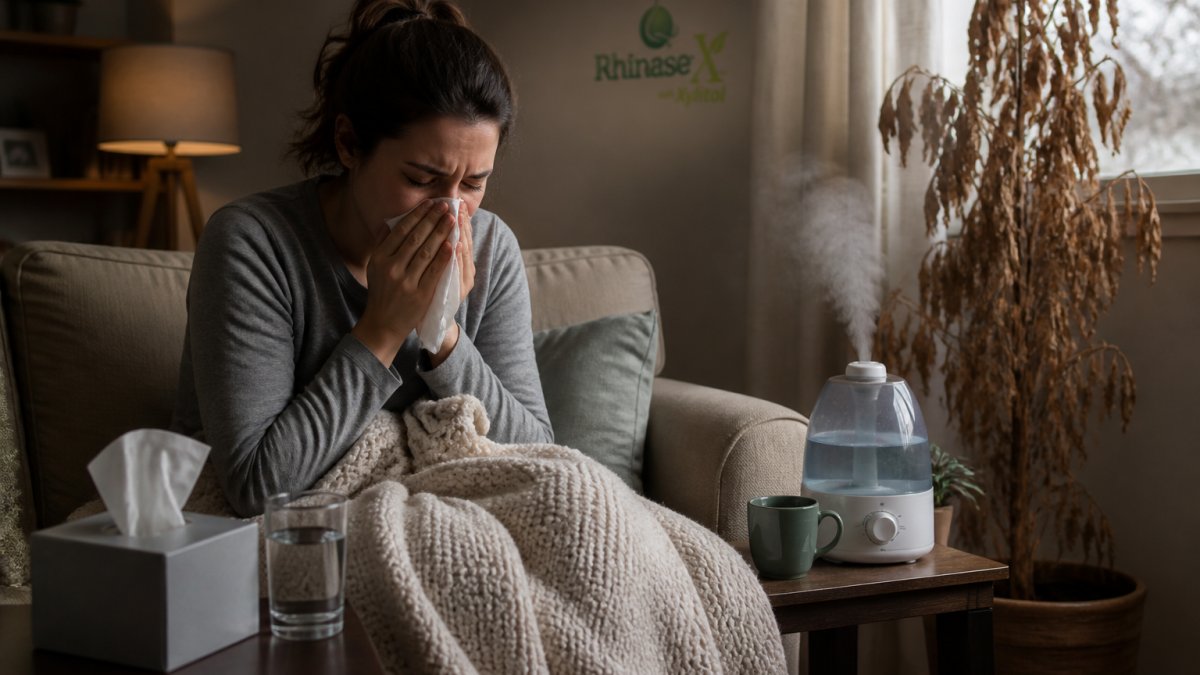
The problem: a humidifier raises moisture in the air but does not directly hydrate the tissue inside your nose. If your nasal lining is inflamed or your mucus is thick, room humidity helps but rarely solves it alone.
The American Academy of Otolaryngology patient guidance on dry nose notes that dry indoor air is one of the most common triggers for nasal crusting and nosebleeds. The fix is not one device.
Quick Comparison: 5 Best Humidifiers for Dry Nose Relief
| Humidifier | Type | Best For | Tank Size | Price Range |
|---|---|---|---|---|
| Levoit Classic 300S | Ultrasonic cool mist | Bedrooms up to 500 sq ft | 1.5 gal | $40-$50 |
| Vicks V745A Warm Mist | Warm mist | Congestion and sinus comfort | 1 gal | $40-$55 |
| Honeywell HCM-350 | Evaporative | Large rooms, whole-home feel | 1 gal | $60-$80 |
| Canopy Humidifier | Evaporative | Mold prevention, easy cleaning | 1 gal | $150-$180 |
| Dyson PH04 | Evaporative with sensors | Smart humidity control | 1 gal | $800+ |
How We Evaluated These Humidifiers for Dry Nose
We judged each unit on how well it supports nasal health, not feature count. Four criteria mattered most, weighted differently than a typical review because chronic dry nose is a medical issue.
Moisture Output and Coverage Area
A humidifier that cannot hold 40-60% relative humidity in your bedroom overnight will not help your nose. We looked at tank capacity, run time, rated square footage, and output adjustability. The Levoit Classic 300S and Dyson PH04 offer granular control; the Vicks V745A and Honeywell HCM-350 are more limited.
Maintenance and Mold Prevention
Any humidifier left wet grows bacteria. We favored designs that are easy to empty, dry, and clean without disassembly. Canopy's dishwasher-safe components set the standard; the Levoit's top-fill tank still requires hand-scrubbing, and the Honeywell's wick filter must be replaced, not cleaned.
Noise and Sleep Hygiene
You run this machine while you sleep, so quiet operation under 30 decibels matters more than a color-changing light. Ultrasonic units like the Levoit are essentially silent on low; evaporative units like the Honeywell and Canopy produce fan noise; the Vicks warm mist unit gurgles as it boils water.
Cost of Ownership: The Hidden Expense Most Reviews Ignore
The sticker price is only the beginning. First-year costs by type:
Ultrasonic (Levoit Classic 300S): $40-$50 purchase. Distilled water adds $30-$60 per month ($360-$720 per year), dwarfing the purchase price. Tap water with a demineralization cartridge adds $10-$15 per month ($120-$180 per year). Either way, operating cost exceeds the purchase price within months.
Warm mist (Vicks V745A): $40-$55 purchase.
Evaporative (Honeywell HCM-350): $60-$80 purchase. Wick filters cost $10-$15 each, replaced every one to three months depending on water hardness, $40-$180 per year.
Evaporative premium (Canopy): $150-$180 purchase. Paper filters are subscription-based, typically $10-$20 per month ($120-$240 per year).
Smart evaporative (Dyson PH04): $800+ purchase. Replacement filters for humidification and purification add several hundred dollars per year. A luxury purchase with luxury operating costs.
Medical Contraindications: When a Humidifier Can Make Things Worse
Most guides omit this, but the underlying cause determines whether a humidifier helps or hurts.
Asthma: Humidity can help or harm depending on the trigger. Dry-air asthma improves with a humidifier; dust mite or mold triggers worsen above 60% humidity.
Dust mite allergy: Dust mites multiply rapidly above 50% relative humidity.
Chronic sinusitis with bacterial component: A dirty humidifier can aerosolize bacteria into inflamed sinuses.
Sleep apnea and CPAP use: CPAP machines already have a heated humidifier built in.
Why We Weighted Health Factors Over Features
Most reviews rank units by tank size, noise, and price. For chronic dry nose, those are secondary to water quality, humidity control, and cleaning ease.
We prioritized units with clear water-quality documentation: Levoit and Honeywell specify distilled water for ultrasonic models and provide filter guidance, Canopy publishes subscription costs upfront, and Dyson's app provides real-time humidity data to verify performance.
1. Levoit Classic 300S: Best Overall for Bedroom Humidity Control
The Levoit Classic 300S is our top pick for most bedrooms: a 1.5-gallon tank, quiet ultrasonic cool mist, and app-based control at a hard-to-beat price.
The top-fill design means no flipping the tank over the sink. The app sets target humidity and schedules, and auto-shutoff kicks in when the tank runs dry.
Where it falls short: ultrasonic cool mist produces white mineral dust with hard tap water. Use distilled water or the optional demineralization cartridge, an ongoing cost most reviews skip.
2. Vicks V745A Warm Mist: Best for Congestion and Sinus Comfort
Warm mist raises the temperature of the air you breathe, which many find soothing when sinuses feel tight and congested.
For dry nose with congestion, this is the pick.
The tradeoff is heat: keep it away from children and pets, expect it to feel warm to the touch, and note it uses more electricity than a cool-mist model.
3. Honeywell HCM-350: Best Evaporative Technology for Large Rooms
Evaporative humidifiers push air through a wet wick filter and release moisture naturally.
Rhinase Nasal Care Combo Pack - Nasal Gel (1 oz) & Saline Spray (1 oz) →
Evaporative technology self-regulates, so the air absorbs only as much moisture as it can hold, far less risk of over-humidifying and mold.
The catch is the filter: replace the wicking filter every one to three months depending on water hardness, adding long-term cost. It is also louder than an ultrasonic unit because of the fan.
4. Canopy Humidifier: Best for Mold Prevention and Easy Cleaning
Canopy built its reputation on the maintenance problem: the unit is dishwasher-safe, and its paper filter traps minerals before they reach the air.
This is the pick for anyone who abandoned a humidifier because cleaning became a chore.
The honest limitation is price: Canopy costs three to four times the Levoit, and filters are a subscription. If budget is tight, the maintenance savings will not offset that.
5. Dyson PH04: Best Smart Humidifier with Hygrometer Integration
The Dyson PH04 is the only unit here with a built-in hygrometer: it measures actual room humidity and adjusts output to hold your target.
It also purifies the air, capturing airborne allergens that irritate nasal passages.
The drawback is obvious: at several hundred dollars, the PH04 costs more than the other four combined. A luxury pick, not a value pick.
How to Treat Chronic Dry Nose at Home
A humidifier is step one. The rest of your routine determines whether your nose actually heals.
- Target 40-60% relative humidity and verify it with a hygrometer, not a guess.
- Use a nasal moisturizer morning and night to hydrate the tissue directly, not just the air.
- Drink water consistently through the day; hydration starts from the inside.
- Avoid over-the-counter decongestant sprays beyond three days, which cause rebound congestion.
- Run a saline rinse before bed if your nose is crusted, then follow with a moisturizing gel.
- Keep the bedroom cool and avoid direct heat vents blowing on your face.
For the moisturizing step, our Rhinase X Combo Pack pairs a nasal gel and a spray. It is drug-free, steroid-free, and built around xylitol and dual salts rather than medication.


Maintaining Optimal Indoor Humidity Levels
Holding steady humidity is harder than setting it once, indoor air changes with weather, heating, and doors opening. But for chronic dry nose sufferers, the bigger risk is what is floating in the mist.
Water Quality: The Mineral Dust Problem Nobody Talks About
The fix: use distilled water in any ultrasonic humidifier. Distilled water has had minerals removed through steam distillation, so the mist is essentially pure water vapor.
If distilled water is impractical, demineralization cartridges are the alternative: ion-exchange resin captures minerals before they reach the ultrasonic plate.
Evaporative humidifiers like the Honeywell HCM-350 and Canopy work differently: they pull air through a wet wick filter, trapping minerals rather than aerosolizing them, a meaningful advantage for sensitive nasal passages.
The 40-60% Range: Why Both Ends Matter
In winter, heated indoor air can drop below 20% relative humidity, well under the 40-60% range most ENT guidance recommends.
Watch for the upper limit too. Above 60%, dust mites multiply and condensation forms on windows, which feeds mold. If you see fog on the glass in the morning, you have gone too far.
A $10-$15 digital hygrometer is the only reliable way to know where you stand, four of the five units here have no built-in sensor, so tank level and run time tell you nothing about actual room humidity.
Cleaning Frequency and Mold Prevention
Any humidifier left wet grows bacteria and mold. The pink slime in tanks is Serratia marcescens, which thrives in moist environments and can irritate nasal passages when aerosolized.
A practical routine: empty the tank every morning, wipe it dry, and air it out.
Canopy's dishwasher-safe design is the standout: every part that touches water goes in the dishwasher, removing the friction that makes most people abandon cleaning routines.
Placement for Maximum Nasal Relief
Place the humidifier on a nightstand or low table within a few feet of your head, but not so close that mist falls directly on your face, direct mist can feel cold and trigger congestion.
Keep the unit away from walls, curtains, and electronics, mist hitting a cold wall condenses into a damp patch that feeds mold. With a warm mist unit like the Vicks V745A, keep it well away from bedding and anything flammable.
Frequently Asked Questions
What is the best humidifier for dry nasal passages?
The best humidifier for dry nasal passages depends on your room size and maintenance preferences. A cool mist ultrasonic model works well for bedrooms up to 500 square feet, while evaporative humidifiers suit larger spaces. Look for adjustable mist output, a top-fill design for easy refilling, and auto-shutoff for safety. Pairing your humidifier with a drug-free nasal moisturizer like Rhinase X Nasal Mist provides targeted relief that room humidity alone cannot deliver.
Why is my nose still dry even when using a humidifier?
Room humidity above 60% can actually worsen congestion, and below 30% does little for nasal passages. If your nose stays dry, check your hygrometer reading first. Also verify you are cleaning the tank every 2-3 days, since bacterial growth in a dirty humidifier can irritate mucous membranes. A nasal gel or saline spray with xylitol, such as Rhinase X Nasal Gel, moisturizes directly where a humidifier cannot reach.
Are cool mist or warm mist humidifiers better for dry noses?
Cool mist ultrasonic humidifiers are safer around children and pets because there is no hot water risk. Warm mist models produce steam that feels soothing for congestion and sinus pressure. Both raise relative humidity effectively. For chronic dry nose, the deciding factor is often noise level and maintenance. Ultrasonic cool mist units run quieter for sleep, while warm mist units require more frequent descaling to prevent mineral dust.
How often should I clean my humidifier to prevent mold and bacteria?
Empty and rinse the tank daily, then deep clean with a vinegar solution every 2-3 days for ultrasonic models. Evaporative humidifiers with wicking filters need filter replacement every 1-2 months depending on water hardness. Skipping this maintenance schedule allows biofilm to form, which releases airborne allergens and can make dry nose symptoms worse. Use distilled water to reduce mineral buildup and extend time between cleanings.
Can I use a nasal spray for dry nose relief alongside a humidifier?
Yes, and this combination works better than either alone. A humidifier raises relative humidity in the room, but nasal passages need direct moisture. Rhinase X Nasal Mist with xylitol and dual wetting agents delivers targeted hydration, while the humidifier maintains overall indoor air quality. Apply the mist 2-3 times daily, especially before sleep, and keep your bedroom humidity between 40-50% for the best overnight results.