

How to Hydrate Nasal Passages Effectively: 2026 Guide
Table of Contents
- Why Dry Nasal Passages Happen and What They Cost You
- What You'll Need to Hydrate Nasal Passages at Home
- Step-by-Step: How to Use a Saline Nasal Spray Correctly
- Best Nasal Spray for Dry Nose Relief: What to Look For
- Natural Remedies for Dry Nose That Support Mucosal Health
- Environmental and Lifestyle Strategies to Protect Nasal Moisture
- Safety Warnings, Hygiene, and Who Should Be Careful
- Conclusion
- Frequently Asked Questions
Last Updated: September 27, 2026
Why Dry Nasal Passages Happen and What They Cost You
Dry nasal passages happen when your nose loses moisture faster than it can replace it. This guide from Profounda Health & Beauty explains how to hydrate nasal passages effectively.
Your nasal cavity depends on a thin layer of mucus to trap dust and germs. When it dries out, the cilia, tiny hairs that sweep irritants from your nose, slow down, causing crusting, cracking, and sometimes nosebleeds.
Common causes include:
- Low ambient humidity, especially in heated homes during winter
- Air conditioning and forced-air heating that strip moisture from the air
- Certain medications, including some antihistamines and decongestant sprays
- Medical equipment like CPAP machines and oxygen therapy
- Aging, which naturally thins nasal secretions
The cost is more than discomfort. Dry nasal mucosa leaves you open to infection and makes breathing feel like work.
What You'll Need to Hydrate Nasal Passages at Home
Before you start, gather the right supplies. Quality matters more than quantity.
Essential Supplies and Product Types
Saline nasal spray is the foundation of any nasal hygiene routine. Choose preservative-free options if you use it more than twice daily.
Nasal gel or ointment moisturizes longer than spray alone by sitting on tissue and holding moisture in place.
A humidifier adds moisture to bedroom air while you sleep, where most people see the biggest overnight improvement.
Distilled or sterile water for irrigation.
Other helpful items:
- Tissues that do not shred
- A mild, fragrance-free soap for cleaning tools
- A clean towel or drying rack
Step-by-Step: How to Use a Saline Nasal Spray Correctly
Technique matters as much as the product. Most people spray too hard, aim too high, or tilt their head wrong. Here is the correct method.
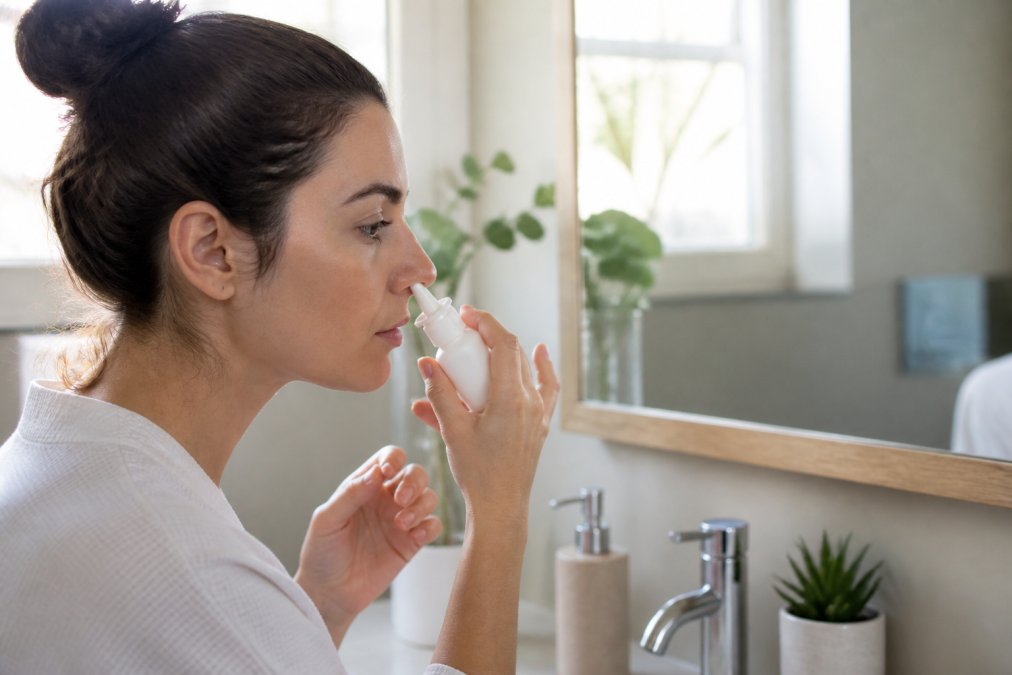
- Blow your nose gently to clear loose mucus. Do not force it.
- Wash your hands with soap and water for at least 20 seconds.
- Shake the bottle if the label tells you to.
- Tilt your head forward slightly and breathe through your mouth.
- Insert the tip just inside one nostril, pointing slightly outward toward the ear, not up toward the eyes.
- Press once and sniff gently. Sniffing too hard pulls liquid into your throat.
- Repeat on the other side. Wipe the nozzle with a clean tissue after each use.
- Breathe normally for a few seconds. Some liquid may run out; that is normal.
Common Mistakes That Make Dryness Worse
The biggest mistake is overusing medicated decongestant sprays. They shrink nasal blood vessels, and after three days of continuous use they cause rebound congestion, your nose swells worse than before.
Other errors that backfire:
- Snorting saline hard enough to reach your throat
- Using a spray while lying flat on your back
- Reusing a neti pot without washing it
- Skipping the humidifier because the spray "should be enough"
- Ignoring a nosebleed that keeps returning
Best Nasal Spray for Dry Nose Relief: What to Look For
The best nasal spray for dry nose relief moisturizes without shrinking blood vessels or adding steroids. Avoid anything labeled "decongestant" and choose products built around wetting agents and balanced salts.
| Feature | Why It Matters | What to Avoid |
|---|---|---|
| Wetting agents | Hold moisture on tissue longer | Products with only salt water |
| Balanced salts | Match your nose's natural chemistry | Very high-salt formulas |
| Preservative-free | Gentler for daily use | Benzalkonium chloride if sensitive |
| pH balanced | Prevents stinging | Unknown or unlisted pH |
| Steroid-free | No rebound dryness | Daily steroid dependence |
Ingredient Analysis: What Belongs in a Nasal Moisturizer
Read the label before you buy. A moisturizing nasal spray should have a short, clear ingredient list: salts like sodium and potassium support cellular hydration, while wetting agents such as glycerin or xylitol help tissue hold water.
Rhinase Nasal Care Combo Pack - Nasal →
What you do not want:
- Decongestants like oxymetazoline or phenylephrine
- Alcohol, which dries tissue further
- Fragrances and dyes that irritate sensitive noses
- Steroids, unless a doctor prescribed them for a specific condition
Natural Remedies for Dry Nose That Support Mucosal Health
Natural remedies for dry nose work best when they support the nasal mucosa rather than just wetting it, helping your nose do its own job again. Each remedy below includes its mechanism, trade-offs, and safety details.
Ingredient Analysis: What to Look For and What to Avoid
Read the label before buying any nasal moisturizer. A good product has a short, clear ingredient list: salts like sodium and potassium support cellular hydration, while wetting agents such as glycerin or xylitol help tissue hold water.
What you do not want:
- Decongestants like oxymetazoline or phenylephrine, which shrink blood vessels and can cause rebound congestion after three days of continuous use
- Alcohol, which dries tissue further
- Fragrances and dyes that irritate sensitive noses
- Steroids, unless a doctor prescribed them for a specific condition
- Preservatives such as benzalkonium chloride if you plan to use the product more than twice daily or have sensitive tissue
Environmental and Lifestyle Strategies to Protect Nasal Moisture
Dry air is often the root cause, so fixing your environment solves the problem at its source. Start at home, then address the places you spend time outside it.
Home HVAC and Humidity Control
- Run a humidifier in the bedroom and main living area. Cool-mist and warm-mist units both work; keep the tank clean.
- Keep indoor humidity between 40% and 50%. A hygrometer takes the guesswork out of it.
- Change humidifier water daily and clean the tank weekly with mild, fragrance-free soap to prevent mold and bacteria from being aerosolized.
- Use a HEPA filter to cut airborne irritants that dry and inflame nasal tissue.
- Turn down forced-air heating at night, since these systems strip moisture and blow it across your nasal passages while you sleep.
- Add a bowl of water near radiators as a low-tech backup for small rooms.
- Avoid smoking and secondhand smoke, which dry and irritate the nasal lining.
Travel and Airplane Dryness
Cabin air on commercial flights is very dry, and long flights can leave your nose raw. A few steps help:
- Use a saline nasal spray before boarding and again midway through the flight.
- Drink water steadily rather than waiting until you feel thirsty.
- Apply a thin layer of nasal gel or petroleum jelly just inside the nostril rim before the flight.
- Avoid alcohol and caffeine, which can worsen dehydration.
- If you use a CPAP machine, ask your equipment provider about a travel humidifier attachment.
CPAP and Oxygen Therapy
If you use a CPAP machine, a heated humidifier attachment makes a noticeable difference. Set it to the lowest comfortable setting and clean the water chamber daily. Oxygen therapy users should ask their provider about a humidifier add-on, since oxygen flow dries nasal tissue quickly.
Preventing Nosebleeds
For those prone to nosebleeds, preventive moisturizing beats treating a bleed after it starts. A daily gel applied morning and before bed keeps the nasal septum from cracking. If a nosebleed occurs, sit upright, pinch the soft part of your nose, and hold for 10-15 minutes. Seek medical care if bleeding lasts more than 20 minutes or follows a head injury.
Safety Warnings, Hygiene, and Who Should Be Careful
Not everyone should follow the same routine. Some groups need extra care or a doctor's input first.
Hygiene rules that apply to everyone:
- Wash your hands before touching your nose or any device
- Clean reusable irrigation devices after every use
- Replace spray bottles per the label's guidance
- Never use tap water in a neti pot without boiling and cooling it
- Store products away from heat and direct sun
Conclusion
Dry nasal passages are stubborn, and the wrong product makes them worse. The fix is a simple routine: correctly used saline spray, a gel for longer-lasting moisture, an overnight humidifier, and enough water through the day.
Frequently Asked Questions
How can I rehydrate my dry nostrils quickly?
Start with a saline nasal spray or mist to add immediate moisture to the nasal cavity. Follow with a water-based nasal gel to lock in hydration, especially if you're in dry air. Using a humidifier and drinking water throughout the day supports hydration levels from the inside. For persistent dryness, a drug-free gel with dual wetting agents can provide longer-lasting relief than saline alone. Avoid picking or blowing forcefully, which irritates the nasal mucosa further.
Is it safe to use petroleum jelly inside the nose?
Petroleum-based ointments are commonly used for dry nasal passages. If you choose petroleum jelly, apply a thin layer just inside the nostril rim, not deep into the nasal cavity.
How does xylitol help with nasal dryness?
Xylitol is a natural humectant that draws moisture to the nasal passages. Unlike plain saline, which can dry out tissues if used excessively, xylitol helps maintain hydration and creates a protective layer that traps moisture and keeps out allergens. It also supports cilia function. Many drug-free nasal sprays combine xylitol with wetting agents and dual salts for more complete relief. It is safe for daily use and often recommended for children under supervision.
What is the best nasal spray for dry nose relief?
The best nasal spray for dry nose relief depends on your needs. Look for a product with multiple wetting agents, a pH balanced around 6.2, and no steroids or alcohol. Sprays that include xylitol and dual salts (sodium and potassium) provide longer-lasting moisture than basic saline. For severe dryness, a combo pack with both a spray for upper passages and a gel for lower passages offers complete coverage. Always check for aloe, dye, and fragrance-free formulas if you have sensitive skin.