

7 Ways to Prevent Dry Nose From CPAP Machine
Table of Contents
- Why Your CPAP Machine Dries Out Your Nose
- 1. Adjust Your CPAP Humidifier Settings for Dry Nose
- 2. Check Your Mask Fit and Seal
- 3. Use Saline Sprays and Rinses
- 4. Apply a Water-Soluble Nasal Lubricant Before Bed
- 5. Is a CPAP Nasal Care Routine Necessary Every Night?
- 6. What Is the Best Nasal Moisturizer for CPAP Users?
- 7. Stay Hydrated and Add a Chin Strap
- Frequently Asked Questions
Last Updated: September 18, 2026
Why Your CPAP Machine Dries Out Your Nose
The 7 ways to prevent dry nose from CPAP machine therapy all start with one fix: replacing the moisture your airflow strips away each night. Many CPAP users wake up with a raw, burning nose and assume they simply have to live with it. They don't.
Continuous positive airway pressure pushes a steady stream of filtered air through your nasal passages for six to eight hours. That airflow is pressurized, and pressurized air holds less moisture than the air in your room. Your nasal mucosa, the thin lining that humidifies and warms every breath you take, has to give up its own moisture to condition that air. By 3 a.m., it's running dry.
Add a cold bedroom, a leaky mask, or a mouth that falls open during sleep, and the drying effect multiplies. The result is crusting, congestion, nosebleeds, and a therapy you start to dread. That dread matters, because nasal irritation is one of the most common reasons people abandon CPAP altogether.
Below, we'll walk through seven fixes in order of impact, from humidifier settings to hydration. Most people find relief by combining two or three.
1. Adjust Your CPAP Humidifier Settings for Dry Nose
The fastest fix for most CPAP users is turning up the heated humidifier. Start by raising your humidity level one setting and give it three to four nights before judging the result.
Most machines ship with the humidifier set low or off by default. That default assumes a mild climate and a nose that isn't already irritated. Neither assumption holds in a heated bedroom in January.
A practical starting routine:
- Set humidity to the middle level on night one
- Note how your nose feels at 3 a.m. and on waking
- Raise one level every three nights until symptoms ease
- Back off one level if you see condensation in the tube
- Clean the humidifier chamber every morning with warm water
Rainout, the gurgling water that collects in your tubing, is the signal you've gone too high. A heated tube solves it without forcing you to lower your humidity.
Heated Humidifier vs. Room Humidity
A heated humidifier warms the water before it reaches your airway, which lets the air carry more moisture. Room humidity does the same job passively, and most people ignore it entirely.
Winter air indoors can drop well below the level your nose needs. A bedroom humidifier, a door left open to a bathroom after a shower, or a bowl of water near a heating vent all raise ambient moisture. Combine a room humidifier with your machine's heated setting and you can often run the CPAP humidifier lower, which cuts condensation and refill frequency.
The two work together. Treat the room as the first layer and the machine as the second.
American Academy of Sleep Medicine guidance on CPAP humidification
2. Check Your Mask Fit and Seal
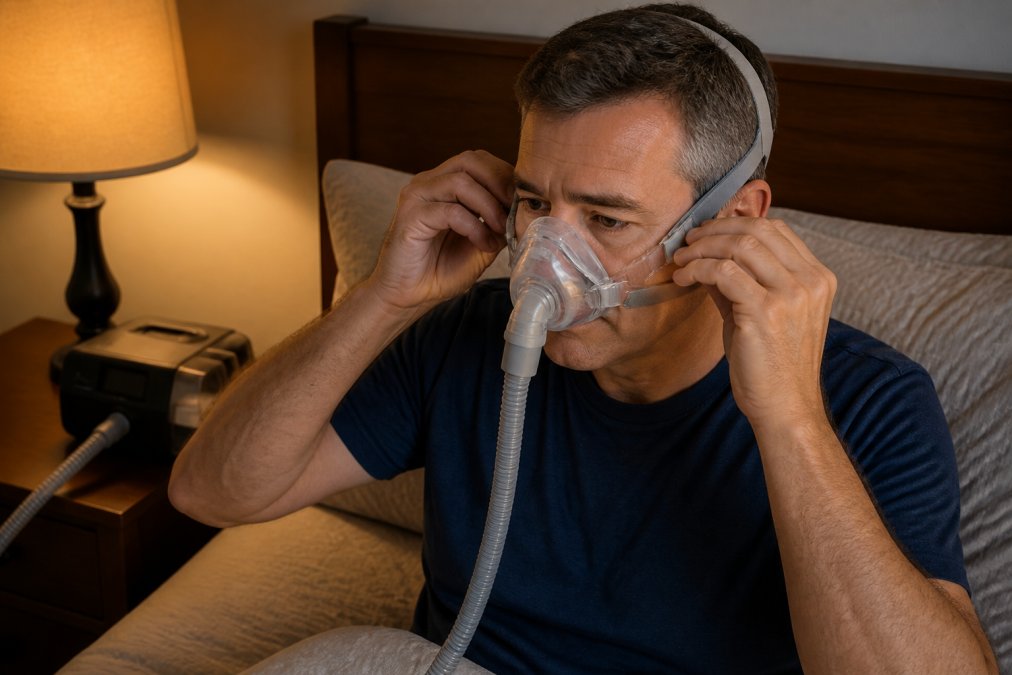
Air leakage is the quiet culprit behind a lot of dry nose complaints. When your mask leaks, the machine pushes more air to compensate, and more air means more drying.
A leak near the eyes or cheeks also blows air across your face all night, which dries the skin and the nostrils from the outside. You can have perfect humidification and still wake up parched if your seal is poor.
Quick fit check:
- Tighten only until the cushion seals, never until it hurts
- Wash your face before bed to remove oils
- Replace cushions on schedule, typically every one to three months
- Run a mask fit test on your machine before lying down
- Check for red marks in the morning, a sign of overtightening
Choosing the Right Mask Type
Mask style changes how much air hits your nasal passages directly. Nasal pillows deliver concentrated airflow right at the nostril opening, which some users find drying. A full-face mask covers the mouth and nose, so if you breathe through your mouth at night, you stop losing moisture that way. Nasal masks sit in the middle.
If you're a mouth breather, a full-face mask often solves dry mouth and dry nose at the same time. If you sleep on your side and hate bulk, nasal pillows with a well-tuned humidifier can work fine.
Rhinase Allergy Relief Lubricating →
3. Use Saline Sprays and Rinses
Saline is the workhorse of nasal care, and it's the step most CPAP users skip. A saline spray or rinse before bed clears crusts and adds a layer of moisture to the nasal mucosa.
Use it about 15 minutes before masking up. That gives the saline time to loosen dried mucus so you can blow your nose before the mask goes on. A rinse bottle does a deeper job than a spray and works well for people with heavy crusting or a history of sinus issues.
A few practical notes:
- Use distilled, sterile, or previously boiled water for rinses
- Never use tap water in a rinse bottle
- Saline is drug-free and safe for nightly use
- A spray is enough for mild dryness; a rinse suits heavy congestion
One warning worth taking seriously: if you use a squeeze-bottle rinse, clean it after every use and replace it on the schedule the manufacturer gives. Rinsing devices that aren't cleaned properly can introduce organisms into the nasal passages, and the CDC has documented serious infections linked to improper rinse water and hygiene.
CDC guidance on safe nasal rinsing practices
4. Apply a Water-Soluble Nasal Lubricant Before Bed
A water-soluble nasal lubricant is the single most underused tool for CPAP dryness. A thin layer inside each nostril before bed keeps the mucosa coated through the night.

5. Is a CPAP Nasal Care Routine Necessary Every Night?
Yes, a nightly CPAP nasal care routine is necessary for most users, and consistency matters more than intensity. Skipping a night or two undoes the moisture balance you built.
6. What Is the Best Nasal Moisturizer for CPAP Users?
The best nasal moisturizer for CPAP is one that's water-soluble, free of aloe, dyes, and fragrances, and formulated to hold moisture rather than just coat the surface. Ingredient list beats brand name every time.
Here's what to look for, and what to avoid:
| Feature | Why It Matters | What to Avoid |
|---|---|---|
| Water-soluble base | Safe for mask cushions and tubing | Petroleum-based ointments |
| No aloe or fragrance | Lower risk of irritation | Added dyes and perfumes |
| Dual salts (sodium + potassium) | Supports natural moisture balance | Harsh hypertonic-only formulas |
| pH balanced near 6.2 | Prevents stinging and bleeding | Unknown or extreme pH |
| Steroid-free | Safe for nightly, long-term use | Daily steroid dependence |
7. Stay Hydrated and Add a Chin Strap
Hydration and a chin strap close the loop on nighttime moisture loss. One works from the inside, the other stops moisture from escaping through your mouth.
A few more habits that help:
- Rinse your nasal passages in the morning, not just at night
- Keep the bedroom cool but not cold, since cold air holds less moisture
- Run a room humidifier on low through the winter
- Replace your humidifier chamber if it develops mineral buildup
- Check your filter monthly, since a clogged filter strains airflow
When to See a Doctor
Dry nose from CPAP usually responds to the steps above within a week or two. See a doctor if you notice persistent nosebleeds that won't stop, facial pain or pressure, a fever alongside nasal symptoms, or irritation that worsens despite good humidification and mask fit. Those signs point to something beyond simple dryness, and a clinician should take a look.
Cleaning and Maintenance
Cushions, chambers, and tubing all collect residue, and residue reduces how well your humidifier performs. Wash the cushion daily with mild soap and warm water. Empty and rinse the humidifier chamber every morning, and let it air dry away from direct sun. Replace filters and cushions on the manufacturer's schedule. A clean system humidifies better and irritates less.
Frequently Asked Questions
What is the best nasal moisturizer for CPAP users?
The best nasal moisturizer for CPAP is one that is water-soluble, steroid-free, and pH balanced so it won't interfere with your mask seal or sting already-irritated tissue. Look for formulas with dual salts like sodium and potassium, plus wetting agents that hold moisture in the nasal passages. Rhinase Nasal Gel fits this profile: it's doctor recommended, free of aloe, dyes, and fragrances, and safe for everyday use alongside CPAP or oxygen therapy.
Does a heated humidifier help with CPAP nasal dryness?
Yes. A heated humidifier adds moisture to the air your CPAP pushes through your nose, which directly counteracts the dryness that causes nasal irritation, congestion, and nosebleeds. If you wake up with a dry mouth or a raw, crusty nose, raise the humidity setting one level at a time until symptoms ease. If condensation builds up in the tube, lower the setting slightly or add a tube cover.
Can nasal sprays help with CPAP-related dryness?
Saline sprays and drug-free moisturizing mists can help, especially when used before bed and again in the morning. Avoid petroleum-based ointments like Vaseline inside the nostrils, since they can degrade silicone mask cushions and pose a safety concern with oxygen. A water-soluble gel or mist, such as Rhinase X Natural Nasal Mist Spray with Xylitol, adds moisture without damaging your equipment or causing rebound congestion.
When should I see a doctor about CPAP nasal irritation?
See a doctor if dryness persists after two to three weeks of consistent humidifier and moisturizer use, if you get frequent nosebleeds that won't stop, or if you notice sores, swelling, or a persistent loss of smell. Ongoing nasal dryness can lower therapy compliance, and your doctor can check for structural issues, adjust your pressure settings, or rule out other causes of chronic congestion.