
Review of Top Nasal Care Products for CPAP Users
Table of Contents
- Why CPAP Therapy Causes Nasal Dryness and Irritation
- Is a CPAP Nasal Care Routine Necessary?
- Quick Comparison: Top Nasal Care Products for CPAP
- 1. Rhinase Allergy Relief Lubricating Nasal Gel (60 g)
- 2. Rhinase X Soothing Nasal Gel with Xylitol (1 oz)
- 3. Rhinase X Natural Nasal Mist Spray (30 ml)
- 4. NaturePro Sesame Oil Nasal Spray (0.75 fl oz)
- 5. Rhinase Nasal Care Combo Pack (Gel + Spray)
- Frequently Asked Questions
Last Updated: September 15, 2026
Why CPAP Therapy Causes Nasal Dryness and Irritation
CPAP air is pressurized, filtered, and often drier than room air, and it hits your nasal passages at a constant rate for seven or eight hours straight. That strips moisture from the nasal lining, leaving a dry, crusty, sometimes stinging nose by morning.
Nasal dryness is one of the most common reasons people abandon CPAP therapy, and it is entirely treatable. This review covers the nasal care products that help CPAP users.
Three things drive CPAP-related nasal irritation:
- Unheated or under-humidified airflow dries the nasal mucosa overnight
- Continuous positive pressure pushes air against tissue that was never meant to handle constant flow
- Mask leakage across the nasal bridge worsens both dryness and skin irritation
The fix is simple: a consistent nasal care routine with the right product restores moisture and keeps therapy tolerable. Below are five options and which CPAP problem each fits.
Is a CPAP Nasal Care Routine Necessary?
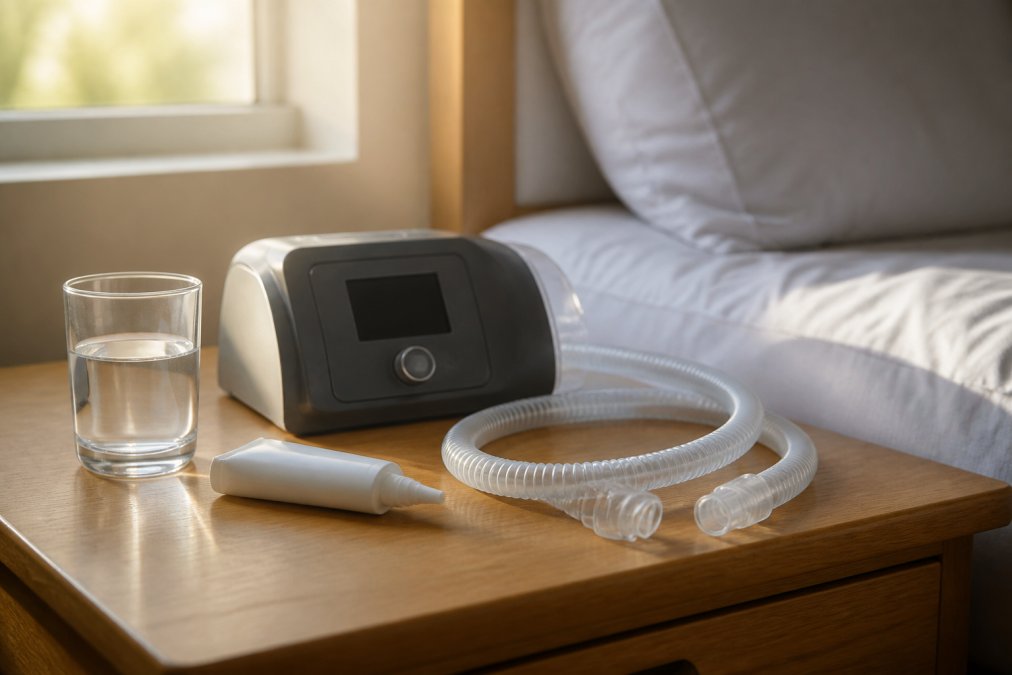
Yes, for most CPAP users a nasal care routine is necessary, because the machine's airflow creates dryness the nose cannot correct overnight. Skipping it often leads to congestion, nosebleeds, and eventually giving up on therapy. Here is what the routine actually has to accomplish.
The clinical goal is straightforward: keep the nasal lining moist so it can do its job. When the mucosa dries out, it cracks, crusts, and becomes more vulnerable to irritation and infection. For anyone wondering how the nose conditions inhaled air, the nasal lining depends on a thin layer of moisture to filter and humidify what you breathe. CPAP airflow overwhelms that layer, and the pressure itself adds a second problem: continuous positive airway pressure pushes air against tissue that was never designed to handle constant flow, so the drying effect compounds hour after hour.
A complete routine has three jobs, and most people only do the first one:
- Moisturize the nasal lining, a saline, xylitol, or oil-based product applied before bed
- Protect the skin, barrier cream or padding where the mask contacts the nose
- Control the air itself, humidifier chamber filled and set to match the room
The part competitors skip: skin and pressure-sore prevention
Nasal dryness gets the attention, but skin breakdown around the nostrils and nasal bridge is what actually forces people to stop therapy. The mask cushion presses against the same few square centimeters of skin for seven or eight hours every night; add dried, cracked mucosa and a little leakage, and redness turns into tenderness and then an open sore.
A few practical habits prevent most of it:
- Apply a thin barrier layer to the nasal bridge and the rim of the nostrils before masking. Look for petrolatum-free, oxygen-safe barrier products, many CPAP manufacturers warn that petroleum-based ointments can degrade silicone cushions and headgear over time, so check your mask's manual before slathering on Vaseline.
- Rotate cushion types if you are prone to sores. A nasal pillow interface contacts the nostril rim; a nasal mask contacts the bridge. Alternating between them shifts the pressure points and gives irritated skin a night to recover.
- Clean the cushion nightly. Oils, moisturizer residue, and skin cells build up on the silicone and reduce the seal, which makes you tighten the straps, which increases pressure on the skin. It is a feedback loop, and nightly cleaning breaks it.
- Loosen before you tighten. A common pattern is to overtighten straps chasing a leak that is actually caused by a dirty or worn cushion. Try a fresh cushion before you crank the headgear down.
The other part competitors skip: matching humidity to the room
Humidification is the single biggest lever on nasal comfort, yet it is almost never discussed alongside nasal care products. The drier your bedroom air, the more moisture your humidifier must add. In winter, indoor humidity can drop well below the 30-50% range most sleep clinicians consider comfortable, so the setting that worked in summer may not be enough in January.
A few things to know:
- Heated tubing matters more than most people realize. Without it, warm humidified air cools as it travels down the tube and drops its moisture as "rainout", condensation that pools in the tube and never reaches your nose. If you wake up dry despite a full chamber, rainout is a likely culprit.
- Higher humidity is not always better. Too much moisture can cause congestion and a runny nose in some users, which is its own reason people quit. Adjust in small steps and give each setting a few nights.
- Your nasal care product and your humidity setting interact. A heavy oil-based product plus high humidity can feel suffocating; a light mist plus low humidity may not be enough. If you change one, watch how the other feels for a few nights before changing anything else.
A practical routine:
- Use a saline or moisturizing product before bed
- Apply a barrier product to the nasal bridge if prone to redness
- Keep your humidifier chamber filled and set for the season
- Clean your mask cushion nightly
- Track symptoms for two weeks, adjusting one variable at a time
Quick Comparison: Top Nasal Care Products for CPAP
Here is the short version for readers who want the answer first. All five products below are drug-free, steroid-free, and designed for daily use.
| Product | Format | Size | Price | Best For |
|---|---|---|---|---|
| Rhinase Allergy Relief Lubricating Nasal Gel | Gel | 60 g | $23.85 | Severe overnight dryness |
| Rhinase X Soothing Nasal Gel with Xylitol | Gel | 1 oz | $18.12 | Congestion plus dryness |
| Rhinase X Natural Nasal Mist Spray | Spray | 30 ml | $17.00 | On-the-go daytime relief |
| NaturePro Sesame Oil Nasal Spray | Oil spray | 0.75 fl oz | $15.00 | Crusty buildup and tenderness |
| Rhinase Nasal Care Combo Pack | Gel + spray | 1 oz each | $26.95 | Complete routine in one box |
How We Evaluated These Products
We judged each product on five criteria: moisture retention through a full night of CPAP airflow, avoidance of irritants like aloe, dyes, and fragrances, pH balance for sensitive tissue, ease of application with a mask on, and cost per use.
1. Rhinase Allergy Relief Lubricating Nasal Gel (60 g)
The 60 g tube is the workhorse of this list. Its dual-salt formulation (sodium and potassium) plus two wetting agents holds moisture in the nasal cavity rather than just coating it, and at pH 6.2 it is designed to avoid stinging.
For CPAP users, the size is the point: a 60 g tube lasts months of nightly use, bringing cost per application well below the smaller formats. It is free of aloe, dyes, and fragrances, so it will not trigger reactions in sensitive noses.
The one drawback: it is a gel, so it takes a few seconds to warm and spread.
2. Rhinase X Soothing Nasal Gel with Xylitol (1 oz)
3. Rhinase X Natural Nasal Mist Spray (30 ml)
4. NaturePro Sesame Oil Nasal Spray (0.75 fl oz)
5. Rhinase Nasal Care Combo Pack (Gel + Spray)
Frequently Asked Questions
Why does my nose get dry while using a CPAP machine?
CPAP pushes a steady stream of air through your nasal passages all night. That airflow strips the natural moisture from your nasal lining, especially if your humidifier is set too low or your mask leaks. Dry nares, congestion, and even nosebleeds are common results. A nasal care product for CPAP adds moisture back and creates a protective barrier so the air does less damage.
Are saline sprays safe for daily use with CPAP therapy?
Yes. Saline sprays are drug-free and non-habit-forming, so you can use them as often as needed. They add moisture and help clear crusty buildup before you put on your mask. For best results, use a saline spray first, then follow with a nasal gel to lock in moisture through the night. Rhinase products are pH balanced at 6.2, which avoids stinging and is safe alongside any steroid medications you may use.
What are the benefits of using xylitol-based nasal gels?
Xylitol is a natural humectant, meaning it pulls moisture into the nasal tissue instead of just coating it. Combined with dual salts (sodium and potassium) and dual wetting agents, xylitol-based gels like Rhinase X provide longer-lasting hydration than plain saline. They also help reduce sneezing, itchiness, and post-nasal drip caused by dryness. The formula is steroid-free and drug-free, so there is no risk of rebound congestion.
How can I prevent nosebleeds caused by CPAP air pressure?
Start by raising your humidifier setting and checking for mask leaks that increase airflow. Before bed, apply a lubricating nasal gel inside each nostril to protect the delicate lining. Rhinase gel is pH balanced at 6.2, which means it will not sting or trigger bleeding the way some saline products can. If nosebleeds continue, talk to your doctor about adjusting your pressure settings.
What ingredients should I avoid in nasal care products for CPAP?
Skip products with aloe, dyes, or fragrances, which can irritate sensitive nasal tissue and cause allergic reactions. Avoid steroid-based sprays unless prescribed, because long-term use can lead to dryness and rebound congestion. Alcohol is another ingredient to watch for because it dries out the nasal lining. Rhinase products are aloe-free, dye-free, fragrance-free, and steroid-free, making them a gentle daily option.