
Affordable Nasal Care for Chronic Dryness: 7 Solutions
Table of Contents
- Quick Comparison: Affordable Nasal Care Solutions
- What Causes Chronic Nasal Dryness and Crusting
- Best Saline Nasal Sprays for Dry Nose
- Natural Remedies for Nasal Crusting
- How to Stop Nosebleeds at Night
- Humidifiers, Hydration, and Steam for Nasal Moisture
- Ingredient Safety: What to Avoid in Nasal Care Products
- Conclusion: Building a Daily Routine for Lasting Relief
- Frequently Asked Questions
Last Updated: September 17, 2026
Quick Comparison: Affordable Nasal Care Solutions
The most effective affordable nasal care solutions for chronic dryness combine three things: moisture that stays put, non-irritating ingredients, and a routine simple enough to repeat daily.

| Solution | Best For | Typical Cost | Key Ingredient |
|---|---|---|---|
| Saline spray | Daily maintenance | Low | Sodium chloride |
| Nasal gel | Overnight dryness | Low to mid | Wetting agents, salts |
| Xylitol spray | Allergy + dryness | Mid | Xylitol |
| Sesame oil spray | Severe crusting | Low | Pharmaceutical sesame oil |
| Humidifier | Environmental dryness | One-time | Water vapor |
| Steam inhalation | Quick relief | Free | Warm moisture |
| Petroleum jelly | Cracked nostrils | Very low | Petrolatum |
What Causes Chronic Nasal Dryness and Crusting
Chronic nasal dryness happens when the mucous membranes inside your nasal passages lose moisture faster than your body replaces it, causing crusting, irritation, and small bleeds.
Common triggers include:
- Low indoor humidity, especially in heated homes
- CPAP and oxygen therapy, which push dry air directly into the nasal passages
- Air travel and air-conditioned offices
- Certain medications, including some over-the-counter decongestants
- Environmental irritants like dust, smoke, and strong fragrances
Best Saline Nasal Sprays for Dry Nose
The best saline nasal sprays for dry nose combine moisture with gentle, non-habit-forming ingredients rather than medicated decongestants. Isotonic saline matches your body's natural salt balance; hypertonic solutions carry more salt and can help with congestion.
Here's what to check on the label:
- Wetting agents alongside the saline base
- Dual salt composition (sodium and potassium) for cellular hydration
- No alcohol, no fragrance, no dyes
- pH balanced near 6.2 to avoid stinging
Natural Remedies for Nasal Crusting
Try this sequence:
- Apply a small amount of nasal gel to the nostril opening
- Wait two to three minutes for the crust to soften
- Use a saline rinse or gentle mist to flush loosened debris
- Blot, don't blow hard
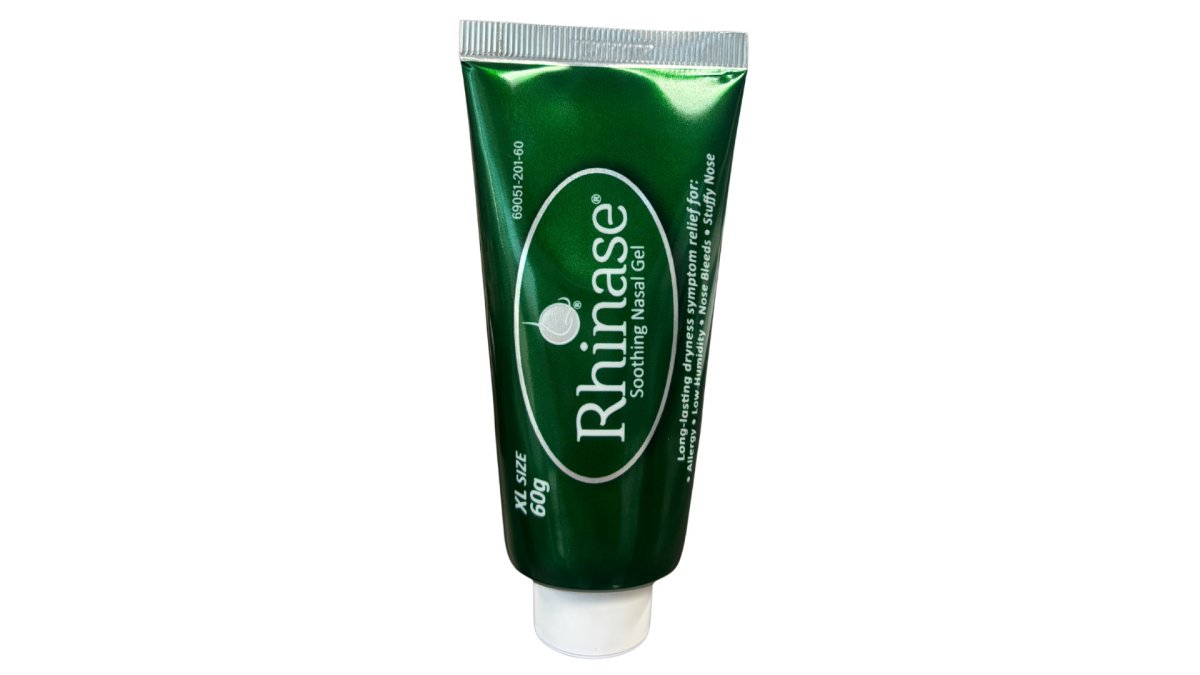
For the crusting stage, a lubricating nasal gel does more than a spray. The Rhinase Allergy Relief Lubricating Nasal Gel uses a dual salt formula with sodium and potassium, and it's free from aloe, dyes, and fragrances. It's also safe for children and for CPAP or oxygen therapy users.

How to Stop Nosebleeds at Night
To stop nosebleeds at night, prevent them before bed rather than treating them at 2 a.m. Nighttime nosebleeds usually trace back to dry air plus unconscious rubbing or mouth breathing.
A practical evening routine:
- Run a cool-mist humidifier in the bedroom
- Apply a thin layer of nasal gel inside each nostril before sleep
- Keep the head of the bed slightly elevated
- Avoid turning the heat up overnight
Humidifiers, Hydration, and Steam for Nasal Moisture
Environmental humidity is the variable most people ignore, and often the one doing the most damage. But "buy a humidifier and drink water" leaves two questions unanswered: how much does each option cost over time, and what do you do when the dry air isn't coming from winter at all?
The Cost Reality of DIY vs. Commercial Moisture
Every moisture option here falls into one of two buckets: things you buy once and maintain, and things you buy repeatedly. The long-term math looks very different from the sticker price.
Beyond Winter: The Dry Environments Nobody Warns You About
Winter gets all the attention, but chronic dryness has three other common drivers most guides skip.
Getting the Bedroom Right
A cool-mist humidifier in the bedroom addresses the root cause rather than the symptom, and it's the highest-leverage environmental change for nighttime dryness. Two maintenance points matter more than the model:
- Clean the tank regularly. A dirty humidifier tank can aerosolize mold and bacteria into the air you breathe all night, which is worse than dry air. Follow the manufacturer's cleaning interval, and don't let water sit in the tank between uses.
- Target the right humidity. Most guidance points to keeping indoor relative humidity in the 30-50% range. Below that, dryness persists; above it, you invite dust mites and mold. A cheap hygrometer takes the guesswork out.
Steam, Done Right
Steam inhalation is the free option and the fastest reset for built-up crusting. Ten minutes over a bowl of hot water with a towel over your head, or a hot shower, loosens crusting and rehydrates the nasal cavity quickly. It won't last all day, but it's a solid reset before bed or after a flight.
Hydration: The Free Layer
Drinking water throughout the day supports mucous membrane function from the inside and costs nothing. The mistake is treating it as a substitute for topical moisture: hydration supports the system but doesn't replace a gel or mist when the air around you is dry.
Ingredient Safety: What to Avoid in Nasal Care Products
Ingredient safety matters more in nasal care than in almost any other drugstore category, because the tissue you're treating is already compromised. When the mucosa is chronically dry, its barrier is thinner, its cilia are sluggish, and its tolerance for anything harsh drops sharply, a product that feels fine on healthy tissue can sting or trigger rebound dryness on raw tissue.
Preservatives: The Hidden Driver of Rebound Dryness
Multi-use nasal sprays need preservatives to stay safe after opening. The most common is benzalkonium chloride (BAC), a quaternary ammonium compound used in many drugstore saline and medicated sprays. BAC kills microbes but is also a known mucosal irritant, long associated with ciliotoxicity, it can slow or damage the cilia that sweep mucus and debris out of the nasal cavity.
- Dryness starts, so they buy a preserved saline spray.
- The spray helps for a week, then seems to stop working.
- They use it more often, which increases BAC exposure.
- Cilia function drops, mucus clearance worsens, and crusting returns.
- They conclude the spray "doesn't work" and buy a different preserved spray.
pH: Why Stinging Is a Formulation Problem, Not a You Problem
The nasal mucosa maintains a slightly acidic environment, and most people tolerate products in the pH 5.5 to 7.0 range without discomfort. Formulas outside that window, particularly alkaline ones, tend to sting on contact, a signal the product is irritating tissue rather than soothing it.
Osmolarity: The Overlooked Third Variable
Beyond preservatives and pH, a spray's salt concentration, its osmolarity, affects how it feels and how long it helps.
- Isotonic sprays match the body's natural salt balance (roughly 0.9% sodium chloride) and are the gentlest option for daily maintenance.
- Hypertonic sprays carry a higher salt concentration and can pull fluid out of swollen tissue, which helps with congestion but can sting and dry out already-dry passages with repeated use.
- Hypotonic sprays carry a lower concentration and are often paired with wetting agents to hydrate without the osmotic pull.
The Short List to Screen For
When you're standing in the aisle, these are the markers worth checking, in order:
- Preservative-free or a non-BAC preservative system
- pH balanced, ideally in the 5.5-7.0 range
- Fragrance-free, fragrance serves no therapeutic purpose and is a common sensitizer
- Dye-free, dyes add nothing and can irritate compromised tissue
- Alcohol-free, alcohol dries on contact, the opposite of what you want
- Aloe-free if you've reacted to it before; aloe is a frequent allergen in nasal products
Why This Connects to Cost
Ingredient sensitivity and affordability aren't separate issues. A preserved spray that irritates your nose can lead to further spending on other solutions. The cheapest bottle is only cheapest if it doesn't trigger the irritation cycle that keeps you buying more; buying the right formula once may offer a lower total cost, even at a higher sticker price.
FDA guidance on nasal spray labeling and inactive ingredients
Conclusion: Building a Daily Routine for Lasting Relief
Chronic dryness relief fades the moment you stop maintaining it: a single spray helps for an hour, a routine helps for a season.
Frequently Asked Questions
How to fix a chronically dry nose?
Addressing chronic nasal dryness starts with a consistent routine. Use a saline nasal spray or moisturizing gel several times a day to hydrate mucous membranes. Run a humidifier in your bedroom, and stay hydrated by drinking plenty of water. Avoid overusing decongestant sprays, which can cause rebound dryness. Products containing xylitol, like those from Rhinase, help attract and retain moisture. If dryness persists despite these steps, see a doctor to rule out underlying conditions.
What to put inside a dry, crusty nose?
For a dry, crusty nose, apply a water-based lubricating gel or saline mist. Avoid petroleum jelly due to inhalation risks. A nasal gel with dual salts and xylitol, such as Rhinase X Soothing Nasal Gel, can soften crusts and protect nasal passages. You can also try a sesame oil spray, which lubricates and helps reduce crusty buildup. Apply gently with a clean finger or swab, and repeat as needed for comfort.
What is the best nasal spray for dryness?
The best nasal spray for dryness is one that moisturizes without steroids or decongestants. Look for isotonic or hypotonic saline sprays, especially those with added xylitol. Rhinase X Natural Nasal Mist combines xylitol with dual wetting agents and dual salts to hydrate and soothe. It is drug-free, non-habit-forming, and safe for daily use.
Are there drug-free alternatives for nasal hydration?
Yes, many drug-free alternatives exist. Saline sprays and gels, xylitol-based mists, and sesame oil nasal sprays are all non-medicated options. These products moisturize nasal passages without steroids or decongestants, so they do not cause rebound congestion. Brands like Rhinase offer steroid-free, drug-free gels and sprays that are doctor-recommended and safe for children and adults.
How does xylitol help with nasal dryness?
Xylitol is a sugar alcohol that attracts and holds moisture, helping to hydrate nasal passages for longer. It also may help prevent bacteria from sticking to nasal walls. In nasal sprays and gels, xylitol supplements the moisturizing effects of saline, providing extended relief from dryness and irritation. Products like Rhinase X and Xynase use xylitol as a key ingredient for natural, drug-free hydration.
This article is for general information and is not a substitute for professional medical advice. If dryness, crusting, or nosebleeds persist, or if you use CPAP or oxygen therapy, talk with your doctor or an ENT specialist about what's right for you.