
Best Drug-Free Nasal Spray for Allergies: 2026 Guide
Table of Contents
- Types of Drug-Free Nasal Spray for Allergies
- Best Nasal Irrigation for Allergies: Top Options Compared
- How to Use Saline Nasal Spray Correctly
- Is Saline Spray Safe for Daily Use?
- Post-Nasal Drip vs. Nasal Congestion: Choosing the Right Drug-Free Nasal Spray
- What to Look for in a Drug-Free Nasal Spray
- Conclusion
Last Updated: August 9, 2026
Allergy sufferers face a crowded shelf of nasal sprays, and the divide between drug-free and medicated options has never been more confusing. At Profounda Health & Beauty, the most common mistake seen is people defaulting to steroid or decongestant sprays when a well-formulated drug-free nasal spray would handle their symptoms without the rebound congestion risk. This guide cuts through the noise, comparing real options, explaining the science behind saline and xylitol formulations, and giving you a clear framework for choosing the right product for your specific situation.
Quick Picks:
- Best Overall: Profounda Health & Beauty xylitol-enhanced mist and gel system, doctor-recommended, steroid-free, dual-action
- Best Nasal Wash System: Nasopure Nasal Wash System, ergonomic design, pH-balanced, preservative-free salt mix
- Best Budget Saline Wash: SinuCleanse Saline Nasal Wash System, straightforward, drug-free, multiple delivery formats
Types of Drug-Free Nasal Spray for Allergies
Drug-free nasal spray for allergies falls into several distinct categories, and the category you choose matters as much as the brand. The core mechanism differs significantly between options, which means a product that works well for seasonal allergies and pollen may do very little for chronic nasal dryness or post-nasal drip.
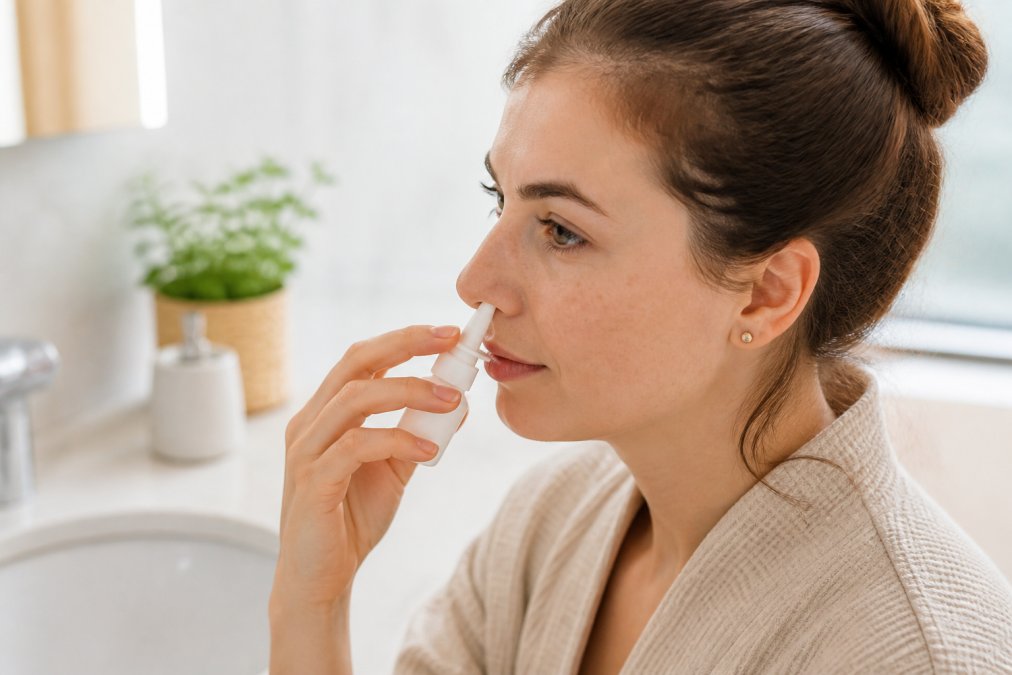
The main categories are:
- Isotonic saline sprays, salt concentration matches the body's natural fluids; gentle, suitable for daily use and sensitive mucus membranes
- Hypertonic saline sprays, higher salt concentration than body fluids; draws excess moisture out of swollen nasal passages
- Xylitol-enhanced formulas, saline base with added xylitol to support the nasal passages' natural defense mechanisms
- Moisturizing mists and gels, thicker formulations designed to coat and protect dry nasal passages for longer periods
- Nasal wash systems, larger-volume irrigation using squeeze bottles or neti pots for thorough allergen removal
Understanding which category fits your symptoms is the starting point for every good decision in this space.
Isotonic vs. Hypertonic Saline Sprays
Isotonic saline is a sterile solution with a salt concentration of roughly 0.9%, which mirrors the body's own fluid balance. Because the concentration matches your nasal tissue, it rinses without drawing moisture out of the mucus membrane. This makes isotonic solutions ideal for daily use, for children, and for anyone with already-dry or irritated nasal passages.
Hypertonic saline contains a higher salt concentration, typically between 1.5% and 3%. The osmotic difference draws fluid out of swollen nasal tissue, reducing nasal congestion more aggressively than an isotonic rinse. According to guidance on nasal irrigation, saline nasal irrigation is considered a first-line treatment for allergic rhinitis and chronic sinusitis, with hypertonic solutions showing particular benefit for congestion reduction.
If your main complaint is congestion and sinus pressure, hypertonic may give faster relief. If you're managing dryness, irritants, or using a spray preventatively, isotonic is the better daily choice.
Xylitol-Enhanced Formulas
Xylitol is a naturally occurring sugar alcohol found in many fruits and vegetables. In nasal sprays, it helps maintain the nasal passages' natural surface tension, which may support the removal of bacteria and irritants that adhere to the nasal lining.
Profounda Health & Beauty's formulations combine natural xylitol with advanced saline to deliver both hydration and support for the nasal passages' own defense mechanisms. This dual action makes xylitol-enhanced sprays particularly useful for allergy sufferers who experience both dryness and recurring irritation from environmental triggers. The formula is steroid-free and drug-free, appropriate for long-term daily use without the dependency concerns associated with medicated decongestants.
Best Nasal Irrigation for Allergies: Top Options Compared
The best nasal irrigation for allergies depends on how thoroughly you need to clear your nasal passages and how much time you're willing to invest. A quick mist spray takes seconds; a full nasal wash system takes a few minutes but delivers a more complete rinse of allergens, mucus, and debris.
| Product | Type | Key Feature | Best For |
|---|---|---|---|
| Profounda Health & Beauty | Mist + Gel system | Xylitol + saline, dual-action, doctor-recommended | Daily allergy relief, dryness, nosebleed prevention, CPAP users |
| Nasopure Nasal Wash System | Squeeze bottle wash | pH-balanced, ergonomic, no backflow | Thorough allergen clearance, adults and children |
| SinuCleanse Saline Nasal Wash System | Squeeze bottle / neti pot | Preservative-free, multiple delivery formats | Daily sinus health, budget-conscious users |
| Breathe Right Nasal Strips | External adhesive strip | Opens nasal passages physically | Nighttime congestion, non-spray preference |
Saline Nasal Wash Systems
Nasal wash systems deliver a larger volume of saline solution than a spray bottle, making them more effective at physically removing accumulated pollen, dander, mucus, and other irritants. For moderate to severe seasonal allergies, a daily nasal rinse can meaningfully reduce symptom burden by reducing the allergen load before it triggers a full inflammatory response.
Nasopure Nasal Wash System uses a patented ergonomic bottle with one-way valves that prevent backflow contamination. Its pH-balanced, buffered salt mix reduces the burning sensation that some users experience with plain saline. Available in adult and pediatric kits with no additives, preservatives, or fragrances. The Nasopure Nasal Wash Natural System by Dr. Hana has an MSRP of $8.99-$16.99. The Nasopure Nasal Wash System Kit is available for $20.00, and refill packets are available for $10.00 (20-count) or $19.00 (40-count).
SinuCleanse Saline Nasal Wash System offers a preservative-free, drug-free saline solution in both squeeze bottle and neti pot formats, giving users flexibility in delivery method. The SinuCleanse Neti Pot Saline Nasal Rinse Kit is available for $10.16. The SinuCleanse Microfilter Nasal Wash System with Nasal Bottle and Saline Packets is available for $11.43. The SinuCleanse Soft Tip Squeeze Bottle Nasal Wash System is available for $10.99. The SinuCleanse Squeeze Nasal Bottle Wash is available for $13.99. SinuCleanse saline refill packets are available in various counts, with 60-count packets priced around $13.54 to $25.44.
Moisturizing Mists and Gels
Moisturizing mists and gels coat and protect the nasal lining, providing sustained relief from dryness and irritation. Profounda Health & Beauty's dual-action approach offers both a spray mist and a gel formulation. The mist delivers quick, even coverage, while the gel provides longer-lasting contact for persistent dryness. This is particularly relevant for CPAP users, who experience forced airflow through the nasal passages for hours each night, and for anyone in low-humidity environments.
How to Use Saline Nasal Spray Correctly
Knowing how to use saline nasal spray correctly is the difference between real symptom relief and wasted product. Most people apply nasal spray incorrectly, reducing its effectiveness and causing irritation.
Follow these steps for correct application:
- Blow your nose gently before applying the spray to clear excess mucus
- Hold the bottle upright and shake it if the instructions recommend it
- Tilt your head slightly forward, not backward, to prevent the solution from draining straight to the throat
- Insert the nozzle gently into one nostril, angling it slightly toward the outer wall of the nose, away from the septum
- Breathe in slowly through your nose as you press the pump
- Breathe out through your mouth
- Repeat in the other nostril
- Avoid blowing your nose for several minutes after application to allow the solution to work

For nasal wash systems, lean over a sink, tilt your head to one side, and allow the solution to flow in through the upper nostril and out through the lower nostril while breathing through your mouth.
Is Saline Spray Safe for Daily Use?
Saline nasal spray is safe for daily use for most people. Unlike medicated decongestant sprays, which carry a risk of rebound congestion when used for more than three consecutive days, preservative-free saline and xylitol-enhanced sprays do not create dependency. They work by physically moisturizing and rinsing the nasal passages rather than by altering vascular or immune responses.
According to guidance from the American College of Allergy, Asthma, and Immunology, saline nasal irrigation is appropriate for long-term daily use and is frequently recommended as an adjunct therapy alongside other allergy treatments. If your saline spray contains preservatives such as benzalkonium chloride, daily use over extended periods may cause irritation in some users. Preservative-free formulations are the better choice for anyone using a nasal spray daily.
Safety for Children and Sensitive Users
Drug-free nasal sprays are among the safest nasal care options for children. Isotonic saline is the standard recommendation for pediatric use because its salt concentration matches children's nasal tissue without causing the stinging or discomfort that hypertonic solutions can produce. Xylitol is generally recognized as safe for children and is widely used in pediatric dental products. Parents should look for preservative-free formulations without added fragrances or dyes.
For infants under two years old, always consult a pediatrician before using any nasal spray, including saline.
CPAP Users and Medical Equipment-Related Irritation
CPAP users represent one of the most underserved groups in nasal care. Continuous positive airway pressure therapy delivers a steady stream of air through the nasal passages for hours each night, drying out the nasal lining and causing significant irritation, congestion, and nosebleeds over time.
Standard saline sprays provide temporary relief, but the forced airflow means moisture evaporates quickly. A gel formulation addresses this more effectively because the thicker consistency stays in contact with the nasal lining longer, providing sustained moisturizing through the night. Profounda Health & Beauty's dual-action spray and gel system is specifically suited to this use case.
Post-Nasal Drip vs. Nasal Congestion: Choosing the Right Drug-Free Nasal Spray
Post-nasal drip and nasal congestion are often confused, but they require different approaches. Choosing the wrong product for your primary symptom is one of the most common reasons people feel their nasal spray "isn't working."
Nasal congestion is caused by inflammation and swelling of the nasal passages, which physically blocks airflow. Hypertonic saline is most effective here because the higher salt concentration draws fluid out of swollen tissue, reducing the blockage.
Post-nasal drip is excess mucus draining from the nasal passages down the back of the throat, causing throat irritation, coughing, and a persistent feeling of mucus. For post-nasal drip, the goal is to thin and clear the excess mucus rather than to reduce swelling. Isotonic saline and nasal wash systems are more appropriate because they flush the mucus away.
Xylitol-enhanced sprays address both scenarios by supporting the nasal passages' natural mucus management, making them a versatile choice for allergy sufferers who experience both symptoms at different times.
| Symptom | Primary Cause | Best Drug-Free Approach |
|---|---|---|
| Nasal congestion | Inflamed, swollen nasal tissue | Hypertonic saline spray |
| Post-nasal drip | Excess mucus drainage | Isotonic saline wash or mist |
| Nasal dryness | Low humidity, environmental irritants | Moisturizing mist or gel |
| Mixed symptoms | Allergic rhinitis with multiple triggers | Xylitol-enhanced dual-action formula |
What to Look for in a Drug-Free Nasal Spray
Not all drug-free nasal sprays are equal. Here's what to evaluate before buying:
Preservative-free formulation. Benzalkonium chloride, a common preservative in nasal sprays, can cause nasal irritation with extended daily use. For anyone using a spray regularly, preservative-free is the better choice.
Salt concentration. Isotonic for daily maintenance and sensitive users; hypertonic for active congestion relief.
Active functional ingredients. Xylitol adds a layer of benefit that plain saline cannot provide. For recurring allergy symptoms, a xylitol-enhanced formula is worth the step up.
Delivery mechanism. A fine mist spray provides quick, even coverage. A gel provides longer contact time. A nasal wash system delivers the most thorough allergen removal. Match the mechanism to your primary need.
Doctor recommendation. For anyone managing chronic allergic rhinitis, a product that is doctor-recommended provides additional confidence in the formulation's safety and efficacy profile.
Suitability for your situation. CPAP users, children, and people prone to nosebleeds each have specific needs that not every product addresses.
For further reading on managing allergic rhinitis without medication, the National Institute of Allergy and Infectious Diseases provides a thorough clinical overview of non-pharmacological approaches.
Managing allergy symptoms without relying on steroids or antihistamines is achievable for most people, but it requires the right formulation for the right situation. Profounda Health & Beauty's doctor-recommended, steroid-free range offers both a spray mist and a gel solution, combining natural xylitol with advanced saline to address dryness, congestion, post-nasal drip, and nosebleed prevention in a single system. Get started with Profounda Health & Beauty and experience the difference that a purpose-built, drug-free nasal care system makes for daily allergy comfort.
Frequently Asked Questions
What is the safest nasal spray for long-term allergy use?
Preservative-free saline and xylitol-based sprays are widely considered the safest options for long-term daily use. Unlike corticosteroid sprays, they carry no risk of systemic absorption or nasal tissue thinning. They work by moisturizing nasal passages, flushing out allergens like pollen and dander, and supporting the mucus membrane's natural defenses. Doctor-recommended formulas that are steroid-free and drug-free are appropriate for ongoing symptom management without the concerns associated with medicated options.
Are saline nasal sprays effective for seasonal allergies?
Yes. Saline nasal sprays serve as a first-line treatment for seasonal allergies by physically rinsing pollen, dander, and other irritants from the nasal passages before they trigger an immune response. While they do not block histamine the way an antihistamine does, regular saline irrigation reduces allergen load, eases nasal congestion, and can decrease reliance on medicated sprays. Using them consistently during high-pollen seasons provides meaningful symptom management for many allergy sufferers.
Can I use saline nasal spray every day?
Drug-free saline and xylitol nasal sprays are designed for daily use. Unlike decongestant sprays, which can cause rebound congestion if used more than three consecutive days, non-habit forming saline sprays are safe to use multiple times daily. Daily nasal wash routines help keep nasal passages clear of irritants, prevent dryness, and reduce post-nasal drip over time. Always follow the product's usage instructions and use sterile or distilled water if mixing your own solution.
Do drug-free nasal sprays help with sinus pressure?
Drug-free nasal sprays can relieve mild sinus pressure caused by congestion and allergen buildup. By thinning and flushing mucus from the nasal passages, saline irrigation reduces blockage that contributes to that heavy, pressured feeling behind the eyes and forehead. Hypertonic saline solutions draw excess fluid from swollen nasal tissue, providing additional relief. For persistent or severe sinus pressure, a healthcare provider should evaluate whether a secondary infection or structural issue is involved.
What ingredients should I look for in a natural nasal spray?
Look for preservative-free, sterile saline as the base. Xylitol is a standout natural ingredient: it reduces the ability of bacteria and allergens to adhere to nasal passages and helps retain moisture. Avoid sprays with benzalkonium chloride, a common preservative linked to mucosal irritation with prolonged use. For sensitive users, including children, isotonic formulas closely match the body's natural salt concentration, minimizing stinging. A short, recognizable ingredient list is a good sign the formula prioritizes safety over fillers.
This article was written using GrandRanker