
Gentle Non-Drowsy Allergy Relief for Kids 2026
Table of Contents
- What to Look for in Non-Drowsy Allergy Relief for Kids
- Top Picks: Gentle Non-Drowsy Allergy Relief for Kids 2026
- How to Soothe Irritated Nasal Passages in Kids
- Dosing Guidelines and Safety Precautions for Kids
- Managing Seasonal vs. Perennial Allergies at School
- Cost-Benefit Analysis: Generic vs. Name Brand Allergy Relief
- When to See a Pediatrician
- Frequently Asked Questions
Last Updated: September 16, 2026
What to Look for in Non-Drowsy Allergy Relief for Kids
Most parents assume "non-drowsy" on a label means their child stays alert and comfortable. It usually means the drug skips the sedating antihistamine class, nothing more. A formula can be non-drowsy and still sting, dry out the nasal lining, or stop working by mid-afternoon. At Profounda Health & Beauty, the products that help most are the ones that treat moisture and irritation, not just histamine.
Here's what actually separates a good pick from a mediocre one.
Active Ingredients That Won't Cause Drowsiness
The second-generation antihistamines are the non-drowsy workhorses: loratadine, cetirizine, fexofenadine, and levocetirizine. They block peripheral histamine receptors rather than crossing into the brain the way diphenhydramine does, which is why the older first-generation drugs cause sedation and the newer ones mostly don't.
That distinction matters for school-age kids. A child who's groggy from diphenhydramine can't focus in class, and the effect lingers well past the morning dose. Pediatricians generally steer families toward loratadine for the youngest patients because it has the longest safety track record in that age group.
The catch is that antihistamines only address one symptom. They don't touch dryness, crusting, or the irritated tissue that makes a runny nose and itchy eyes feel worse. That's where the delivery format matters as much as the active ingredient.
Why Steroid-Free Nasal Care for Kids Matters
Steroid nasal sprays work, but they come with a trade-off parents don't always hear about: long-term use can dry out and irritate the nasal lining. For a child already dealing with allergy symptoms, adding steroid-induced dryness can make the whole picture worse.
Steroid-free nasal care for kids takes a different route. Instead of suppressing the immune response, it hydrates the nasal passages and creates a protective layer that traps moisture in and keeps allergens out. Xylitol, a sugar alcohol the body already produces in small amounts, helps here by making it harder for bacteria to adhere to nasal walls while extending how long the moisture lasts.
Top Picks: Gentle Non-Drowsy Allergy Relief for Kids 2026
Not every child needs the same format. A kid who tolerates a spray fine will do well with a mist; a kid who flinches at anything going up the nose does better with a gel. These three picks cover the range, and all of them are steroid-free and drug-free.
| Product | Format | Price | Best For |
|---|---|---|---|
| Rhinase Allergy Relief Lubricating Nasal Gel | Gel | $18.32 (1 oz) | Kids who dislike sprays; nosebleed-prone noses |
| Xynase Natural Saline Nasal Spray with Xylitol | Spray | $11.79 (0.75 fl oz) | Daily congestion and sinus pressure |
| Rhinase X Combo Pack | Gel + spray | $26.95 | Kids with both upper and lower passage dryness |
Rhinase Allergy Relief Lubricating Nasal Gel
This is the pick I'd hand to a parent whose child fights every spray. The gel format means you apply a small amount with a fingertip or swab rather than shooting liquid up a small nose, which removes the flinch response entirely. It's built on two wetting agents plus two types of salt, sodium and potassium, so it holds moisture in the nasal cavity instead of flashing through it.

The formulation is free of aloe, dyes, and fragrances, which matters more than most parents realize. A sensitive nose reacts to additives, and every unnecessary ingredient is one more thing that could trigger the irritation you're trying to calm. It's balanced at a pH of 6.2, close enough to the nose's natural environment that it doesn't sting on application.
Where it earns its place for allergy season specifically: it's also a strong option for kids prone to nosebleeds, since keeping the lining moist is the single most effective way to prevent them. Doctor recommended and safe for everyday use.
Xynase Natural Saline Nasal Spray with Xylitol
If your child handles sprays without a fuss, this is the most economical daily option on the list at $11.79. It pairs saline with xylitol, and the xylitol is doing real work: it helps stop bacteria from sticking to nasal walls and extends how long the moisture lasts compared to plain saline.
The spray tip is designed to fit small noses, which sounds like a minor detail until you've tried to aim a standard spray tip into a five-year-old's nostril. It's 100% natural, drug-free, non-habit forming, and safe for daily use, so there's no cycling on and off it the way you'd manage a medication.
Rhinase X Combo Pack
Dryness doesn't happen in one place. The upper and lower nasal passages dry out separately, and a single product often reaches only one of them. The Rhinase X Combo Pack provides a gel for the lower passages and a spray for the upper sinuses, both built on dual wetting agents and dual salts.
Rhinase Allergy Relief Lubricating →
How to Soothe Irritated Nasal Passages in Kids
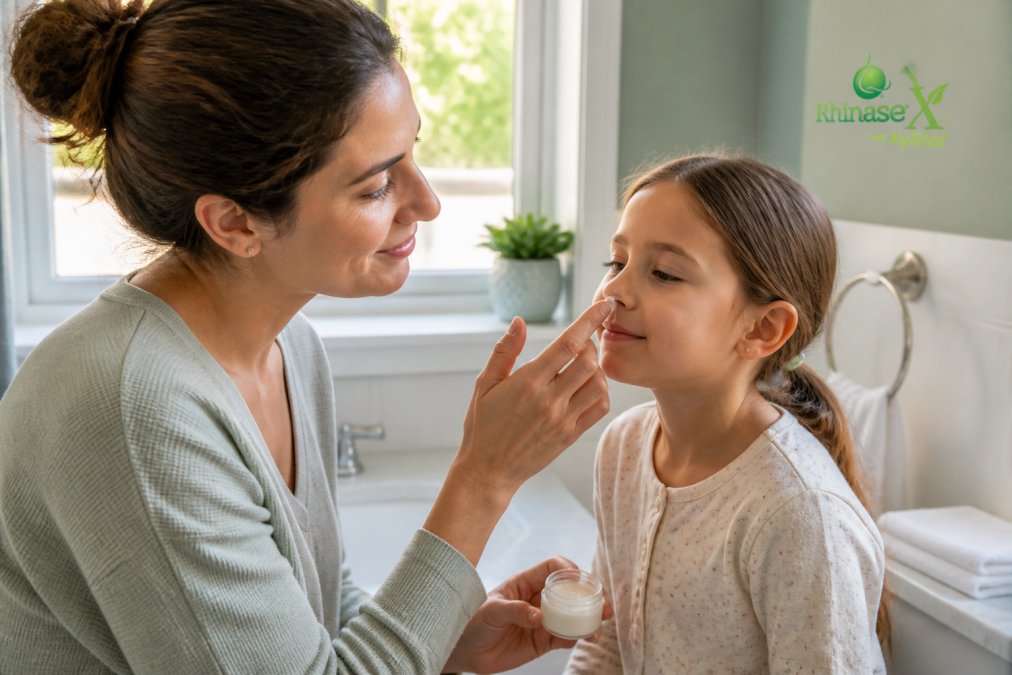
Start with moisture, not medication. An irritated nasal passage is almost always a dry one, and drying it out further with the wrong product makes every other symptom feel worse. The goal is to hydrate the lining and keep it hydrated through the day.
A routine that works for most families:
- Saline mist first. A gentle spray clears crusting and adds the first layer of moisture.
- Follow with a gel. The gel holds that moisture in place instead of letting it evaporate.
- Repeat morning and bedtime. Allergy symptoms build overnight, so the bedtime application does a lot of the work.
- Keep the bedroom humid. Low humidity undoes everything the products are doing.
- Skip anything with fragrance or dyes. Additives are a common trigger for sensitive noses.
Dosing Guidelines and Safety Precautions for Kids
Saline and xylitol nasal products are not dosed by weight the way oral antihistamines are. They're used as needed to restore moisture, which is why they're generally safe for daily use without a strict schedule.
A few precautions worth keeping in mind:
- Check with a pediatrician before starting any oral antihistamine in a child under two.
- Keep nasal products separate from each family member. Don't share applicators.
- Stop and call the doctor if a child develops a nosebleed that won't stop, facial swelling, or trouble breathing.
Managing Seasonal vs. Perennial Allergies at School
Seasonal allergies spike and fade with pollen counts, while perennial allergies run year-round from dust mites, pet dander, and mold. The two need different handling during the school day, and the school-day piece is where most parents get caught out.
Cost-Benefit Analysis: Generic vs. Name Brand Allergy Relief
Generic oral antihistamines are almost always the smarter buy. Loratadine and cetirizine are off-patent, and the store-brand versions use the same active ingredient at the same dose for a fraction of the price. There's no meaningful difference in how well they work.
So the calculation splits cleanly:
- Oral antihistamines: buy generic. Same drug, lower price.
- Plain saline: buy cheap. It's salt water.
- Formulated nasal care: pay for the formulation. This is where the difference in daily comfort actually lives.
When to See a Pediatrician
Call the pediatrician if over-the-counter relief isn't controlling your child's symptoms after a couple of weeks of consistent use, or if symptoms are interfering with sleep or school. Those are the two clearest signals that home management has hit its ceiling.
Go sooner, without waiting, if you see any of these:
- Difficulty breathing, wheezing, or chest tightness
- Swelling of the face, lips, or tongue
- A nosebleed that won't stop after 10 to 15 minutes of pressure
- Symptoms that appear suddenly and severely, which can indicate anaphylaxis
Frequently Asked Questions
What is the best non-drowsy allergy medication for kids?
The best non-drowsy option depends on your child's age and symptoms. For children 2 and older, steroid-free nasal care products like Rhinase X Value Combo Pack are safe and effective. For older kids, second-generation antihistamines such as loratadine or cetirizine are common, but always confirm with a pediatrician. Drug-free saline sprays with xylitol, like Xynase, offer gentle relief without sedation risk.
Are there drug-free alternatives for children's allergy relief?
Yes. Saline nasal sprays and gels with xylitol are drug-free and safe for daily use. Xynase Natural Saline Nasal Spray is regulated as a cosmetic by the FDA, not a drug, and is safe for all ages. These products moisturize nasal passages, reduce congestion, and help clear allergens without steroids or antihistamines, making them a gentle first line of defense.
How do I choose the safest allergy relief for my child?
Start by checking the active ingredients and age recommendations. For children under 6, avoid antihistamines unless a doctor prescribes them. Steroid-free nasal gels and sprays with xylitol are safe for kids 2 and up. Look for products that are dye-free, fragrance-free, and pH-balanced, like Rhinase Nasal Gel, which is pH 6.2 and doctor-recommended.
What are the benefits of using xylitol-based nasal care for kids?
Xylitol-based nasal care, such as Xynase or Rhinase X, moisturizes nasal passages for longer-lasting relief. Xylitol helps stop bacteria from adhering to nasal walls and enhances hydration. These products are non-habit forming, steroid-free, and safe for daily use. They also reduce sneezing, itchiness, and congestion caused by dryness, making them ideal for kids with sensitive noses.
When should I consult a pediatrician about my child's allergies?
Consult a pediatrician if your child has trouble breathing, wheezing, or symptoms that interfere with sleep or school. Also seek advice if over-the-counter options don't help within a week or if you notice side effects like drowsiness or irritability. For children under 2, always talk to a doctor before using any allergy product, including nasal sprays or gels.