

How to Choose the Best Nasal Moisturizer for CPAP Therapy
Table of Contents
- Why CPAP Therapy Dries Out Your Nose
- Nasal Moisturizer Formats Compared: Gels, Sprays, and Oils
- Saline Gel for CPAP Users: When Thick Moisture Wins
- Saline Nasal Spray for CPAP Dryness: Fast, Light Relief
- Nasal Moisturizer Ingredients to Avoid
- How to Apply Nasal Moisturizer Without Breaking Your Mask Seal
- CPAP Humidifier for Dry Nose: Pairing Moisture Inside and Out
- Frequently Asked Questions
Last Updated: October 17, 2026
Why CPAP Therapy Dries Out Your Nose
CPAP pushes a steady stream of air through your nose all night. When your humidifier runs low or your mask leaks, your nasal passages dry out.
Nasal dryness is one of the most common CPAP complaints: a dry nose, a raw feeling inside the nostrils, sometimes a bit of blood on the tissue.

Below, we'll show you exactly how to pick a nasal moisturizer that works with your machine, not against it.
Causes of Nasal Dryness During CPAP Therapy
Nasal dryness during CPAP therapy happens when pressurized airflow outpaces your nose's ability to stay moist. Your nasal passages normally add warmth and humidity to every breath. CPAP bypasses some of that natural process.
The main culprits:
- Low humidifier settings. Cool, dry room air gets pushed straight into your nose.
- Mask leaks. Air escapes around the cushion and dries the skin and nasal rim.
- Mouth breathing. If your mask doesn't fit well, you may open your mouth at night without noticing.
- Dry indoor air. Winter heating and air conditioning both pull moisture out of the room.
A common mistake is turning up the pressure to fix congestion. That usually makes dryness worse.
Nasal Irritation, Soreness, and Mask-Related Friction
Friction is the second half of the problem, and most guides skip it. Your mask cushion rubs the same spot on your nose for hours, and dry skin breaks down faster under that pressure.
Watch for these signs:
- Redness or tender skin along the mask rim
- Small sores inside the nostrils
- Crusting that scabs over by morning
- A stinging feeling when you first turn the machine on
If you're coming from a nasal pillow mask, expect more direct contact right at the nostril opening. A nasal mask spreads pressure across a wider area but can still cause bridge irritation.
Nasal Moisturizer Formats Compared: Gels, Sprays, and Oils
Nasal moisturizers come in three main formats, each solving a different problem. Picking the wrong one is why so many CPAP users give up on moisturizing.
| Format | Best For | Typical Duration | Mask-Material Compatibility | Application Notes |
|---|---|---|---|---|
| Water-based saline gel | Severe dryness, crusting, nosebleeds, overnight coverage | Long; stays put through the night | Generally compatible with silicone cushions when applied sparingly and allowed to absorb | Small dab per nostril; wait 10-15 minutes before masking |
| Saline spray | Quick refresh, light congestion, daytime use, loosening crusts | Short; may need reapplication | Compatible; low residue | Spray, then blot excess; avoid pooling in the nasal passage |
| Water-based nasal oil or emollient | Very dry, irritated passages when gels feel too thick | Medium to long | Use with caution near silicone; some oils can degrade cushion material or leave residue that compromises the seal | Apply thinly; wipe cushion if transfer occurs |
| Petroleum-based ointment | Not recommended for routine CPAP use | Long | Can degrade silicone and compromise the mask seal | Avoid near mask contact areas |
How to choose in practice:
- Start with your dominant symptom. Cracked, scabbing nostrils or small nosebleeds call for a gel; tight, dry midday nose calls for a spray.
- Match duration to your sleep schedule. Gels stay in place longer for a seven-hour night; sprays are for quick, repeatable relief.
- Check what touches the cushion. Products applied inside the nostril rim are less likely to contact the mask. With a nasal pillow mask, keep product away from the pillow contact point.
- Read the ingredient list for sensitizers. Fragrance, dyes, alcohol, and some botanicals can sting irritated tissue. Simpler is safer when your nasal lining is raw.
Format matters more than brand. A gel you will actually use every night beats a spray you forget about.
If you are unsure, start with a saline gel for nighttime and a saline spray for daytime.
Saline Gel for CPAP Users: When Thick Moisture Wins
A saline gel for CPAP users is the right call when dryness is severe, crusty, or comes with nosebleeds. The thicker texture coats the nasal passages and stays in place all night.
Gels earn their keep in specific situations:
- You wake up with cracked, scabbing nostrils
- Dryness causes small nosebleeds
- Winter air or air travel dries you out badly
- You need moisture that lasts past the first hour
Application is simple: wash your hands, place a small dab on a clean fingertip, and gently coat the inside rim of each nostril. Keep it light, too much can feel clogged and interfere with airflow.
Our Rhinase Dry Nose Relief Lubricating Nasal Gel is built for exactly this use. It's steroid-free, contains dual salts, and is pH balanced at 6.2 to reduce stinging. The 1 oz size runs $18.32, and the 60 g size is $23.85.

Saline Nasal Spray for CPAP Dryness: Fast, Light Relief
Sprays shine in these moments:
- Midday dryness at your desk
- A quick moisture boost before bed
- Clearing light crusting in the morning
- Traveling where air is dry
The trade-off is duration: sprays evaporate faster than gels, so you may need to reapply. That's fine for daytime, less ideal for all-night coverage.
For CPAP users, spray first, then gel. The spray loosens any crusting, and the gel locks in moisture for the night.
Our Rhinase Lubricating Nasal Mist is aloe-free and fragrance-free, which matters if your nose is already irritated. It's $17.00 for a 1 oz bottle.
Nasal Moisturizer Ingredients to Avoid
Read the label before you buy, because some common ingredients cause more problems than they solve. Avoiding the wrong ingredients is only half the job, you also need to know whether your symptoms are simple dryness or something that needs a different next step.
Ingredients to avoid or question:
- Aloe vera. A frequent allergen, and it can sting irritated tissue. If you have reacted to aloe in skin products, keep it out of your nose.
- Fragrances and dyes. No place near your nasal lining, especially when the tissue is already raw.
- Petroleum-based ointments. Can damage silicone mask cushions over time and compromise the seal, which makes leaks and dryness worse.
- Alcohol. Drying, which defeats the purpose.
- Steroids. Not a moisturizer. Useful for some conditions under medical guidance, but not for simple dryness.
- Preservatives you have reacted to before. Check the inactive ingredients list rather than assuming a product is safe because it is labeled natural.
The safest picks are simple: saline, water, and a short list of inactive ingredients. Look for "fragrance-free" and "dye-free" on the label.
Symptom-based troubleshooting: dryness vs. something else
Not every dry-feeling nose is simple dryness. The table below distinguishes the common patterns and matches each to a next step.
| What you notice | Likely issue | Next step |
|---|---|---|
| Dry, tight feeling; mild crusting; worse in winter or dry rooms | Simple dryness | Saline gel before bed; raise humidifier setting; consider a room humidifier |
| Cracked nostrils, scabbing, small nosebleeds | Severe dryness or irritation | Saline gel; avoid picking; if nosebleeds persist or are heavy, contact a clinician |
| Congestion, runny nose, sneezing, itchy eyes | Congestion or allergies | Saline spray to loosen mucus; discuss allergy treatment with a clinician or pharmacist |
| Redness or tenderness along the mask rim; sores at pressure points | Mask friction or poor fit | Recheck mask fit and strap tension; consider mask liners; keep the cushion clean |
| Stinging or burning when you apply a product | Ingredient sensitivity | Stop using the product; switch to a simpler saline-only option |
| Dryness that persists despite humidifier and moisturizer | Possible mask leak, mouth breathing, or another cause | Check seal and fit; if it continues, raise it with your sleep-care professional |
Medical considerations
- Allergies. If you have known allergies to aloe, fragrances, or preservatives, read every label. A product marketed for sensitive noses can still contain a sensitizer.
- Medication use. Some medications, including certain decongestant sprays, are not meant for long-term use. Do not substitute a medicated spray for a moisturizer without guidance.
- When to seek advice. Persistent dryness, recurring nosebleeds, sores that do not heal, or symptoms that interfere with CPAP use warrant a conversation with a clinician or sleep-care professional. A moisturizer is a comfort tool, not a treatment for an underlying condition.
How to Apply Nasal Moisturizer Without Breaking Your Mask Seal
Application technique decides whether moisturizing helps or hurts. Get this wrong and you'll fight leaks all night.
Follow these steps:
- Wash your hands with soap and water, then dry them fully.
- Blow your nose gently to clear loose mucus.
- Apply a small amount of gel or spray, using a clean fingertip or the spray nozzle.
- Wait 10 to 15 minutes so the product absorbs.
- Wipe the mask cushion with a dry cloth if any product transferred.
- Fit your mask and check the seal at your usual pressure.
- Adjust the straps if you feel air escaping near the eyes or cheeks.
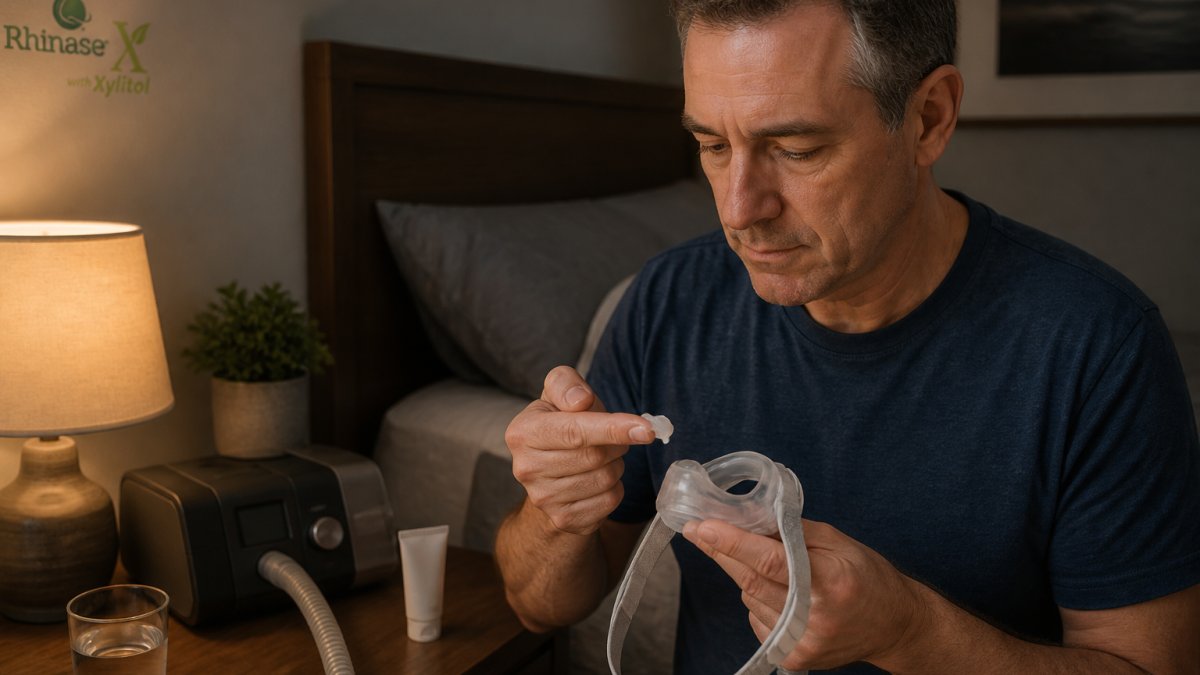
Less is more here. A pea-sized amount per nostril is plenty. If you feel product on the cushion, you used too much.
CPAP Humidifier for Dry Nose: Pairing Moisture Inside and Out
A CPAP humidifier for dry nose handles the inside job while your moisturizer handles the surface.
Here's the division of labor:
- Heated humidifier: adds moisture to the airflow itself
- Nasal moisturizer: coats and protects the nasal lining
- Room humidifier: raises overall indoor humidity
- Mask cleaning: keeps residue from blocking airflow
Turn your heated humidifier up a notch in winter. If you still wake up dry, add a gel before bed.
Daily cleaning matters more than people think.
Our Rhinase Nasal Care Combo Pack pairs a 1 oz gel with a 1 oz saline spray for $26.95.

Frequently Asked Questions
Which is better for CPAP-related nasal dryness: saline gel or saline spray?
It depends on where the dryness sits and how long you need relief. A saline gel for CPAP users stays in the lower nasal passages longer, so it suits crusting, soreness at the nostril rim, and overnight use. A saline nasal spray for CPAP dryness reaches higher into the nasal cavity and works well for a quick reset before bed or after waking. Many people keep both: spray first to clear and hydrate, then gel to hold moisture through the night. If you run a heated humidifier, start with the lighter option and add gel only where dryness persists.
Can I use petroleum jelly or a thick ointment on my nose with CPAP?
Most CPAP manufacturers advise against petroleum-based products because they can degrade silicone mask cushions and, in rare cases, irritate the airway if inhaled. Greaseless, water-based options are the safer default. Look for a gel or mist labeled aloe-free, dye-free, and fragrance-free, with a pH near the nose's natural range. Apply a small amount inside the nostrils rather than smearing it across the cushion contact area, and clean the cushion daily so residue does not build up and affect the seal.
What ingredients should I look for in a nasal moisturizer for CPAP?
Prioritize simple formulations: water-based wetting agents, sodium and potassium salts, and optionally xylitol for added hydration. Skip anything with alcohol, fragrance, dyes, aloe, or menthol, which can sting already-irritated tissue. A pH around 6.2 is gentle enough for daily use and will not interfere with steroid sprays you may also take. If you have known allergies or use oxygen therapy, check the label for full ingredient disclosure and ask your clinician before starting a new product.
How do I use nasal gel without affecting my CPAP mask seal?
Apply the gel 10 to 15 minutes before putting your mask on, using a pea-sized amount inside each nostril with a clean finger or cotton swab. Keep it off the silicone cushion and the skin it touches. Wipe any excess from the nostril rim, then fit the mask as usual. Clean the cushion each morning with mild soap and warm water, and replace it on the schedule your manufacturer recommends. If you notice air leaks or slipping, reduce the amount of gel rather than tightening the headgear.