

How to Soothe Dry Nose During Pregnancy: Safe Relief
Table of Contents
- Why Pregnancy Causes a Dry Nose
- Natural Remedies for Pregnancy Congestion and Dryness
- How to Use Saline Spray for Dry Nose
- The Best Nasal Spray for Dry Nose Relief
- Humidifiers, Steam Inhalation, and Elevated Sleeping
- OTC Ingredient Safety and When to See a Doctor
- Frequently Asked Questions
Last Updated: September 29, 2026
Why Pregnancy Causes a Dry Nose
Pregnancy rhinitis is a real, common condition that affects many expecting mothers. It causes a stuffy nose, congestion, and nasal dryness that can make it hard to breathe. In fact, hormonal changes are the main reason why learning how to soothe dry nose during pregnancy matters so much.
Hormonal Changes and Nasal Dryness
Rising estrogen and progesterone levels boost blood flow to your nasal passages. This extra blood causes swelling, which leads to vasodilation and a stuffy nose.
Environmental Triggers That Make It Worse
Your nose is more sensitive now. Common triggers include:
- Dry indoor air from heating or air conditioning
- Dust, smoke, and strong smells
- Cold weather outside
- Low humidity in the bedroom
- Caffeine and alcohol
These irritants strip moisture from your mucous membranes. That makes nasal dryness worse.
Natural Remedies for Pregnancy Congestion and Dryness
Natural remedies for pregnancy congestion focus on adding moisture and reducing irritation, not on blocking symptoms. Most doctors prefer these gentle options first because they are drug-free and carry no risk to the placenta. Here is what each one actually does and how to use it well.
1. Drink More Water
Hydration thins mucus so it drains instead of drying into crusts. Aim for roughly 8 to 10 cups of water a day, more if you are active or in a dry climate. A practical check: pale yellow urine usually means you are well hydrated. Caffeine and alcohol work against you here because both are diuretics and can pull moisture out of tissue.
2. Use a Humidifier
Keep bedroom humidity around 40-50%. Below 30% is where most people notice dryness, nosebleeds, and morning congestion. A cool-mist humidifier is generally preferred over warm-mist for safety around a sleeping area. Clean the tank every two to three days with a diluted vinegar solution and let it dry fully, because standing water is where mold and bacteria grow. Replace the filter per the manufacturer's schedule.
3. Try Steam Inhalation
Lean over a bowl of warm (not boiling) water with a towel over your head, or sit in a steamy bathroom for 10 minutes. The warm moisture loosens dried mucus and soothes irritated tissue. Keep the water at a comfortable temperature, steam burns are a real risk, especially as pregnancy can affect your sense of temperature.
4. Apply a Warm Compress
A warm, damp cloth over your sinuses for 5-10 minutes eases sinus pressure and helps mucus move. This is especially useful in the morning when dryness is worst.
5. Sleep With Your Head Elevated
Use two pillows or a wedge to raise your head about 4-6 inches. This helps nasal passages drain and reduces the pooling that causes morning stuffiness. It also tends to reduce snoring, which many pregnant women notice in the second and third trimesters.
6. Use Saline Spray
Saline adds topical moisture without drugs and can be used as often as needed. It is the safest first step and pairs well with every other remedy on this list. See the saline spray section below for technique.
7. Add a Humectant-Based Product for Overnight
A saline gel or mist with glycerin or xylitol holds moisture longer than plain saline, which matters most overnight when you are breathing through your nose for hours. This is where a drug-free, pH-balanced product earns its place in the routine.

What to Avoid
A common mistake is reaching for a decongestant spray first. Most doctors say to avoid these during pregnancy. Also skip menthol-heavy balms directly inside the nostril, essential oils applied undiluted, and any product with alcohol or fragrance, all of which can irritate already-sensitive tissue.
How to Use Saline Spray for Dry Nose
Saline spray is the safest first step for nasal dryness. Learning how to use saline spray for dry nose takes about 30 seconds and you can repeat it as often as needed.
Rhinase Nasal Care Combo Pack - Nasal →

Step-by-Step Saline Spray Technique
Follow these steps for the best results:
- Wash your hands with soap and water.
- Blow your nose gently to clear mucus.
- Shake the bottle if the label says to.
- Tilt your head slightly forward.
- Insert the tip just inside one nostril.
- Spray once while breathing in gently.
- Repeat on the other side.
- Wipe the tip clean and let the saline sit for a minute.
Do this two to three times a day, or whenever your nose feels dry.
Proper Neti Pot Usage and Sterile Water Safety
A neti pot or nasal rinse can flush out irritants and add moisture. But safety matters here.
- Always use sterile water, distilled water, or water boiled and cooled.
- Never use tap water straight from the sink.
- Clean the pot after every use.
- Replace it every few months.
The Best Nasal Spray for Dry Nose Relief
The best nasal spray for dry nose relief is one that is drug-free, pH balanced, and safe for daily use during pregnancy. Look for saline-based sprays with simple ingredients.
When you shop, check the label for:
- No steroids
- No decongestants
- No alcohol or fragrance
- pH balanced around 6.2
- Safe for daily use
| Product | Type | Key Feature | Best For |
|---|---|---|---|
| Rhinase Mist | Saline spray | Dual wetting agents | Daily dryness relief |
| Rhinase X | Xylitol mist | Natural xylitol | Long-lasting moisture |
| Rhinase Gel | Nasal gel | pH balanced 6.2 | Overnight and nosebleeds |
| Rhinase Combo Pack | Gel + mist | Full routine | Complete nasal care |
Humidifiers, Steam Inhalation, and Elevated Sleeping
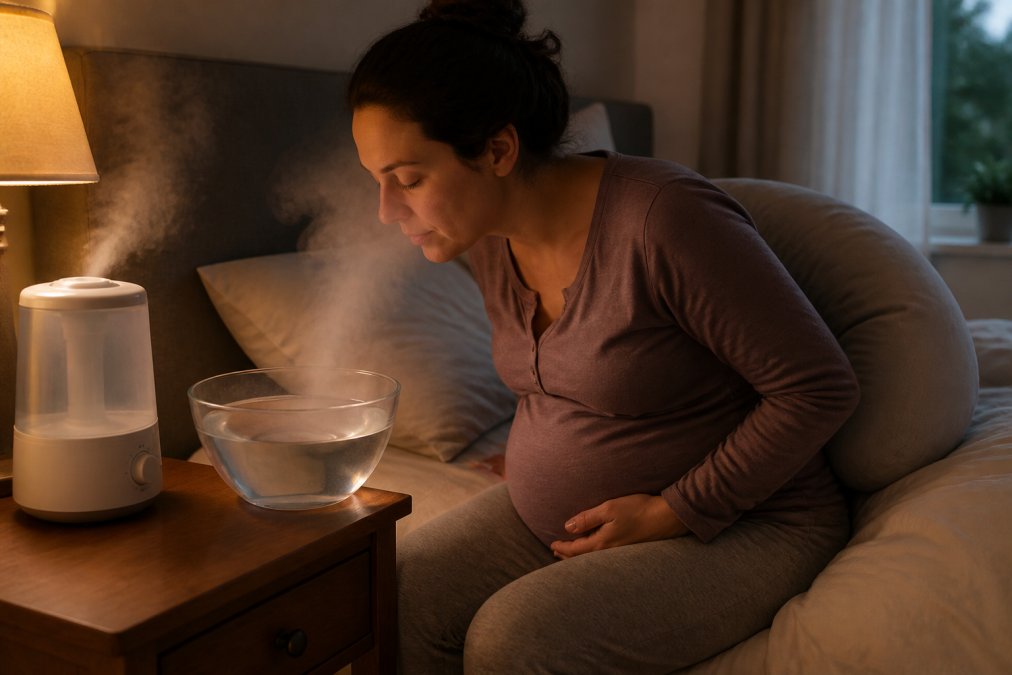
- Humidifier: Run a cool-mist humidifier while you sleep. Clean it every few days to stop mold.
- Steam inhalation: Sit in a steamy bathroom for 10 minutes before bed.
- Elevated sleeping: Use two pillows or a wedge to raise your head. This eases sinus pressure and helps sleep quality.
OTC Ingredient Safety and When to See a Doctor
Most OTC nasal sprays are safe during pregnancy, but the label matters more now than at any other time. Here is a concrete breakdown of what to avoid, what is generally considered safe, and why.
Ingredients to Avoid During Pregnancy
- Oral and topical decongestants, pseudoephedrine, phenylephrine, and oxymetazoline. These constrict blood vessels, which is exactly the mechanism that makes them work on a stuffy nose. The concern is that the same vasoconstriction can reduce blood flow to the placenta. Most practitioners advise avoiding them, especially in the first trimester.
- Steroid nasal sprays, budesonide, fluticasone, mometasone. Some are considered acceptable under a doctor's supervision, but none should be started without one.
- Sprays with alcohol, fragrance, or preservatives like benzalkonium chloride, these can sting already-irritated tissue and worsen dryness.
- Antihistamine-decongestant combinations, the decongestant component carries the same risk as above.
Ingredients Generally Considered Safe
- Saline (sodium chloride), the baseline. Drug-free, safe for daily and repeated use.
- Sodium and potassium salts, dual-salt formulas can hold moisture longer than sodium alone.
- Xylitol, a natural sugar alcohol that draws water to the tissue and has some evidence of reducing nasal bacteria adhesion.
- Glycerin, a humectant that pulls moisture into the nasal lining.
- Aloe vera, soothing, though some users find it stings; patch-test first.
Check with your doctor before starting any new product, even one labeled natural.
When to See a Doctor or ENT Specialist
Call your doctor or an ENT specialist if you have:
- Symptoms lasting more than 10 days without improvement
- A fever above 100.4°F
- Green or yellow mucus
- Breathing difficulties or shortness of breath
- Frequent nosebleeds that will not stop after 10-15 minutes of pressure
- Pain or pressure around the eyes, cheeks, or forehead
- One-sided swelling or vision changes
How Long Does Pregnancy Rhinitis Last?
This is the question most guides skip. Pregnancy rhinitis and the dryness that comes with it typically resolve on their own within about two weeks after delivery, once hormone levels drop and blood flow to the nasal passages returns to baseline. Some women notice improvement within days of giving birth; a smaller number continue to have symptoms for a few weeks postpartum.
Frequently Asked Questions
Is it normal to have a dry nose during pregnancy?
Yes, nasal dryness is common during pregnancy. Hormonal changes, especially increased estrogen and progesterone, boost blood flow to mucous membranes and can cause swelling, congestion, and dryness. Pregnancy rhinitis affects roughly 20 to 30 percent of pregnant women. Low indoor humidity and cold weather can make symptoms worse. While uncomfortable, a dry nose pregnancy symptom is usually not dangerous. Using saline spray, a humidifier, and staying hydrated can ease irritation.
Are saline nasal sprays safe to use during pregnancy?
Saline nasal sprays are generally considered safe during pregnancy because they contain no steroids or active drugs. They work by adding moisture and thinning mucus. Look for products that are drug-free, steroid-free, and free of aloe, dyes, and fragrances to reduce allergy risk. Rhinase Lubricating Nasal Mist is pH balanced at 6.2 and uses dual wetting agents plus sodium and potassium salts. Always check with your doctor before starting any new product.
What is the fastest way to fix dry nostrils?
For quick relief, use a saline spray or nasal gel immediately. A gel like Rhinase Nasal Gel provides longer-lasting topical moisture because it coats the nasal passages. Follow with a humidifier in your bedroom and drink water throughout the day. Avoid caffeine and alcohol, which can dehydrate you. If dryness persists or causes nosebleeds, talk to your doctor. A warm compress over the sinuses can also help soothe irritation and improve comfort.
When should I see a doctor for nasal dryness during pregnancy?
See your doctor if dryness leads to frequent nosebleeds, severe sinus pressure, breathing difficulties, or symptoms that interfere with sleep. Also seek care if you notice yellow or green discharge, fever, or facial pain, which may signal infection. An ENT specialist can evaluate persistent issues. If you use a CPAP machine or oxygen therapy and experience nasal irritation, ask about pregnancy-safe moisturizing options like a drug-free nasal gel.
Pregnancy already asks a lot of your body. A dry, stuffy nose should not be one more thing you have to fight. Profounda Health & Beauty makes drug-free, doctor-recommended nasal care that fits safely into your daily routine, from the Rhinase Lubricating Nasal Mist for daytime relief to the Rhinase Nasal Gel for overnight comfort. Both are steroid-free, pH balanced, and gentle enough for daily use. Get started with Profounda Health & Beauty and breathe easier through every trimester.