

How to Stop Nosebleeds in Children: Step-by-Step Guide
Table of Contents
- What Causes Nosebleeds in Children
- How to Stop a Nosebleed: Immediate First-Aid Steps
- What to Avoid During a Nosebleed
- How to Prevent Nosebleeds in Children
- When to See a Doctor for Nosebleeds
- Post-Nosebleed Care and Recovery
- First-Aid Equipment Checklist for Nosebleeds
- Conclusion
Last Updated: August 28, 2026
What Causes Nosebleeds in Children
Nosebleeds in children happen more often than many parents realize. The nasal mucosa, the delicate tissue lining the nostrils, contains tiny blood vessels that bleed easily when irritated, injured, or dried out. Most nosebleeds are minor and stop quickly, though they can alarm both child and parent.
The most common cause is nasal dryness. Children living in low-humidity environments, especially during winter when heating systems run constantly, experience moisture loss in their nasal passages. This dryness causes the nasal mucosa to crack and bleed. Nasal picking ranks second, kids explore their noses out of curiosity, and their fingernails puncture the delicate tissue inside. Trauma from falls, sports injuries, or blows to the face also ruptures blood vessels in the septum and nasal walls.
Allergies trigger nosebleeds through inflammation and congestion. When allergens irritate the nasal passages, tissue swells and blood vessels dilate. Children then blow their noses forcefully, increasing pressure inside the nostrils and causing bleeding. Environmental irritants like smoke and pollution have similar effects.
Less commonly, bleeding disorders, high blood pressure, or infections like colds and flu cause nosebleeds. Colds inflame the nasal mucosa and increase mucus production, prompting repeated nose-blowing that irritates blood vessels until they bleed. Most nosebleeds in otherwise healthy children stem from dryness and picking rather than serious underlying conditions.
How to Stop a Nosebleed: Immediate First-Aid Steps
When your child gets a nosebleed, your calm response sets the tone. Panic makes the child anxious, raising heart rate and blood pressure, both of which increase bleeding. Your goal is to stop the bleeding quickly while keeping your child reassured.
Step 1: Keep Your Child Calm and Upright
Sit your child upright in a comfortable position, never lying flat or tilting the head backward. Tilting the head back forces blood down the throat, causing nausea and vomiting. Upright positioning allows blood to flow out of the nostrils where you can apply pressure effectively.
Speak in a calm, matter-of-fact tone. Tell your child the nosebleed will stop soon and that you're right there. Distraction helps, ask them to focus on breathing or count with you. The psychological support you provide reduces anxiety and stabilizes their breathing and heart rate.
Step 2: Apply Steady Pressure to the Nostrils
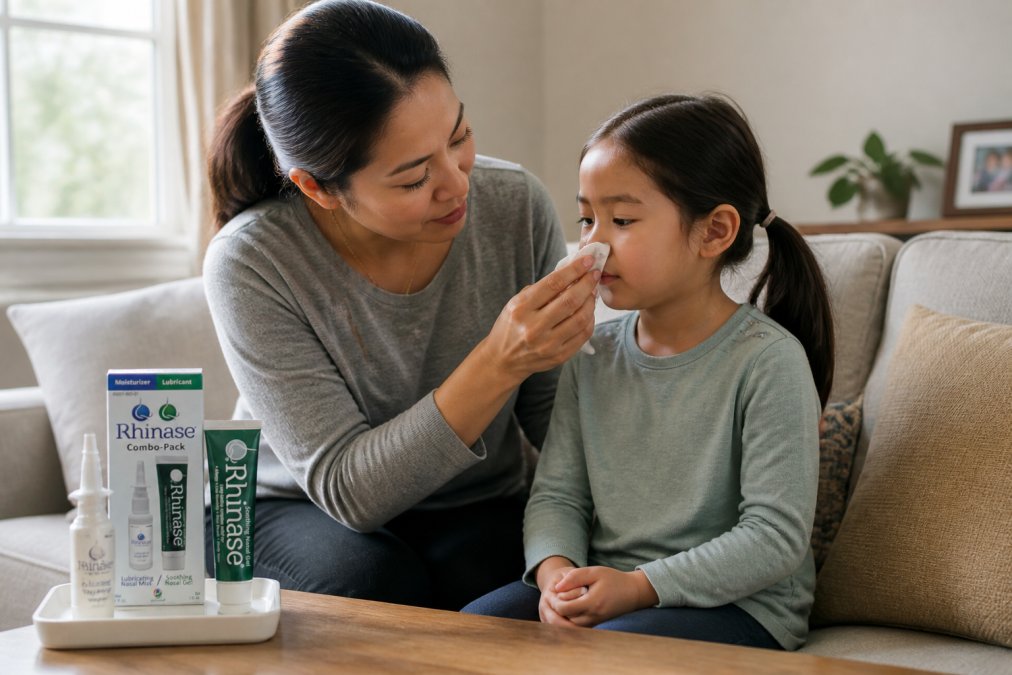
Have your child pinch both nostrils together using their thumb and index finger, or do it for them if they're very young. The pressure must be firm and steady, not harsh, but definite enough to compress the blood vessels in the septum where most nosebleeds originate.
Maintain this pressure continuously for 10 to 15 minutes (aap.org). This is the single most important step. Releasing pressure too early to check if bleeding has stopped only restarts the process. Set a timer so you know exactly when to release. During this time, have your child breathe through their mouth and remain upright.
Step 3: Lean Forward Slightly
While maintaining pressure on the nostrils, have your child lean forward just slightly, about 15 to 30 degrees forward from vertical. This prevents blood from flowing backward into the throat, reducing nausea. It also allows you to monitor whether bleeding is slowing without releasing the pressure inside.
Step 4: Apply Cold Compress
After the first 5 minutes of direct pressure, apply a cold compress to the bridge of the nose and the area above the upper lip. Cold causes vasoconstriction, narrowing blood vessels and reducing blood flow to the area. This speeds clotting and helps stop bleeding faster.
Use an ice pack wrapped in a thin cloth, a cold washcloth, or a bag of frozen peas. Never apply ice directly to skin. Keep the cold compress in place for 5 to 10 minutes while maintaining nostril pressure. The combination of direct pressure plus cold is more effective than either method alone.
Step 5: Wait and Monitor
After 10 to 15 minutes of pressure, slowly release the pinch and check if bleeding has stopped. If it has, have your child rest quietly for the next 30 minutes, no running, playing, or strenuous activity. If bleeding continues, reapply pressure for another 10 minutes. Most nosebleeds stop within 15 to 20 minutes of steady pressure. If bleeding persists beyond 30 minutes, contact your pediatrician.
What to Avoid During a Nosebleed
Never tilt your child's head backward. This creates the false impression that bleeding is severe because blood flows down the throat instead of out of the nostrils. Your child may gag, vomit, or inhale blood.
Avoid using cotton balls or tissues that stick to the nasal mucosa. When you remove them, they can pull away the forming clot and restart bleeding. Use tissues that won't adhere, or use a saline-moistened gauze pad.
Don't allow your child to blow their nose forcefully during or immediately after a nosebleed. Pressure from blowing disrupts clotting and can restart bleeding. If your child needs to clear their nose in the days following a nosebleed, have them gently sniff or use saline spray.
Avoid hot foods and beverages for several hours after a nosebleed. Heat dilates blood vessels and can restart bleeding. Stick to cool or room-temperature foods and drinks. Spicy foods also increase blood flow to the nasal passages, so skip those for at least 24 hours.
Don't use nasal decongestant sprays during an active nosebleed. After the bleeding has fully stopped and at least 24 hours have passed, saline-based products are safe and helpful for preventing future bleeds.
How to Prevent Nosebleeds in Children
Prevention is far more effective than managing bleeds after they happen. Most nosebleeds in children stem from nasal dryness and picking, both of which are preventable with consistent care.
Maintain Nasal Hydration for Dry Nose
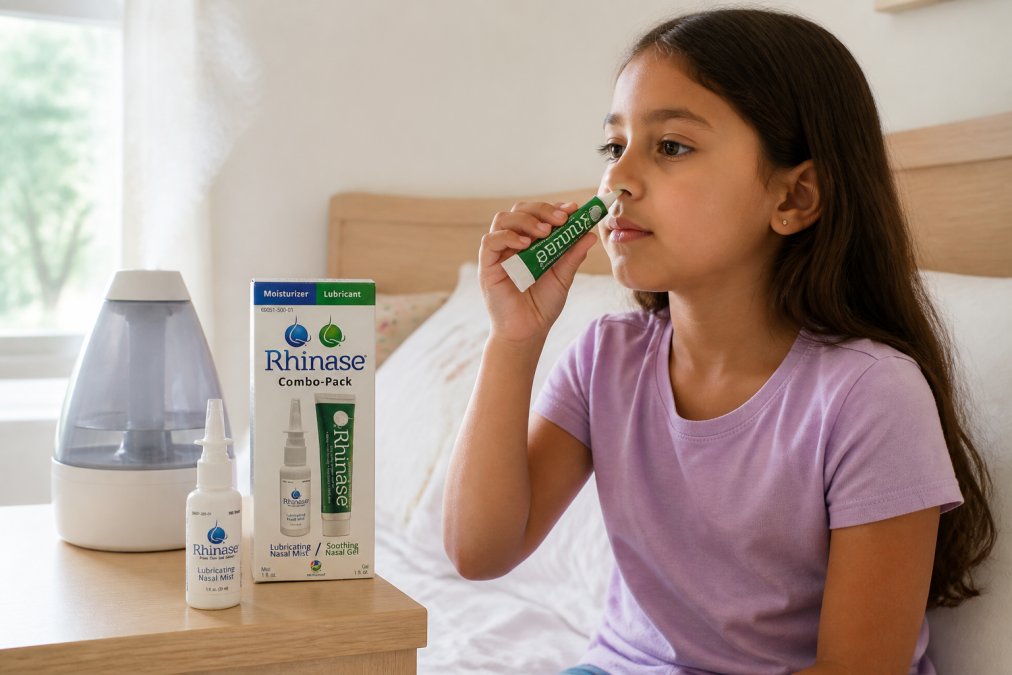
Keeping the nasal mucosa moist is the single most effective prevention strategy. Daily nasal moisturizing using a saline spray or gel protects the delicate tissue inside the nostrils. Apply saline spray 2-3 times daily, especially in the morning and before bed. For children prone to nosebleeds, a water-based gel provides longer-lasting moisture than spray alone.
Profounda Health & Beauty's nasal care products are specifically formulated with natural ingredients like xylitol and dual-salt saline solutions designed to hydrate without irritation. The Rhinase Nasal Care Combo Pack combines both spray and gel for comprehensive moisture coverage, with the spray delivering quick hydration while the gel provides extended protection.

Avoid Nasal Picking and Trauma
Teach your child that picking their nose damages the delicate tissue inside and causes bleeding. Make this lesson age-appropriate and non-punitive. Keeping fingernails trimmed short reduces damage if picking does occur.
Protect your child from head trauma by ensuring safe play environments and proper sports equipment. While you can't prevent every bump, reducing unnecessary risk significantly lowers nosebleed frequency.
Use a Humidifier in Dry Environments
A humidifier running during sleep hours adds moisture to the air, which the nasal passages absorb. This is especially important in winter when heating systems run constantly. A humidifier set to 40-50% relative humidity provides optimal moisture without promoting mold growth (the CDC).
Cool-mist humidifiers are safer for children than warm-mist models. Place the humidifier in your child's bedroom and run it during sleep hours. Combining a humidifier with daily saline moisturizing provides good protection.
When to See a Doctor for Nosebleeds
Most nosebleeds stop within 15 to 20 minutes of home treatment and pose no serious risk (peer-reviewed research). Contact your pediatrician if your child experiences nosebleeds more than once weekly, as this suggests an underlying issue requiring medical attention.
Seek immediate medical care if a nosebleed lasts longer than 30 minutes despite continuous pressure, or if the bleeding is so heavy that your child loses blood faster than you can manage it. If your child has nosebleeds accompanied by easy bruising, frequent bleeding from other sites, or a family history of bleeding disorders, mention this to your pediatrician.
Nosebleeds following head trauma, especially if accompanied by dizziness, confusion, or loss of consciousness, require emergency evaluation. If your child is taking blood-thinning medications, discuss frequent nosebleeds with your doctor.
Post-Nosebleed Care and Recovery
After a nosebleed stops, your child's nasal passages need time to fully heal. The clot that formed inside the nostrils is fragile and can restart bleeding with minimal disturbance.
For the first 24 hours, restrict your child's activity. No running, jumping, sports, or vigorous play. Quiet activities like reading, drawing, or watching television are appropriate.
Avoid hot foods, spicy foods, and hot beverages for at least 24 hours. Heat dilates blood vessels and increases blood flow to the nasal area. Don't allow nose-blowing, sniffing, or picking for at least 24 hours. If your child needs to clear nasal passages, use saline spray to gently loosen mucus.
Apply saline spray or gel every 4-6 hours during the recovery period. The Rhinase Allergy Relief Lubricating Nasal Gel is doctor-recommended specifically for post-nosebleed care because it provides extended moisture without irritating healing tissue.

Some children experience emotional anxiety after a nosebleed. Reassure your child that nosebleeds are common, not dangerous, and that you know how to stop them. Avoid making your child feel ashamed or embarrassed.
First-Aid Equipment Checklist for Nosebleeds
Having the right supplies on hand means you can respond quickly and effectively when a nosebleed occurs.
| Item | Purpose | Quantity |
|---|---|---|
| Soft tissues | Catching blood, minimal irritation | 1 box |
| Saline nasal spray | Quick hydration and moisture | 1-2 bottles |
| Saline nasal gel | Extended moisture protection | 1-2 tubes |
| Clean washcloths | Cold compress application | 2-3 |
| Ice pack or frozen peas | Vasoconstriction to slow bleeding | 1 |
| Thin cloth for ice | Barrier between ice and skin | 1-2 |
| Timer or clock | Track 10-15 minute pressure duration | 1 |
| Small bowl | Catch blood if needed | 1 |
| Antibiotic ointment | Protect nostrils after bleeding stops | 1 tube |
| Humidifier | Maintain environmental moisture | 1 |
Keep saline products in your child's bedroom, bathroom, and a portable kit for school or travel. Profounda Health & Beauty's Rhinase Nasal Mist is compact and portable, making it ideal for keeping at school or in your bag for quick access during nosebleeds away from home.

Ensure ice packs are properly wrapped to prevent direct skin contact. Label all medications and saline products clearly so caregivers, teachers, and babysitters know exactly what to use. Replace saline products every 6-12 months to ensure freshness and prevent contamination.
Nosebleeds in children are frightening for parents but manageable with the right knowledge and preparation. Most nosebleeds stop quickly with calm, steady pressure and proper positioning. The real victory comes from prevention, maintaining nasal hydration, controlling environmental dryness, and teaching your child to avoid picking creates the conditions where nosebleeds become rare.
Start with a humidifier in your child's bedroom and daily saline moisturizing using products from Profounda Health & Beauty. The Rhinase Allergy Relief Lubricating Nasal Gel is specifically formulated for children and provides the steroid-free, drug-free protection that prevents nosebleeds before they start. Get started today and watch nosebleed frequency drop.
=== FAQ ANSWERS (audit these too, same rules) ===
[1] Q: What triggers nosebleeds in kids? A: Nosebleeds occur when blood vessels in the nasal mucosa rupture. Common triggers include dry air, nasal picking, allergies, trauma from falls or sports, infections, and low humidity. Children are particularly prone because their nasal passages are delicate. Dry indoor air during winter and environmental irritation from allergies frequently cause epistaxis in children. Using a humidifier and maintaining nasal hydration with saline solutions can significantly reduce occurrences.
[2] Q: How long should you hold pressure on a child's nose during a nosebleed? A: Hold steady, gentle pressure on both nostrils for 10-15 minutes continuously. Avoid releasing pressure to check if the bleeding has stopped, as this can restart it. If bleeding continues after 15 minutes, apply pressure for another 10 minutes. Most nosebleeds stop within this timeframe. Keep your child calm and sitting upright during this period. If bleeding persists beyond 30 minutes of continuous pressure, contact your pediatrician or seek emergency care.
[3] Q: How can nasal hydration for dry nose help prevent nosebleeds? A: Nasal hydration keeps the nasal mucosa moist and flexible, reducing the risk of capillaries rupturing. Dry nasal passages crack easily and bleed more readily. Using a water-based gel or saline spray daily, especially in low-humidity environments, maintains healthy tissue. Products like Rhinase Nasal Gel contain wetting agents and saline that restore moisture to irritated passages. For children prone to nosebleeds, regular nasal hydration is one of the most effective preventative measures, particularly during winter months or in dry climates.
[4] Q: When should I take my child to the doctor for a nosebleed? A: Seek medical attention if the nosebleed lasts longer than 30 minutes despite continuous pressure, occurs frequently (more than once weekly), follows a head injury, is accompanied by difficulty breathing or swallowing, involves heavy bleeding that soaks through tissues rapidly, or if your child takes blood-thinning medications. Also contact your pediatrician if nosebleeds are accompanied by other symptoms like fever, rash, or unexplained bruising, as these may indicate an underlying condition requiring evaluation.
Frequently Asked Questions
Q: What triggers nosebleeds in kids?
A: Nosebleeds occur when blood vessels in the nasal mucosa rupture. Common triggers include dry air, nasal picking, allergies, trauma from falls or sports, infections, and low humidity. Children are particularly prone because their nasal passages are delicate. Dry indoor air during winter and environmental irritation from allergies frequently cause epistaxis in children. Using a humidifier and maintaining nasal hydration with saline solutions can significantly reduce occurrences.
Q: How long should you hold pressure on a child's nose during a nosebleed?
A: Hold steady, gentle pressure on both nostrils for 10-15 minutes continuously. Avoid releasing pressure to check if the bleeding has stopped, as this can restart it. If bleeding continues after 15 minutes, apply pressure for another 10 minutes. Most nosebleeds stop within this timeframe. Keep your child calm and sitting upright during this period. If bleeding persists beyond 30 minutes of continuous pressure, contact your pediatrician or seek emergency care.
Q: How can nasal hydration for dry nose help prevent nosebleeds?
A: Nasal hydration keeps the nasal mucosa moist and flexible, reducing the risk of capillaries rupturing. Dry nasal passages crack easily and bleed more readily. Using a water-based gel or saline spray daily, especially in low-humidity environments, maintains healthy tissue. Products like Rhinase Nasal Gel contain wetting agents and saline that restore moisture to irritated passages. For children prone to nosebleeds, regular nasal hydration is one of the most effective preventative measures, particularly during winter months or in dry climates.
Q: When should I take my child to the doctor for a nosebleed?
A: Seek medical attention if the nosebleed lasts longer than 30 minutes despite continuous pressure, occurs frequently (more than once weekly), follows a head injury, is accompanied by difficulty breathing or swallowing, involves heavy bleeding that soaks through tissues rapidly, or if your child takes blood-thinning medications. Also contact your pediatrician if nosebleeds are accompanied by other symptoms like fever, rash, or unexplained bruising, as these may indicate an underlying condition requiring evaluation.
This article was written using GrandRanker