

Is a CPAP Nasal Care Routine Necessary? What to Know
Table of Contents
- Why Nasal Care Matters When You Use CPAP Every Night
- CPAP Nasal Irritation Symptoms You Should Not Ignore
- How to Prevent Nasal Dryness from CPAP
- Benefits of Xylitol Nasal Sprays for CPAP Users
- Building a Daily Nasal Care Routine That Sticks
- When to Replace CPAP Supplies and Adjust Your Routine
- Frequently Asked Questions
Last Updated: September 10, 2026
Why Nasal Care Matters When You Use CPAP Every Night
A CPAP nasal care routine is necessary. CPAP pushes filtered, pressurized air through your nasal passages for six to eight hours a night, and that airflow strips moisture from the mucosal lining. This guide from Profounda Health & Beauty covers why that happens, what it does to your nose, and how a daily routine protects your comfort and therapy adherence.
Your nose warms, humidifies, and filters air before it reaches your lungs. A CPAP machine delivers air at a fixed pressure, often faster and drier than anything you'd breathe naturally. The result is mucosal irritation: dryness, crusting, and congestion that make the mask feel unbearable by 3 a.m.
That matters more than most people realize. When your nose is raw, you take the mask off. When you take the mask off, your airway pressure drops to zero and your sleep quality suffers. The American Academy of Sleep Medicine has long noted that mask discomfort and nasal side effects are among the leading reasons patients abandon therapy. A nasal care routine isn't a luxury add-on. It's the maintenance layer that keeps the equipment working.
CPAP Nasal Irritation Symptoms You Should Not Ignore
The most common CPAP nasal irritation symptoms are dryness, congestion, nosebleeds, and post-nasal drip. Each signals that your nasal passages are losing moisture faster than they can replace it, and each tends to escalate into the next if left alone.
Dryness, Congestion, and Nosebleeds: What to Watch For
Dryness is the first warning: you wake with a parched, burning sensation and feel blocked even when you aren't. That's mucosal irritation setting in. The mucosa is a thin, vascular layer; when air passing over it is drier than the tissue, water moves out of the cells and into the airstream, the surface cracks, and nerve endings become hypersensitive.
Congestion comes next and is the most misunderstood symptom. The turbinates swell when they dry out, a protective reflex that increases blood flow to replace lost moisture, narrowing the nasal passages. A dry nose often feels stuffier than a moist one. That's why decongestant sprays make CPAP dryness worse over time: they shrink the turbinates temporarily, but the dehydration remains and rebound congestion follows.
Nosebleeds are the late-stage signal: when the mucosa cracks, small vessels underneath are exposed. Low humidity, winter heating, and air conditioning make this worse. A spot of blood on the pillowcase is a warning; recurrent bleeding, or bleeding that takes more than a few minutes to stop, warrants a call to your clinician.
Post-nasal drip is rarely connected to CPAP. Irritated tissue produces thicker mucus that runs down the back of the throat, showing up as a morning cough, scratchy throat, or constant throat clearing. It's often mistaken for allergies or reflux when the real driver is overnight nasal dehydration.
- Dryness: burning, crusting, a raw feeling on waking
- Congestion: stuffiness that doesn't respond to blowing, worse in the morning
- Nosebleeds: small amounts of blood, especially in dry air or after a cold
- Post-nasal drip: mucus running down the throat, morning cough, throat clearing
- Loss of smell or taste: a less common sign that the mucosa is chronically inflamed
When a Symptom Crosses the Line
Most nasal irritation from CPAP is manageable with humidification and a daily routine. A few patterns are not:
- Symptoms persisting past two weeks despite consistent humidification and moisturizing point to something beyond simple dryness, often a deviated septum or chronic rhinitis a clinician should evaluate.
- Bleeding that recurs more than twice a month. Recurrent nosebleeds from nasal dryness mean your routine isn't working, and can indicate the nasal lining is being injured by something other than airflow.
- Congestion that is one-sided. Dryness affects both sides roughly equally. A blockage that stays on one side can point to a polyp, a structural narrowing, or an infection.
- Symptoms that improve when you skip therapy. If your nose feels better on nights off CPAP, the machine is the irritant, the fix is a settings or equipment conversation, not more product.
If you're seeing blood, stop and address it. Tracking symptoms isn't self-diagnosis, it's knowing when to bring in your sleep clinician.
How to Prevent Nasal Dryness from CPAP
You prevent nasal dryness from CPAP by adding moisture back faster than the airflow removes it: a heated humidifier, a properly fitted mask, and a daily moisturizing routine.
Heated Humidification and Mask Fit Adjustments
A heated humidifier is the single most effective upgrade. It warms the water in the chamber before the air reaches your nose, raising how much moisture the air can carry. Cold, dry air holds almost nothing; warm, humid air holds far more, and your mucosa absorbs it instead of giving moisture up.
Turn the humidity setting up gradually. Too high too fast causes condensation in the tubing, a problem called rainout. Most machines let you adjust both humidity and tube temperature, and balancing the two usually solves it.
Mask fit matters just as much, a leaking mask blows air across your eyes and nasal passages, accelerating drying. Check these points:
- The cushion sits on the bridge of the nose without gaps
- Headgear straps are snug but not tight enough to leave marks
- You've refitted the mask while lying down, not sitting up
- The cushion is clean and free of oils from your skin
A common mistake is overtightening. A tight mask leaks more, not less, because the cushion can't inflate and seal properly.
Benefits of Xylitol Nasal Sprays for CPAP Users
The benefits of xylitol nasal sprays for CPAP users come down to how xylitol holds moisture. It's a sugar alcohol that attracts and retains water, keeping the nasal lining hydrated longer than a plain saline rinse alone.
Plain saline flushes well but evaporates quickly. Xylitol stays on the tissue and keeps pulling moisture in; combined with saline solution and dual wetting agents, it creates a protective layer that traps moisture and keeps irritants out.
This is where product choice starts to matter. A basic drugstore saline spray is a rinse. A formulated gel or mist with xylitol and dual salts is a moisturizer. For CPAP users, you want the second category.
Profounda Health & Beauty makes both formats. The Rhinase X Combo Pack pairs a 30g nasal gel with a 30ml spray for $26.95, covering the upper and lower passages in one routine. The Rhinase X Soothing Nasal Gel is a steroid-free, hypotonic gel with natural xylitol at $18.12, and the Rhinase Allergy Relief Lubricating Nasal Gel is specifically labeled for CPAP and oxygen therapy users at $23.85.


Building a Daily Nasal Care Routine That Sticks
The routine that works is the one you'll actually do. Most people quit because they attempt a ten-step protocol overnight. Start with two steps and add more only when those feel automatic.
A Simple Morning and Evening Protocol
Morning: Rinse with a saline mist to clear overnight crusting, then apply a light gel layer if your nose still feels dry. Takes about thirty seconds.
Evening, before mask on: Apply gel to the lower nasal passages, check that your humidifier chamber is filled, and refit the mask while lying down. Takes about two minutes.
That's it. The morning step addresses comfort. The evening step protects you through the night.
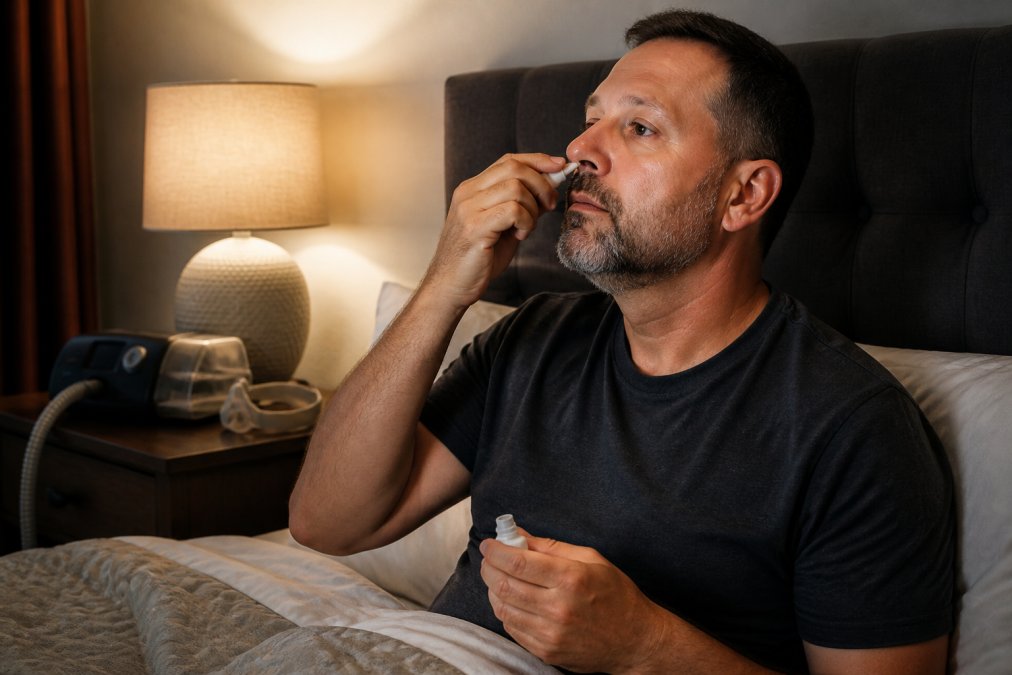
The real obstacle is psychological. People skip the routine when tired, and dryness returns within two or three days. Attach the step to something you already do without thinking, filling the humidifier chamber, brushing your teeth. Habit stacking beats willpower.
When to Replace CPAP Supplies and Adjust Your Routine
Supply replacement is where most routines quietly fail. Worn cushions leak, dirty tubing carries bacterial growth, and a clogged filter pushes drier air, each undermining your nasal care. Most advice treats "CPAP supplies" as one category with one schedule, but each component fails differently and affects your nose differently.
Component-by-Component Maintenance Schedule
| Component | Clean | Replace | How It Affects Nasal Care |
|---|---|---|---|
| Mask cushion | Daily, warm water and mild soap | Every 1-3 months | Worn silicone loses its seal and blows air across the nose, accelerating drying |
| Mask frame and headgear | Weekly | Headgear every 6 months | Stretched straps break the seal; a loose mask leaks more than a tight one |
| Tubing | Weekly, hang to dry | Every 3 months | Residue and biofilm build up inside; a damp tube grows bacteria that reach your airway |
| Humidifier chamber | Daily rinse, weekly vinegar soak | Every 6 months | Mineral buildup coats the heating plate and reduces moisture output |
| Disposable filter | Do not wash | Every 2-4 weeks | A clogged filter reduces airflow quality and forces the machine to work harder |
| Reusable filter | Monthly rinse | Every 6 months | Same as above, but reusable versions clog faster in dusty rooms |
| Humidifier water | Empty and refill daily | N/A | Standing water is a growth medium; use distilled water to avoid mineral scale |
Two details matter more than the intervals. First, the cushion touches your face every night, so clean it daily, a film of skin oil breaks the seal within a few nights. Second, the humidifier chamber is the most neglected component and the one that most directly controls how dry your nose gets; visible white scale means it's delivering less moisture than the setting suggests.
Adjusting the Routine to Your Environment
Replacement intervals are fixed; your routine shouldn't be. Indoor humidity swings more than most people realize, and a protocol that works in a humid summer can fail in a heated bedroom in January.
- Below 30% indoor humidity: Add a bedroom humidifier, close the door, and increase your machine's humidity setting one step. This is the range where dryness, crusting, and nosebleeds cluster.
- 30-50% indoor humidity: Most people's target range. Keep the routine steady and check the humidifier chamber weekly for scale.
- Above 50% indoor humidity: Watch for rainout, condensation in the tubing that can drip into the mask. Lower the humidity setting or raise the tube temperature to compensate.
- Seasonal shifts: Winter heating and summer air conditioning both drop indoor humidity. Recheck your settings at the start of each season rather than assuming last season's routine still fits.
- Travel: Hotel rooms and airplanes are among the driest environments you'll sleep in. A travel-sized saline mist and a higher humidity setting for the first night back home are reasonable adjustments.
A nightstand hygrometer costs less than a replacement cushion and explains more about your nose than any product label. If your bedroom reads below 30% and you still wake up dry, the room is fighting your routine.
Clean the mask cushion daily with warm water and mild soap, and wash the tubing and chamber weekly. This is basic equipment maintenance, and it directly affects how dry your nose gets. If dryness persists despite a solid routine and a controlled bedroom environment, talk to your sleep clinician about your pressure settings and humidity configuration. Sometimes the fix is a machine adjustment, not another product. Any guidance from the FDA on nasal spray safety or your clinician should take priority over general advice.
Frequently Asked Questions
How often should you perform nasal care while using CPAP?
Most CPAP users benefit from nasal care twice daily: once in the morning to clear overnight dryness and once before bed to moisturize nasal passages before therapy. If you live in a low-humidity environment or use a heated humidifier on a high setting, you may need additional applications. A drug-free nasal gel or saline mist can be used as often as needed throughout the day without the risk of rebound congestion that comes with medicated decongestants.
Can a CPAP machine mess with your sinuses?
Yes. CPAP pushes filtered air through your nasal passages at a set airway pressure all night, and that constant airflow can dry out the mucosal lining. When the nose dries out, it becomes more vulnerable to congestion, irritation, and even nosebleeds. Using a heated humidifier with your machine and adding a daily nasal moisturizing routine can reduce these effects and help you stay compliant with therapy.
What are the signs that your CPAP is drying out your nasal passages?
Common CPAP nasal irritation symptoms include a dry, burning feeling inside the nose, crusty buildup in the morning, nasal congestion that worsens with use, frequent sneezing, and occasional nosebleeds. You might also notice a sore throat or post-nasal drip. If these symptoms appear most nights, your humidifier setting may be too low or you may need a nasal moisturizer to protect the nasal passages before bed.
Are drug-free nasal gels safe for daily CPAP use?
Drug-free nasal gels made with ingredients like xylitol and dual salts are generally safe for daily use alongside CPAP therapy. Unlike steroid or decongestant sprays, they do not carry risks of rebound congestion or long-term mucosal damage. Look for products that are pH balanced, free from aloe, dyes, and fragrances, and labeled as safe for everyday use. Applying a small amount before bed can help maintain a comfortable mask seal and reduce irritation.
How does nasal dryness affect CPAP compliance?
Nasal dryness is one of the most common reasons people stop using CPAP. When therapy causes discomfort, users tend to remove the mask mid-night or skip nights entirely, which undermines the treatment. Research on CPAP adherence consistently shows that bothersome nasal symptoms reduce average nightly use. Addressing dryness with humidification and a nasal care routine helps users tolerate therapy longer and get the sleep quality benefits CPAP is meant to deliver.