

Manage Nasal Irritation From Oxygen: 7 Steps
Table of Contents
- Why Oxygen Therapy Causes Nasal Irritation
- Step 1: Use Water-Based Lubricants and Avoid Petroleum Products
- Step 2: Set Up Supplemental Humidification for Your Oxygen
- Step 3: Clean Your Nasal Cannula Equipment Regularly
- Step 4: Protect Your Nasal Passages and Skin With Proper Cannula Fit
- Step 5: Stay Hydrated and Monitor for Mucosal Irritation
- Step 6: Choose the Best Nasal Moisturizer for Oxygen Users
- Step 7: Prevent Nosebleeds From Oxygen Therapy
Last Updated: August 16, 2026
Why Oxygen Therapy Causes Nasal Irritation
Oxygen therapy saves lives, but supplemental oxygen delivery bypasses your body's natural humidification system. When you breathe normally, air passes through your sinuses and throat where moisture is added before reaching your lungs. Oxygen delivered through a nasal cannula skips this process, flowing directly into your nasal passages at concentrations far higher than ambient air. This dries out the delicate mucous membranes that line your nose.
The nasal mucosa contains specialized cells designed to trap particles, fight infection, and maintain moisture balance. When oxygen therapy dries these tissues, they crack and become inflamed, triggering stuffiness, crusting, bleeding, and discomfort. The problem intensifies in low-humidity environments like heated homes, air-conditioned spaces, and high-altitude locations.
This irritation affects compliance. When nasal passages hurt, people reduce oxygen use or skip doses to get relief, which is dangerous. Managing the irritation properly means you can use your oxygen as prescribed without suffering.
The good news: managing nasal irritation from oxygen is straightforward once you understand what's happening. The steps below address the root cause (dryness) and protect your nasal tissues from further damage.
Step 1: Use Water-Based Lubricants and Avoid Petroleum Products
The first rule of oxygen therapy nasal care is simple: lubricate with water-based products only. Never use petroleum jelly, mineral oil, or oil-based ointments near your oxygen equipment.
Oil and oxygen don't mix, literally. Petroleum-based products create a fire hazard around oxygen equipment and trap moisture underneath, creating an environment where bacteria thrive. Water-based lubricants work differently, they hydrate the mucous membrane directly without creating a barrier.
When selecting a water-based lubricant, look for formulations that include saline solution or xylitol. Saline mimics your body's natural salt balance, so tissues accept it readily. Xylitol is a natural humectant that draws moisture into tissue and holds it longer than plain water.

Apply a small amount (about the size of a pea) to the inside of each nostril using your fingertip 2-3 times daily, especially before bed.
Step 2: Set Up Supplemental Humidification for Your Oxygen
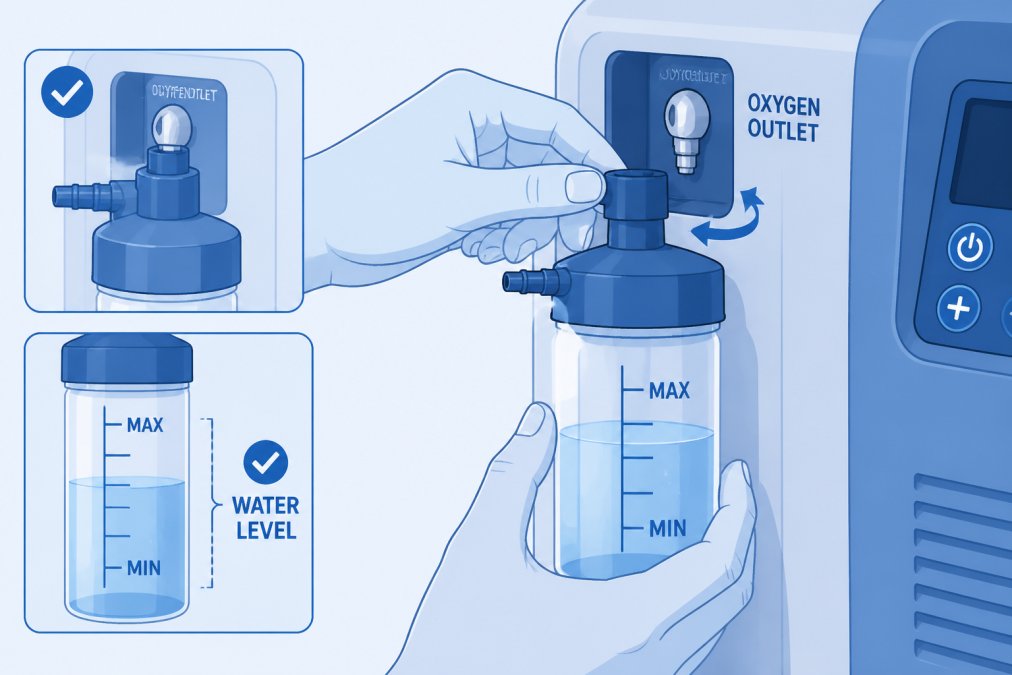
Supplemental humidification is the most effective long-term solution for nasal irritation from oxygen therapy. A humidifier bottle attached to your oxygen concentrator or portable tank adds moisture directly to the oxygen gas before it enters your nasal passages.
Oxygen passes through a chamber filled with distilled water. As the gas bubbles through, it picks up water vapor. By the time oxygen reaches your nose, it's carrying moisture that your nasal tissues can absorb. If you're using oxygen 8+ hours daily, humidification becomes critical.
Most oxygen concentrators have a humidifier bottle connection point on the outlet. Fill the bottle with distilled water only, never tap water, which contains minerals that clog the system. Check your humidifier bottle water level daily and refill when half-empty.
If you're using portable oxygen tanks with a regulator, ask your oxygen supplier whether your specific model supports humidification. Some regulators aren't designed for humidifier bottles. In those cases, a room humidifier becomes your best alternative.
Step 3: Clean Your Nasal Cannula Equipment Regularly
Your nasal cannula is a direct pathway to your nasal passages. Any bacteria or debris on the tubing can transfer directly into your nose. Regular cleaning prevents infection and removes dried secretions that irritate your tissues further.
Clean your nasal cannula at least once daily:
- Disconnect the cannula from your oxygen source
- Rinse the entire length of tubing under warm running water
- Use a soft brush or pipe cleaner to gently scrub the inside of the tubing
- Soak in a mixture of equal parts white vinegar and water for 15 minutes
- Rinse thoroughly with distilled water
- Hang to air dry completely before reconnecting
Pay special attention to the prongs that insert into your nostrils. Replace your nasal cannula every 2-4 weeks. If you notice increased irritation despite proper cleaning and lubrication, ask your oxygen supplier about alternative cannula materials like silicone.
Step 4: Protect Your Nasal Passages and Skin With Proper Cannula Fit
How your nasal cannula sits makes an enormous difference in comfort and irritation levels. A poorly fitted cannula causes constant friction, rubbing, and pressure that damages skin and tissue.
Your cannula should rest gently in your nostrils without pressure. The prongs should insert about a quarter-inch into each nostril, deep enough to deliver oxygen effectively, shallow enough that you don't feel constant pressure. The tubing should loop over your ears without pulling or digging in.
If you notice redness or skin breakdown where tubing contacts your face or ears, try these adjustments:
- Use foam ear pads designed for oxygen cannulas
- Apply a thin layer of water-based lubricant to contact areas
- Rotate which ear the tubing loops over every few hours
- Take brief breaks from the cannula when possible
If you've tried all other solutions and irritation persists, ask your supplier about silicone or latex-free alternatives.

Step 5: Stay Hydrated and Monitor for Mucosal Irritation
Your nasal mucosa is part of your whole-body hydration system. When you're dehydrated, your mucous membranes dry out faster, and oxygen therapy irritation worsens dramatically. Drink at least 8 glasses of water daily, more if you're in a dry climate or using oxygen heavily.
Monitor your nasal passages for signs of problematic irritation: nosebleeds occurring multiple times per week, crusting that blocks airflow, pain or burning that doesn't improve with lubrication, or discharge that's thick, yellow, or foul-smelling. If you notice these symptoms, contact your healthcare provider.
Step 6: Choose the Best Nasal Moisturizer for Oxygen Users
Not all nasal moisturizers are created equal. The best nasal moisturizer for oxygen users combines effective hydration, long-lasting protection, and compatibility with oxygen equipment.
Standard saline sprays are a starting point, but they're often insufficient for oxygen users. Saline hydrates briefly, but the moisture evaporates quickly. Look for moisturizers that include xylitol, a natural sugar alcohol that acts as a humectant. Xylitol draws moisture into your nasal tissues and holds it far longer than saline alone.
Gel-based moisturizers work better than sprays for oxygen users because they stay in place longer. Apply a pea-sized amount to each nostril 2-3 times daily.
Profounda Health & Beauty's Rhinase Allergy Relief Lubricating Nasal Gel is specifically formulated for people using supplemental oxygen and CPAP equipment. The dual-salt formulation mimics your body's natural saline balance, and the xylitol content provides sustained hydration. The Rhinase Nasal Care Combo Pack pairs the gel with a saline spray, giving you sustained relief and quick relief when needed.

When comparing moisturizer options, check the ingredient list. Avoid products with petroleum, mineral oil, or alcohol. Look for xylitol, saline solution, and glycerin as primary ingredients.
Step 7: Prevent Nosebleeds From Oxygen Therapy
Nosebleeds are one of the most distressing complications of oxygen therapy. The dry gas damages small blood vessels in your nasal passages, causing them to rupture and bleed. Preventing nosebleeds from oxygen therapy requires addressing the root cause (dryness) and protecting fragile blood vessels from further damage.
The steps above (humidification, lubrication, hydration) prevent most nosebleeds by keeping tissues moist and healthy. When a nosebleed starts:
- Sit upright and lean slightly forward
- Pinch the soft part of your nose firmly for 10 minutes
- Breathe through your mouth
- After 10 minutes, release and check if bleeding has stopped
- Once bleeding stops, apply a thin layer of water-based lubricant to protect the area
Avoid blowing your nose or sniffling for several hours after a nosebleed. If nosebleeds occur more than once or twice per week despite using humidification and moisturizers, contact your healthcare provider.
Managing nasal irritation from oxygen doesn't require complicated medical interventions. Humidification, water-based lubrication, proper equipment fit, and hydration address the problem at its source. Most oxygen users see significant improvement within 1-2 weeks of implementing these steps consistently.
If irritation persists despite these efforts, products like Rhinase Allergy Relief Lubricating Nasal Gel provide targeted relief with xylitol-based hydration designed specifically for oxygen therapy users. Get started with Rhinase and experience the difference that professional-grade nasal care makes in your daily comfort and oxygen therapy compliance.
| Strategy | Best For | Frequency |
|---|---|---|
| Water-based lubricant | Immediate relief and daily maintenance | 2-3 times daily |
| Supplemental humidification | Long-term tissue protection | Continuous during oxygen use |
| Nasal cannula cleaning | Equipment hygiene and irritant removal | Daily |
| Proper cannula fit adjustment | Reducing friction and pressure damage | Check daily, adjust as needed |
| Hydration | Supporting whole-body mucous membrane health | Ongoing (8+ glasses water daily) |
| Xylitol-based moisturizer | Sustained relief and tissue protection | 2-3 times daily |
| Nosebleed prevention protocol | Protecting fragile blood vessels | As needed when bleeding occurs |
Frequently Asked Questions
What is the best nasal moisturizer for oxygen users?
Water-based gels and saline sprays designed for oxygen therapy users work best. Look for products with xylitol and dual-salt formulations that hydrate the nasal mucosa without petroleum jelly or oil-based ingredients. The Rhinase Allergy Relief Lubricating Nasal Gel is specifically formulated for CPAP and oxygen therapy users, offering steroid-free relief that protects your nasal passages from dryness and irritation caused by supplemental oxygen.
Can I use steroid nasal sprays while on oxygen therapy?
Steroid sprays like Flonase can be used alongside oxygen therapy, but they don't address the core problem: dry nasal passages from oxygen flow. Steroids reduce inflammation and congestion but don't hydrate the nasal mucosa. For oxygen-related irritation, water-based lubricants and humidification work better. Always check with your healthcare provider before combining oxygen therapy with any nasal medication.
How often should I change my nasal cannula to prevent irritation?
Most manufacturers recommend replacing your nasal cannula every 2-4 weeks, depending on usage and material sensitivity. Daily cleaning extends its life, but worn tubing can develop rough spots that irritate the nasal septum and mucosa. If you notice increased discomfort or skin irritation, replace it sooner. Some people find that alternating between two cannulas (one in use while one dries) reduces irritation by allowing the nasal passages recovery time.
What causes nosebleeds during oxygen therapy?
Continuous oxygen flow dries out the nasal mucosa, causing it to crack and bleed. Low humidity in your room worsens this. Preventing nosebleeds requires humidification, water-based lubrication, and proper cannula fit. Using a humidifier bottle on your oxygen concentrator and applying a nasal moisturizer gel daily can significantly reduce bleeding risk. If nosebleeds persist despite these steps, consult your healthcare provider.
This article was written using GrandRanker