

Managing Rebound Congestion: How to Break the Nasal Spray Cycle
Last Updated: November 9, 2026
Quick Summary
Rebound congestion is a cycle where a decongestant nasal spray brings relief, then makes swelling worse once it wears off. To break it, taper one nostril at a time over about ten days while using saline and a nasal steroid, since symptoms may resolve within 48 hours once a steroid is started.
- Using a decongestant spray for more than three days can make congestion return worse than before.
- Spray only the right nostril twice daily for days 1 to 3, leaving the left unsprayed.
- From day 10 onward, stop the decongestant entirely and switch to saline.
- Use saline irrigation every few hours and sleep with your head raised on an extra pillow.
- Call your doctor if congestion has not improved after two weeks of tapering.
Table of Contents
- What Rebound Congestion From Nasal Sprays Really Is
- Weaning Off Decongestant Nasal Spray: A Step-by-Step Protocol
- Rhinitis Medicamentosa Treatment Options That Work
- Using Saline Nasal Spray for Congestion During Withdrawal
- How Long Rebound Congestion Lasts and What to Expect Day by Day
- The Mental Side: Coping With the Urge to Spray
- When to See a Doctor About Nasal Spray Dependency
- Building a Drug-Free Nasal Care Routine With Profounda
- Frequently Asked Questions
What Rebound Congestion From Nasal Sprays Really Is
Rebound congestion is a cycle where a decongestant nasal spray brings relief, then makes swelling worse once it wears off. Each spray feels good for hours. Then your nose plugs up harder than before.
This is why managing rebound congestion from nasal sprays trips up so many people. The spray itself becomes the problem. The first step out of this loop is understanding what is happening inside your nose.
Why the Spray Stops Working
Decongestant sprays like oxymetazoline and phenylephrine work by narrowing blood vessels in the nasal mucosa. That is called vasoconstriction. Swollen tissue around your nasal turbinates shrinks, and air moves freely.
The catch: your body pushes back. When the drug fades, blood vessels widen past their normal size. Mucosal swelling returns, often worse. Houston Methodist patient guidance on rebound congestion warns that using a decongestant spray for more than three days can make congestion return worse than before.
Signs You Have Rhinitis Medicamentosa
Rhinitis medicamentosa is a form of pharmacological rhinitis caused by overuse of topical decongestant sprays. Doctors also call it nasal spray addiction, though the label is a little unfair, since the cause is a physical rebound effect rather than a craving.
Watch for these signs:
- You need the spray more often than the label allows
- Congestion returns within hours of each dose
- Your nasal passage feels more blocked than when you started
Weaning Off Decongestant Nasal Spray: A Step-by-Step Protocol
Some people stop cold turkey, but a structured taper can make weaning off decongestant nasal spray more bearable. The protocol below uses a one-nostril-at-a-time approach.
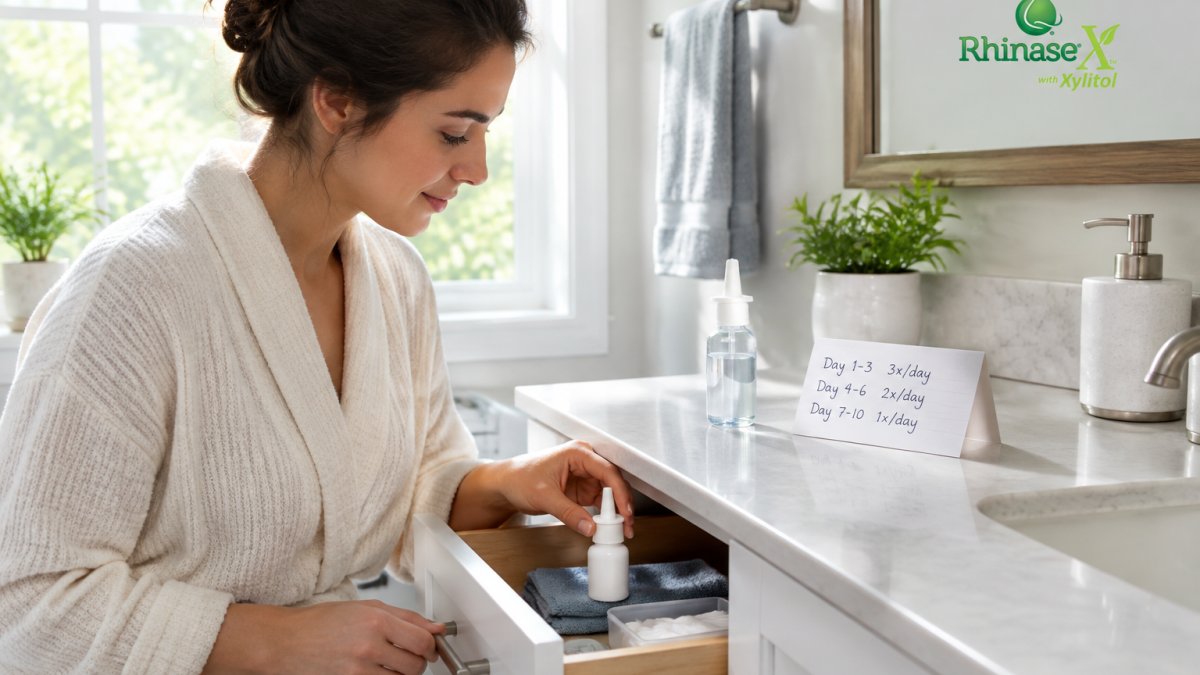
Step 1: Pick Your Quit Date and Clear the Cabinet
Choose a three-day window when poor sleep hurts least, a weekend plus a Monday, or a stretch with no early meetings. Move every decongestant bottle out of reach. Keep one bottle for tapering, and hand the rest to a family member or lock them away. Write the taper schedule on paper and tape it inside the medicine cabinet; the physical note matters more than a phone reminder when you are groggy at 2 a.m.
Step 2: Taper One Nostril at a Time
The one-nostril approach gives you an open airway on one side while the other side recovers. That open side is what keeps you from panicking and reaching for the bottle. Follow this schedule:
- Days 1-3: Spray only the right nostril, once in the morning and once at night. Leave the left nostril completely unsprayed.
- Days 4-6: Spray the right nostril once daily, in the morning only. The left nostril stays unsprayed.
- Days 7-9: Spray the right nostril only every other morning, or when congestion becomes genuinely unbearable. Skip the morning dose on days you can breathe through the right side.
Watch out: if you find yourself "borrowing" sprays for the unsprayed nostril, you have effectively restarted the cycle, reset the clock to Day 1 rather than pushing forward.
Step 3: Manage the 48-Hour Crunch
For many people the worst stretch is short. StatPearls clinical reference on rhinitis medicamentosa notes that symptoms may resolve within 48 hours when an intranasal corticosteroid is started alongside discontinuation of the decongestant. A nasal steroid can calm nasal inflammation while your mucosa recovers. Use saline irrigation every few hours, sleep with your head raised on an extra pillow, and drink plenty of water.
Step 4: Build a Slip Plan Before You Need It
Most people slip once. Decide in advance what you will do: put the bottle back in the drawer, spray saline, set a ten-minute timer, and log the slip on your calendar without judgment. A slip is not a restart unless you spray the unsprayed nostril or return to twice-daily use for more than two days. If that happens, go back to the Day 1 schedule rather than abandoning the taper.
What to Expect From the Taper Itself
The first 48 hours are the hardest, and the open nostril is doing most of the work of keeping you comfortable. By Day 4-6, many people notice the unsprayed side starting to open on its own, which is the signal that the mucosa is recovering. By Day 10, the goal is zero decongestant sprays and a saline-and-steroid routine you can sustain.
Rhinitis Medicamentosa Treatment Options That Work
Treatment typically involves several layers that are often used together.
| Option | What It Does | How Often |
|---|---|---|
| Intranasal corticosteroid | Reduces nasal inflammation during withdrawal | Once daily, as directed |
| Saline nasal rinse or spray | Clears mucus, supports mucociliary clearance | 2-4 times daily |
| Oral decongestant (short term) | Eases sinus pressure while tapering | Per label, a few days max |
If you want a daily-use option that will not restart the cycle, see our guide to a non-addictive nasal spray for daily use. And if you would rather lean on non-medicated methods, these drug-free relief methods for nasal congestion cover seven approaches that help during withdrawal.
Using Saline Nasal Spray for Congestion During Withdrawal
Saline nasal spray is a common supportive step during withdrawal. It does not shrink swollen tissue the way a decongestant does; it works by moisturizing the nasal passages and helping to loosen mucus.
A few habits that make it count:
- Spray or rinse before your steroid dose so the medication reaches clean tissue
- Use saline whenever the urge to reach for the decongestant hits
- Keep a bottle in your bag, at your desk, and by the bed
For a gentle option, our Xynase natural saline nasal spray with xylitol is steroid-free and drug-free, with a tip designed for comfortable use.

How Long Rebound Congestion Lasts and What to Expect Day by Day
Recovery timelines vary with how long the spray was used and whether a steroid is on board. The stages below describe commonly reported patterns during recovery.
- Days 1-2: Peak stuffiness and sinus pressure. This is the 48-hour crunch. Blood vessels that were artificially narrowed are widening back past their normal size, and the mucosa is inflamed. Sleep is worst here; head elevation and saline help more than anything else.
- Days 3-7: Congestion eases in waves. Mornings are hardest because lying flat overnight lets blood pool in the nasal tissue. The unsprayed nostril typically starts to open first, which is the earliest reliable sign the taper is working.
- Week 2: Nasal obstruction fades and sleep improves. The mucosa is still sensitive, so dry air, smoke, and strong fragrances can trigger temporary stuffiness that feels like a setback but is not a return to rebound.
What Slows Recovery Down
A few factors reliably lengthen the timeline: continuing any decongestant spray, even occasionally; skipping the nasal steroid; dry indoor air; and untreated allergies or sinusitis underneath the rebound. If you have underlying allergic rhinitis, the steroid is doing double duty, calming withdrawal inflammation and treating the original trigger, which is why it is the backbone of most taper plans.
When the Timeline Is Not Normal
One honest caveat: not every stuffy nose after quitting is true rebound. A 2013 review on rebound congestion and rhinitis medicamentosa notes that a task force described post-treatment congestion as a return of rhinosinusitis-driven congestion, an alternative explanation worth discussing with your doctor. Watch out: if congestion is worse at Week 3 than it was at Week 1, or if you develop facial pain, fever, or bloody discharge, that is a reason to be seen rather than to keep tapering on your own.
The Mental Side: Coping With the Urge to Spray
The psychological pull is real, and most clinical guides skip it. You are not weak for wanting the bottle. Your body learned that spraying brings relief in seconds, and that habit sits deep.
Try these tactics:
- Delay by ten minutes. Set a timer. The urge usually passes.
- Swap the ritual. Keep saline where the decongestant used to sit and spray that instead.
- Track your wins. Note each spray-free day on a calendar.
- Tell someone. A partner or friend who knows your quit date keeps you accountable.
When to See a Doctor About Nasal Spray Dependency
Call your doctor if any of these apply:
- You have used a decongestant spray daily for more than a week
- Congestion has not improved after two weeks of tapering
- You have facial pain, fever, or bloody discharge
- You have high blood pressure, heart disease, or thyroid problems
A doctor can prescribe a nasal corticosteroid, check for structural causes like polyps, and rule out other sources of chronic congestion. If you are weighing a switch away from medicated sprays, this explanation of why people switch from steroid nasal sprays walks through the reasoning.
Building a Drug-Free Nasal Care Routine With Profounda
A routine beats a rescue plan. Once the decongestant is gone, your nose needs daily moisture to stay comfortable, especially in dry air, during allergy season, or if you use a CPAP machine or oxygen therapy at night.
Our approach at Profounda Health & Beauty is simple: doctor-recommended, steroid-free, drug-free formulas built around natural xylitol and dual-salt saline. The Rhinase X Combo Pack pairs a nasal gel with a nasal spray for upper and lower nasal passages, addressing dryness, congestion, and post-nasal drip at $26.95.

The cycle breaks when the spray stops and moisture takes over. That is the whole game.
Breaking a nasal spray habit takes a plan, a taper, and something gentle to reach for when the urge hits.
Frequently Asked Questions
How long does rebound congestion from nose spray last?
Most people notice the worst of it in the first 48 hours after stopping. Clinical references note that symptoms may resolve within about 48 hours when an intranasal corticosteroid is started alongside discontinuation of the decongestant, though that is a reported timeframe, not a guarantee. Full comfort can take one to three weeks depending on how long you used the spray. Using a saline nasal spray for congestion and a moisturizing mist during this window keeps the nasal passages comfortable while they recover.
Can saline sprays help manage rebound congestion?
Saline does not reverse the rebound effect, but it does keep the nasal mucosa moist and helps clear mucus while you taper. A drug-free moisturizing mist, such as Rhinase Lubricating Nasal Mist ($17.00), adds wetting agents and two types of salt to hydrate the nasal cavity without steroids. Use it as often as needed between taper doses to reduce the dry, stuffy feeling that triggers the urge to reach for the decongestant again.
Is it safe to quit nasal spray cold turkey?
Stopping abruptly is not dangerous for most healthy adults, but it is uncomfortable because the rebound phenomenon peaks fast. A short taper works better for many people: cut to one nostril at a time, then step down to once daily before stopping. If you have heart disease, high blood pressure, or thyroid problems, talk to a doctor before quitting oxymetazoline or phenylephrine, since these ingredients affect blood vessels.
When should I see a doctor for nasal spray dependency?
Book a medical consultation if you have used a decongestant spray daily for more than a week, if congestion persists past two weeks of being spray-free, or if you notice bleeding, facial pain, or fever. A doctor can confirm rhinitis medicamentosa treatment options, prescribe an intranasal corticosteroid such as fluticasone, and rule out structural causes like a deviated septum. Patients with rhinitis medicamentosa can often stop using nasal sprays with medical support.
