

Natural Ingredients for Soothing Nasal Passages
Table of Contents
- Why Natural Ingredients Matter for Nasal Health
- Best Nasal Spray for Dry Nose Relief
- Steam Inhalation and Humidification Techniques
- How to Moisturize Nasal Passages With Natural Oils
- Benefits of Xylitol in Nasal Sprays
- Herbal Remedies and Warm Fluids for Congestion Relief
- Safety Precautions and When to See a Doctor
- Conclusion
Last Updated: August 22, 2026
Why Natural Ingredients Matter for Nasal Health
Natural ingredients for soothing nasal passages offer a gentler alternative that works with your body's own healing mechanisms rather than against them. At Profounda Health & Beauty, we've developed formulations combining time-tested botanical remedies with modern saline science to deliver real relief without the side effects of steroids or decongestants.
Your nasal passages produce mucus naturally, it traps particles, keeps tissues moist, and maintains the delicate pH balance that prevents infection. When you use harsh treatments, you fight against this system. Natural ingredients that moisturize, reduce inflammation, and support mucus drainage work with your body instead of against it.
Your nasal health affects everything downstream: sleep quality, your ability to smell and taste food, and post-nasal drip that irritates your throat. For people using CPAP machines, oxygen therapy, or managing chronic allergies, this becomes a daily quality-of-life issue.
Best Nasal Spray for Dry Nose Relief
The best nasal spray for dry nose relief combines effective hydration, natural anti-inflammatory ingredients, and a formulation that maintains your nasal passage's natural pH balance. Many drugstore options focus on saline alone, which helps temporarily but doesn't address underlying dryness or inflammation.
Look for sprays that include xylitol, a natural humectant that pulls moisture into nasal tissue and holds it longer than plain saline. Xylitol also has mild antimicrobial properties, helping prevent bacterial overgrowth that complicates congestion.
Xynase® Natural Saline Nasal Spray with Xylitol at $11.79 delivers pharmaceutical-grade saline combined with natural xylitol, addressing both immediate congestion and underlying dryness. It's safe for all ages, making it practical for families.

For severely dry nasal passages, the sesame oil-based spray at $15.00 offers deeper moisturizing power with 100% pharmaceutical-grade sesame oil that coats and protects irritated tissue while reducing inflammation. This works particularly well for people whose dryness stems from environmental factors, heating systems, or medical equipment like CPAP machines.
Steam Inhalation and Humidification Techniques
Steam inhalation opens congested nasal passages and delivers moisture directly to irritated tissue. The heat increases blood flow to your nasal lining, reducing inflammation, while moisture loosens thick mucus for natural drainage.
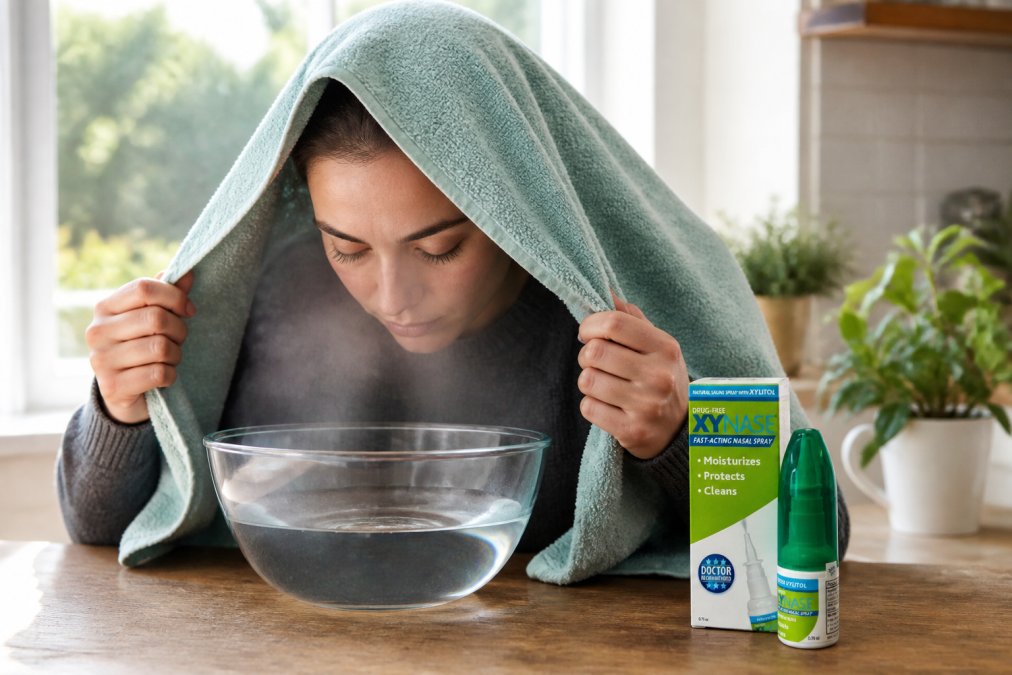
The classic bowl method works well: boil water, let it cool for 30 seconds, then lean over the bowl with a towel draped over your head. Breathe normally through your nose for 10-15 minutes. Many people add a few drops of eucalyptus oil to enhance the decongestant effect.
For consistent relief, a humidifier becomes essential, particularly during winter or in dry climates. Cool-mist humidifiers work best because they add moisture without scalding risk. Aim for 40-50% relative humidity in your bedroom; too much encourages mold growth (the CDC).
Run your humidifier for 2-3 hours before bed, positioning it to distribute moisture throughout your sleeping area. Combine this with nightly saline spray or moisturizing gel, and most people notice dramatic improvement within a week. Consistent use actually retrains your nasal tissue to maintain better moisture balance on its own.
How to Moisturize Nasal Passages With Natural Oils
Moisturizing nasal passages with natural oils requires understanding which oils work best and how to apply them safely. Not all oils are appropriate for nasal use.
Sesame oil stands out as the premier choice for nasal moisturizing. It's light enough to spread easily but thick enough to create a protective coating that holds moisture in place. Sesame oil also contains lignans that reduce inflammation and support tissue healing. Apply it using a clean dropper or spray applicator, never pour oil directly into your nose.

Tilt your head back slightly, insert the applicator just inside one nostril, and spray a light mist. Sniff gently to distribute the oil. Repeat on the other side. Do this once in the morning and once before bed. After 3-5 days of consistent application, most people notice significantly less irritation and decreased congestion.
Honey-infused formulations offer different benefits. Honey has natural antibacterial and anti-inflammatory properties and is a humectant that pulls moisture into tissue. Nasal Nectar with Real Honey at $15.95 works particularly well for people whose congestion stems from mild sinus inflammation or post-nasal drip.

Apply oils twice daily using light applications. More isn't better, it just makes your nose feel greasy and can impede normal mucus drainage. After 2-3 weeks of consistent use, many people reduce frequency to once daily as their nasal tissue regains natural moisture balance.
Benefits of Xylitol in Nasal Sprays
Xylitol has emerged as one of the most scientifically-supported natural ingredients for nasal health. Unlike sugar, which feeds bacteria and worsens congestion, xylitol inhibits bacterial growth, particularly valuable for people prone to sinus infections.
Xylitol is a humectant that attracts and holds water molecules (peer-reviewed research). When applied to nasal passages, it pulls moisture from deeper tissue layers to the surface, hydrating the mucous membrane. This hydration reduces inflammation naturally, swollen, dry tissue causes congestion, but properly moisturized tissue shrinks back to normal size and function.
Rhinase X Natural Nasal Mist Spray with Xylitol at $17.00 combines xylitol with a hypotonic saline base. The hypotonic formulation has lower salt concentration than your body's natural fluids, encouraging water to move into swollen nasal tissue, reducing congestion from the inside out. Doctor-recommended formulations work faster and more thoroughly than standard saline sprays because they address congestion through multiple mechanisms simultaneously.

For people with chronic congestion, xylitol-based sprays often provide relief within 2-3 days where plain saline might take a week.
Herbal Remedies and Warm Fluids for Congestion Relief
Herbal remedies work through multiple pathways, some reduce inflammation, others support mucus drainage, and several have antimicrobial properties. Warm fluids amplify these benefits by increasing blood flow to your nasal passages and loosening thick mucus.
Ginger tea stands out as one of the most effective herbal remedies. Fresh ginger contains gingerols and shogaols, compounds that reduce inflammation and support mucus drainage (peer-reviewed research). Steep fresh ginger slices in hot water for 10 minutes, then drink slowly. Many people report that sipping ginger tea twice daily reduces congestion more effectively than over-the-counter decongestants, without side effects.
Turmeric offers similar anti-inflammatory benefits while supporting your immune system's response to upper respiratory irritation. Golden milk (turmeric mixed with warm milk and honey) delivers real therapeutic benefit.
Eucalyptus and peppermint work differently, they create a cooling sensation that makes breathing feel easier while their aromatic compounds help open airways. Add 2-3 drops of eucalyptus oil to hot water, cover your head with a towel, and breathe the steam for 10 minutes.
Spicy foods work through a distinct mechanism. Capsaicin in hot peppers triggers temporary increased nasal mucus production and blood flow, helping clear congestion. This provides 1-2 hours of relief but isn't a long-term solution.
The key with herbal remedies is consistency. Drinking ginger tea twice daily for a week produces cumulative benefits as inflammation gradually decreases. Combine herbal approaches with moisturizing sprays or oils for synergistic effect.
Safety Precautions and When to See a Doctor
Natural ingredients are generally safe, but nasal health involves delicate tissue that demands respect. Never insert anything solid into your nasal passages, cotton swabs, tissues, or fingers can damage the mucous membrane and introduce bacteria. Use saline rinses or sprays designed for that purpose. Avoid homemade saline solutions unless using sterile water and pharmaceutical-grade salt.
For children, additional caution applies. While ingredients in products like Xynase Natural Saline Nasal Spray are safe for all ages, application technique matters. Children under 6 often can't cooperate with proper spray technique. Consult your pediatrician before using any nasal product on young children.
Seek medical attention if you experience:
- Nosebleeds lasting longer than 10 minutes or occurring multiple times weekly
- Nasal discharge that's thick, discolored, or foul-smelling
- Severe facial pain or pressure not improving with home care
- Congestion persisting beyond 10 days or worsening despite treatment
- Symptoms of allergic reaction: swelling, difficulty breathing, or severe itching
If you're pregnant or nursing, consult your doctor before using any nasal product. Pregnancy changes nasal physiology significantly. Similarly, if you take medications or have chronic health conditions, mention your nasal care routine to your healthcare provider.
Natural ingredients for soothing nasal passages offer real relief without the side effects of pharmaceutical decongestants or steroids. When congestion disrupts your sleep or chronic dryness affects your quality of life, the right combination of moisturizing sprays, steam inhalation, and herbal support can restore normal nasal function. Profounda Health & Beauty's formulations, particularly Xynase Natural Saline Spray with Xylitol and Rhinase X with its advanced hypotonic delivery, combine these natural approaches with pharmaceutical-grade precision. Get started with Profounda Health & Beauty and experience the difference professional-grade natural nasal care delivers.
Frequently Asked Questions
How can I naturally moisten nasal passages without medication?
Steam inhalation, saline rinses, and natural nasal sprays with ingredients like xylitol and sesame oil are effective drug-free options. Use a humidifier to increase air moisture, drink plenty of water to thin mucus, and apply natural nasal moisturizers 2-3 times daily. These methods address inflammation and nasal tissue irritation without steroids or decongestants, making them suitable for long-term use and safe for all ages.
What are the benefits of xylitol in nasal sprays?
Xylitol is a natural humectant that draws moisture into nasal passages and helps reduce inflammation. It supports mucus drainage, decreases sinus pressure, and may help prevent bacterial growth in the upper respiratory tract. Xylitol-based sprays provide anti-inflammatory relief without steroids, making them ideal for those with allergies, chronic dryness, or sensitivity to medicated options.
Is it safe to use natural nasal sprays daily for chronic congestion?
Yes, natural saline and oil-based nasal sprays are safe for daily use. Unlike steroid sprays that can cause rebound congestion, natural moisturizers actually improve nasal health over time by maintaining hydration and supporting the nasal mucosa. However, if congestion persists beyond two weeks despite daily natural remedies, or if you experience severe sinus pressure, consult a healthcare provider to rule out sinusitis or other underlying conditions.
Can natural nasal remedies help with post-nasal drip?
Yes. Post-nasal drip often results from inflammation and inadequate mucus thinning. Natural ingredients like xylitol reduce inflammation, while hydration and steam inhalation thin mucus, promoting better drainage. Saline rinses clear excess mucus from the nasal passages, reducing the sensation of drip. Using a humidifier at night and applying natural nasal moisturizers regularly addresses the root cause by keeping nasal tissues healthy and supporting proper mucus drainage.
This article was written using GrandRanker