

Natural Remedies for Dry Nose and Sinus Discomfort
Table of Contents
- Why Your Nose and Sinuses Feel Dry in the First Place
- Natural Remedies for Dry Nose and Sinus Discomfort: 7 That Work
- Choosing a Saline Spray for Dry Nose Relief
- Using a Saline Nasal Rinse for Sinus Pressure Safely
- Picking a Humidifier for Dry Nose Relief (and Keeping It Clean)
- Home Remedies for Sinus Pressure: What Helps and What to Skip
- When Dry Nose and Sinus Discomfort Need a Doctor
- Frequently Asked Questions
Last Updated: October 19, 2026
Why Your Nose and Sinuses Feel Dry in the First Place
Your nose is supposed to stay wet. A thin layer of mucus traps dust, pollen, and germs, then moves them out of your body.
At Profounda Health & Beauty, we hear the same story from customers: dry nasal passages, crusting, a burning feeling, and sinus pressure that shows up around the same time each year.
The usual causes are easy to name:
- Dry air from indoor heating, air conditioning, or winter weather
- Long flights and low-humidity hotel rooms
- CPAP machines and oxygen therapy, which push dry air straight into your nose
Most people blame allergies. Often it's just dry air. The fix is different, which is why the next section matters.
Dryness, a Sinus Infection, or Allergies? How to Tell
Plain dryness feels like a dry nose with mild crusting. It usually clears up when humidity rises. A sinus infection brings facial pain, thick discolored mucus, and symptoms that drag on past ten days.
One clue: dry nasal passages tend to improve within a day or two of adding moisture. Sinus infections don't. If symptoms keep coming back, the cause is probably environmental, not infectious.
Natural Remedies for Dry Nose and Sinus Discomfort: 7 That Work
These natural remedies for dry nose and sinus discomfort are the ones worth trying first. None require a prescription, and most cost very little.
- Steam and steamy showers to loosen crusting
- Warm compresses for sinus pressure
- Saline spray to moisturize and lubricate
- Saline nasal rinse for congestion and pressure
- A humidifier to raise indoor humidity
- More water through the day
- Head elevation at night
Below, we break down how to use each one without making things worse.
Steam, Showers, and Warm Compresses
Steam inhalation is the fastest relief for dry nasal passages.
Keep it short. Long, hot steam sessions can dry you out further, and the bowl method carries a burn risk if you lean too close.
A warm compress works differently.
Skip essential oils in the water. Eucalyptus and peppermint smell good but can irritate sensitive nasal passages, especially in children.
Hydration and Sleep Position
Water intake affects mucus thickness. When you're dehydrated, mucus gets sticky and hard to clear.
Sleep position matters just as much. Lying flat lets mucus pool and pressure build. Try sleeping with your head elevated on an extra pillow.
Dry indoor air at night undoes daytime progress. A humidifier in the bedroom often helps more than anything you do during the day.
Choosing a Saline Spray for Dry Nose Relief
A saline spray for dry nose is the simplest tool in this whole list. It adds moisture, loosens crusts, and rinses away irritants without drugs.
Look for three things:
- Buffered saline or a formula with minerals, which feels gentler than plain salt water
- A fine mist tip for even coverage
- No steroids or decongestants if you plan to use it daily
For daily dryness, we recommend Rhinase X Natural Nasal Mist Spray with Xylitol. It's steroid-free and drug-free, uses natural xylitol for lasting hydration, and carries a doctor-recommended label. The hypotonic formula includes sodium and potassium, which moisturize without the sting some high-salt sprays cause.


How to Apply Nasal Moisturizers Correctly
Application technique matters more than most people realize. Here's how we'd do it:
- Blow your nose gently first to clear loose mucus.
- Shake the bottle and prime the pump.
- Tilt your head slightly forward, not back.
- Insert the tip just inside the nostril, pointing toward the ear, not the septum.
- Spray once or twice and sniff gently. Don't snort hard.
- Repeat in the other nostril. Wipe the tip clean after use.
For thicker dryness or crusting, a gel holds longer than a mist. Rhinase X Soothing Nasal Gel with Natural Xylitol is designed for exactly that: long-lasting moisture with the same steroid-free, xylitol-based approach.
If you prefer a single-ingredient option, NaturePro Sesame Oil Nasal Spray uses 100% pharmaceutical grade sesame oil to lubricate severely dry passages and create a barrier against irritants.

Using a Saline Nasal Rinse for Sinus Pressure Safely
A saline nasal rinse for sinus pressure flushes out thick mucus and irritants.
Safety rules come first:
- Use distilled, sterile, or boiled-and-cooled water. Never tap water straight from the sink.
- Clean the device after every use and let it air dry fully.
- Mix the salt solution exactly as directed.
Neti pots and squeeze bottles both work.
Rinsing twice a day is typical during a flare-up. Once symptoms settle, cut back to a few times a week.
People with a history of ear problems or a compromised immune system should check with a doctor before starting nasal irrigation.
Picking a Humidifier for Dry Nose Relief (and Keeping It Clean)
A humidifier for dry nose relief works, but only if you run it correctly. Target 30 to 50 percent relative humidity. Higher than that invites mold and dust mites; lower than 30 percent and your nasal passages dry out overnight.
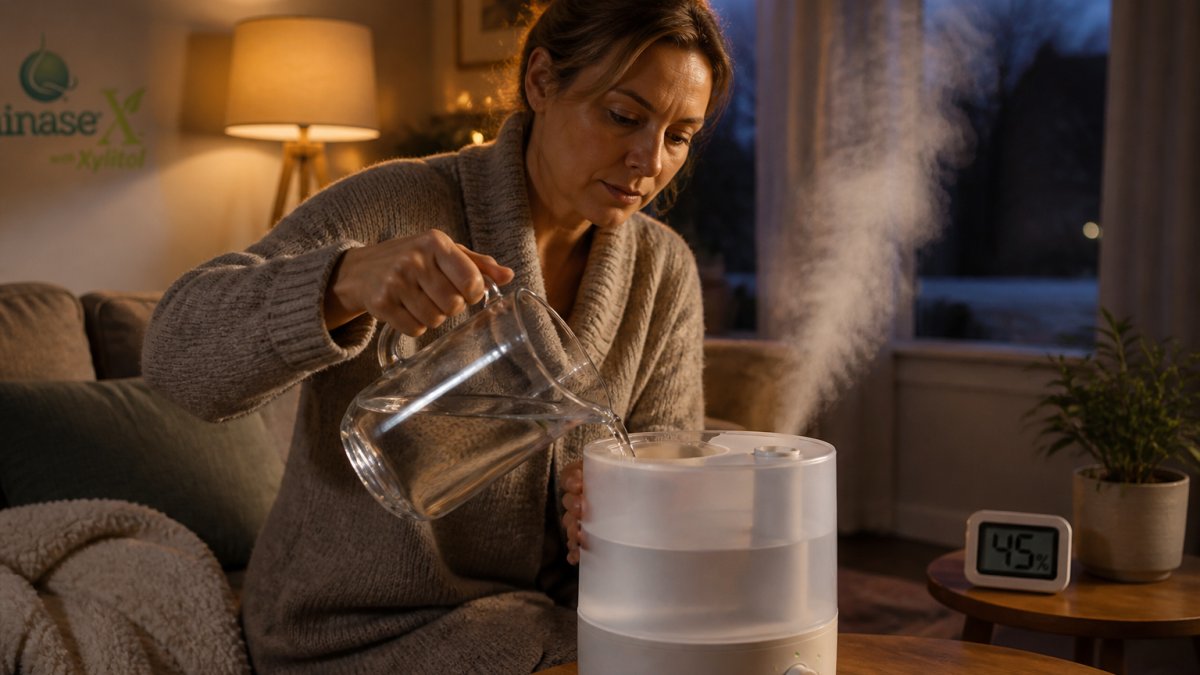
Cool Mist vs. Warm Mist
Cool-mist and warm-mist models both add moisture, but they fail differently:
- Cool mist (evaporative or ultrasonic) is safer around children because there is no hot water to spill. Ultrasonic models can leave a fine white dust if you have hard water; evaporative models avoid that but need a wick filter changed every few weeks to a couple of months depending on use.
- Warm mist (steam vaporizers) feels more comfortable in a cold bedroom and the boiling action kills most microbes in the tank, but the hot water and steam outlet are a burn risk for kids and pets.
Whole-house humidifiers attached to the furnace are an option if dryness is a seasonal, home-wide problem. They cost more up front and need annual service, but they remove the daily refill chore.
Water Type Matters
Use distilled or demineralized water in ultrasonic and cool-mist units when you can. Tap water carries minerals that end up as white dust on furniture and in the air, and it can contain microbes that a humidifier will happily aerosolize. If distilled water is impractical, an evaporative model with a wick is the more forgiving choice.
Cleaning Cadence That Actually Prevents Mold
Cleaning is where most people slip, and a dirty humidifier can blow bacteria and mold into the air you are trying to make healthier. A workable routine:
- Daily: empty the tank, rinse it, and let it air dry between fills. Do not leave standing water in the tank.
- Every few days: scrub the tank and base with a mild soap solution, rinse thoroughly, and dry.
- Weekly: descale with a diluted white vinegar solution, then rinse well. Mineral scale is where biofilm starts.
Placement and Overnight Use
Put the unit on a hard, level surface a few feet from the bed, not directly beside your pillow, so mist disperses rather than soaking one spot. Keep the bedroom door closed to hold humidity, and run the unit on low overnight rather than blasting it. If windows sweat or walls feel damp in the morning, you are over-humidifying, dial back and check the hygrometer.
Home Remedies for Sinus Pressure: What Helps and What to Skip
Home remedies for sinus pressure fall into two groups: those that ease symptoms and those that make things worse.
Worth trying:
- Warm compresses across the sinuses
- Saline rinses and sprays
- Steam from a hot shower
Skip these:
- Petroleum jelly inside the nostrils. It's fine on the outer rim, but inside the nose it can be inhaled into the lungs.
- Undiluted essential oils. Tea tree oil and eucalyptus can burn nasal tissue.
- Decongestant sprays past three days. Rebound congestion is real and stubborn.
Over-the-counter options have a place, but many people get enough relief from moisture alone. That's the appeal of drug-free care: you can use it daily without worrying about rebound or long-term effects.
When Dry Nose and Sinus Discomfort Need a Doctor
Most dryness clears with home care within a few days of adding moisture. Some symptoms need a professional look, and a few need care right away. Sorting them by urgency makes the decision easier.
Seek Care Promptly
Call your doctor or visit urgent care if you notice:
- Nasal bleeding that won't stop after ten to fifteen minutes of firm pressure, or that keeps returning over days
- Fever along with facial pain or pressure
- Facial swelling, or swelling around the eyes
These can point to a sinus infection, a structural issue such as a deviated septum or nasal polyp, or another condition that home remedies won't fix. Swelling around the eyes or vision changes are the most urgent of the group and warrant same-day evaluation.
What a Clinician Will Check
A visit usually starts with a history: how long symptoms have lasted, whether they flare with seasons or heating, what medications you take, and whether you use CPAP or oxygen. A clinician may examine the nasal passages with a light and scope, check for polyps or structural narrowing, and, if infection is suspected, look at the character and duration of discharge rather than color alone.
Children and Special Cases
Children with ongoing dryness or nosebleeds deserve a pediatric visit, especially before you start any new nasal product. People with a compromised immune system, a history of ear problems, or recent nasal surgery should check with a doctor before starting nasal irrigation. And if dryness persists despite consistent humidification and saline use, that is itself a reason to be evaluated rather than to keep adding remedies.
Frequently Asked Questions
What can soothe a dry nose quickly?
The fastest relief comes from putting moisture directly where it is missing. A saline spray for dry nose, a few drops of buffered saline, or a thin layer of nasal gel restores the moisture barrier within minutes. Steam from a steamy shower or a bowl of hot water can loosen crusty buildup in about 10 minutes. For overnight dryness, run a cool-mist humidifier in the bedroom and keep the door closed. Avoid picking or blowing hard, which irritates the nasal lining further and can trigger nasal bleeding.
Can a humidifier help with a dry nose and sinuses?
Yes, when the indoor air is dry, which is common in heated homes during winter. A humidifier for dry nose relief works best when you target 30 to 50 percent relative humidity and check it with a cheap hygrometer. Above 50 percent, dust mites and mold thrive. Clean the tank every one to two days with a diluted vinegar solution and refill with fresh distilled or filtered water. A dirty humidifier can spray bacteria into your nasal passages and make irritation worse, so hygiene matters as much as the machine itself.
Is saline spray safe to use every day?
Plain saline and xylitol-based moisturizing sprays are generally safe for daily use because they contain no steroids or decongestants, so there is no rebound congestion risk. Use them as often as three to four times daily when your nose is dry, and follow the label directions. Choose a product labeled drug-free and steroid-free if you want something suitable for children or long-term use. Prescription and over-the-counter medicated sprays are a different category and should follow their own dosing limits.
Which home remedies should I avoid putting inside my nose?
Skip petroleum jelly and oil-based products for deep nasal use unless a doctor recommends them, because of a rare but serious risk of lipid pneumonia from inhaling oils. Do not use essential oils such as eucalyptus, peppermint, or tea tree oil directly inside the nostrils; they sting and can damage the nasal lining. Avoid tap water in nasal rinse devices, since it can carry organisms that cause dangerous infections. Also skip hydrogen peroxide, rubbing alcohol, and undiluted saltwater, all of which irritate tissue rather than soothe it.