

Natural Ways to Reduce Sinus Inflammation
Table of Contents
- Why Sinus Inflammation Happens and What Makes It Worse
- Hydration as Your First Line of Defense 💧
- Nasal Irrigation Benefits for Congestion Relief 🌊
- How to Reduce Sinus Swelling Fast With Heat and Moisture 🔥
- Anti-Inflammatory Foods and Supplements That Work 🥗
- Xylitol Nasal Spray Benefits for Long-Lasting Relief ✨
- When to See a Doctor and What Not to Ignore 🩺
- Frequently Asked Questions
Last Updated: September 19, 2026
Why Sinus Inflammation Happens and What Makes It Worse
Common Acute Triggers:
- Allergies and seasonal pollen exposure
- Viral infections like colds and flu
- Prolonged use of decongestant sprays (creates rebound congestion)
- Medical equipment like CPAP machines causing nasal irritation
Chronic Environmental Factors (Often Overlooked):
- Dry indoor air: Heating systems in winter and air conditioning in summer drop humidity below 30%, drying nasal tissues and making them more susceptible to irritation and infection. This is the single largest preventable cause of chronic sinus issues.
- Poor air quality: Outdoor pollution (particulate matter, nitrogen dioxide) and indoor sources (dust, pet dander, mold spores, volatile organic compounds from cleaning products) trigger inflammation daily. People in urban areas or those with pets often don't realize their environment is the root cause.
- Mold and moisture imbalances: Humidity above 60% promotes mold growth in bathrooms and basements, which then circulates through HVAC systems. Conversely, humidity below 30% dries tissues. The optimal range is 40-50%.
- Smoke and chemical irritants: Cigarette smoke, vaping, incense, and strong cleaning products irritate nasal passages and impair the ciliary action that normally clears mucus.
The Rebound Congestion Trap:
Proactive Environmental Management (The Missing Piece):
-
Humidity optimization: Use a humidifier to maintain 40-50% relative humidity, especially during winter months. Ultrasonic or evaporative humidifiers work equally well; aim for a unit that covers your bedroom (typically 500-1000 square feet). Check humidity with an inexpensive hygrometer ($10-20).
-
Air quality improvement: HEPA air purifiers reduce particulate matter and allergens. Place one in your bedroom and run it continuously, especially if you have pets or live near traffic. The EPA guidance on indoor air quality recommends MERV-13 or higher filters for HVAC systems.
-
Allergen reduction: Wash bedding weekly in hot water, use allergen-proof pillow and mattress covers, and remove carpeting from the bedroom if possible. These steps reduce the daily allergen load your nasal passages must process.
-
Ventilation and mold control: Run exhaust fans during and 20 minutes after showers to prevent mold growth. Keep bathroom humidity below 60% and check for visible mold monthly, especially around windows and under sinks.
This is where gentle, evidence-based approaches make a real difference. The strategies below work because they address the root cause, moisture, circulation, environmental triggers, and reducing irritants, rather than just masking discomfort. Combined with environmental management, they create lasting relief.

Hydration as Your First Line of Defense 💧
Here's what hydration does for sinus health:
- Thins mucus secretions so they drain more easily
- Keeps nasal tissues moist and flexible
- Reduces the urge to blow your nose forcefully
- Supports your immune system's ability to fight infection
Many people don't realize that coffee and alcohol actually dehydrate you further, making sinus congestion worse. If you drink these, add an extra glass of water for each cup of coffee or alcoholic beverage.
Nasal Irrigation Benefits for Congestion Relief 🌊
A neti pot or saline rinse bottle works by:
- Flushing out thick mucus that blocks drainage
- Removing pollen, dust, and environmental irritants
- Reducing bacterial buildup naturally
- Improving air flow without medication
How to do it safely:
- Use distilled or boiled water only (tap water can introduce bacteria)
- Mix with saline solution (1/2 teaspoon salt per 8 oz water)
- Tilt your head sideways over a sink
- Pour the solution gently into your upper nostril
- Let it flow through and out the lower nostril
- Repeat on the other side
The beauty of this method is that it requires no drugs and works with your body's natural drainage system. Unlike decongestant sprays, nasal irrigation doesn't create dependency or rebound congestion.
How to Reduce Sinus Swelling Fast With Heat and Moisture 🔥
Steam inhalation opens congested passages within minutes:
- Sit in a steamy bathroom for 10-15 minutes
- Or use a bowl of hot water with a towel draped over your head
- Breathe deeply to let the moisture penetrate
A warm compress does the same thing for facial pain:
- Soak a clean cloth in warm water
- Apply to your forehead and cheeks for 5-10 minutes
- Repeat 2-3 times daily
Many people find that sleeping with an extra pillow to elevate their head helps drainage overnight. Gravity assists mucus movement downward instead of pooling in your sinuses.
Xynase® Natural Saline Nasal Spray with →
Anti-Inflammatory Foods and Supplements That Work 🥗
What you eat directly impacts sinus inflammation. Certain foods naturally reduce sinus inflammation by lowering overall inflammation in your body. However, not all remedies work equally well, and some carry safety considerations depending on your health status.
Evidence-Based Anti-Inflammatory Foods (ranked by clinical support):
Strong Evidence:
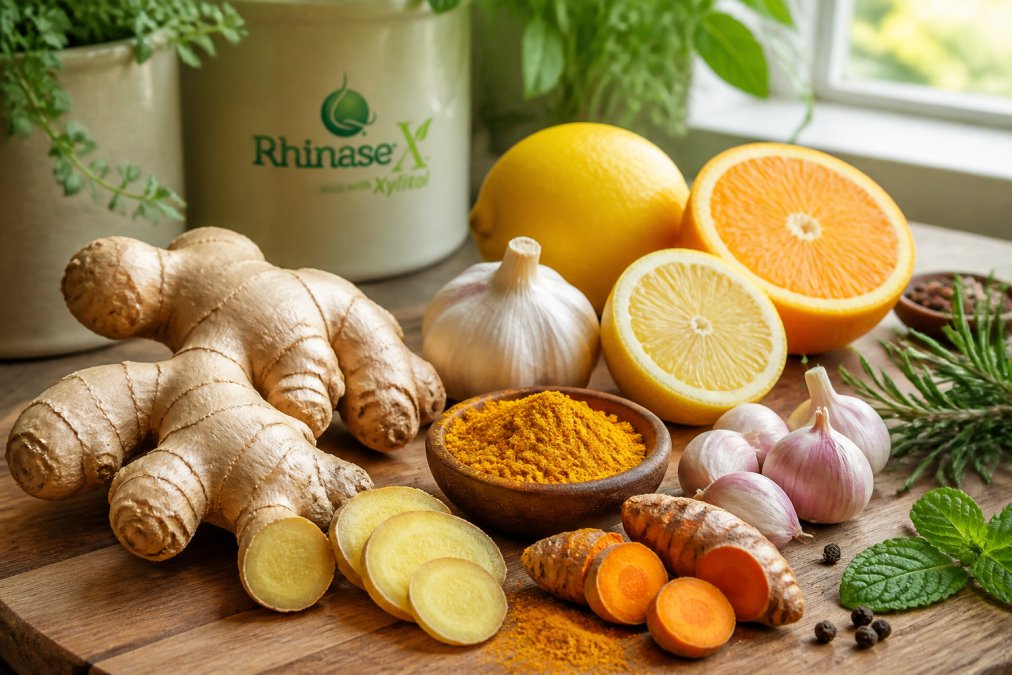
- Ginger: Reduces swelling and supports respiratory health. Fresh ginger tea (1-2 teaspoons grated per cup) or 1-2 grams daily in supplement form shows measurable reduction in inflammatory markers. Caution: May increase bleeding risk if you take anticoagulants like warfarin; consult your doctor first.
- Turmeric (curcumin): Contains curcumin, a powerful anti-inflammatory compound. Effective at 500-1000 mg daily, though absorption improves when paired with black pepper (piperine). Warning: High doses may irritate the stomach or interact with blood thinners and diabetes medications.
- Omega-3 fatty acids: Fish oil or algae-based supplements (1000-2000 mg EPA+DHA daily) reduce systemic inflammation. Avoid if you have a fish allergy or take blood thinners without medical approval.
Moderate Evidence:
- Garlic: Natural antimicrobial and anti-inflammatory properties; 1-2 cloves daily or 600-1200 mg supplement form. May cause stomach upset in sensitive individuals.
- Citrus fruits and vitamin C: High in vitamin C, supports immune function. Aim for 500-1000 mg daily from food or supplements. Excessive supplementation (>2000 mg/day) may cause kidney stones in susceptible people.
- Leafy greens: Packed with antioxidants that fight inflammation; no dosing limit, eat freely.
- Honey: Soothes irritated tissues and has antimicrobial properties. Use 1-2 teaspoons daily. Never give to children under 1 year due to botulism risk.
Moderate-to-Low Evidence (use as supportive, not primary):
- Quercetin: A natural antihistamine found in onions and apples; 500-1000 mg daily may help allergy-driven sinus inflammation. May interact with certain antibiotics.
- Bromelain (from pineapple): Some studies suggest it reduces sinus swelling; 500-1000 mg daily between meals. Avoid if allergic to pineapple or latex, or if taking blood thinners.
Foods and Substances to Limit:
Avoid foods that trigger inflammation in your specific case. Common culprits include:
- Dairy (for some people): Mucus-forming in sensitive individuals; try eliminating for 1-2 weeks to test.
- Processed foods: High in refined oils and additives that promote inflammation.
- Excess sugar: Feeds inflammatory pathways; limit to <25 g added sugar daily.
- Alcohol: Dehydrates and can worsen congestion.
- Spicy foods: May temporarily increase nasal secretions (though some people find relief).
Supplement Safety Checklist:
Before starting any supplement, verify:
- You are not pregnant or nursing (many herbs are not studied in these populations)
- You do not take prescription medications that interact (ginger, turmeric, and garlic all interact with blood thinners and some diabetes drugs)
- You do not have a history of kidney stones (high-dose vitamin C increases risk)
- You do not have a bleeding disorder (ginger, garlic, and omega-3s have mild anticoagulant effects)
Xylitol Nasal Spray Benefits for Long-Lasting Relief ✨
Xylitol has emerged as one of the most effective natural ingredients for xylitol nasal spray benefits. This naturally occurring sugar alcohol works differently than saline alone.
How xylitol works:
- Prevents bacteria from sticking to nasal tissues
- Provides longer-lasting moisture than plain saline
- Supports natural mucus drainage
- Reduces the urge to use decongestants
When to See a Doctor and What Not to Ignore 🩺
Most sinus inflammation responds well to natural approaches within 1-2 weeks. But certain signs mean you need professional evaluation.
See a doctor if you experience:
- Symptoms lasting longer than 10 days without improvement
- Severe facial pain or pressure that doesn't ease with heat
- Fever above 101°F
- Discolored nasal discharge (thick yellow or green mucus)
- Vision changes or swelling around your eyes
- Symptoms affecting only one side of your face
Frequently Asked Questions
How can I reduce sinus inflammation quickly at home?
Start with hydration, drink at least 8-10 glasses of water daily to thin mucus and support drainage. Use steam inhalation for 10-15 minutes twice daily by breathing in steam from a hot shower or bowl of hot water. Apply a warm compress to your sinuses for 15 minutes. Saline nasal irrigation with a neti pot or spray helps clear nasal passages and reduce inflammation. Products like Rhinase X with xylitol provide dual moisturizing action for faster relief. Elevate your head while sleeping to encourage drainage.
What are the best natural anti-inflammatory foods for sinus relief?
Ginger, turmeric, and garlic contain compounds that reduce inflammation and support immune function. Omega-3 rich foods like salmon and flaxseeds help manage inflammation throughout your body. Vitamin C sources, citrus fruits, bell peppers, and berries, boost immune response and reduce mucus buildup. Honey has natural antimicrobial properties and soothes irritated passages. Spicy foods containing capsaicin can temporarily open nasal passages. Avoid dairy, refined sugars, and processed foods, which can increase mucus production and inflammation.
How does xylitol nasal spray help with sinus inflammation?
Xylitol is a natural sugar alcohol with unique moisturizing properties that hydrate nasal passages without the dryness caused by steroid sprays. Studies show xylitol prevents bacteria from adhering to nasal walls, reducing infection risk and inflammation. Products like Xynase and Rhinase X combine xylitol with saline to provide dual-action relief, the xylitol moisturizes while saline clears congestion. This combination offers longer-lasting hydration than plain saline alone, making it especially effective for chronic inflammation and post-nasal drip.
When should I see a doctor for persistent sinus inflammation?
Seek medical attention if inflammation lasts longer than 10 days, worsens despite home care, or is accompanied by fever above 101°F, severe facial pain, vision changes, or thick green nasal discharge. If you experience nosebleeds frequently or have symptoms interfering with sleep and daily function, consult an ENT specialist. Those using CPAP machines or oxygen therapy with persistent nasal irritation should discuss options with their doctor. Natural remedies work best for mild to moderate inflammation; persistent or severe cases may require professional evaluation to rule out sinus infection or other conditions.