
Order a Steroid Free Nasal Care Kit: 2026 Review
Table of Contents
- Why a Steroid Free Nasal Care Kit Is Worth Ordering
- Steroid-Free Nasal Care Kits Compared: Price and Features
- Rhinase X Combo Pack: Best for Severe Dryness
- Rhinase Nasal Care Combo Pack: Best Aloe-Free Daily Kit
- Xynase Saline Nasal Spray: Best Budget Starter Option
- How to Use Nasal Wetting Agents and Saline Sprays Correctly
- Saline Nasal Irrigation Benefits and When to Add a Kit
- Frequently Asked Questions
Last Updated: September 11, 2026
Why a Steroid Free Nasal Care Kit Is Worth Ordering
If you use a steroid nasal spray every day, you already know the trade-off: congestion relief that comes with dryness, stinging, and a nagging worry about long-term use. That is why so many people now search for a steroid free nasal care kit instead. A steroid-free kit uses saline, wetting agents, and moisturizers to hydrate the nasal passages rather than suppress inflammation with medication.

A steroid-free kit uses saline, wetting agents, and moisturizers to hydrate the nasal passages rather than suppress inflammation with medication. The logic is simple. Steroid sprays reduce swelling, but they do not add moisture, and for a lot of users the dryness becomes its own problem. A steroid-free kit treats the underlying irritation and leaves the steroid decision to you and your doctor.
Below, we break down three kits worth ordering, what each costs, and how to use them correctly.
Steroid-Free Nasal Care Kits Compared: Price and Features
Three kits cover almost every use case, and they range from a budget starter to a full dual-action system. Every option here is steroid-free and drug-free.
| Kit | Price | What's Included | Best For |
|---|---|---|---|
| Rhinase X Combo Pack | $26.95 | Nasal gel (30 g) + spray (30 ml) | Severe dryness, upper and lower passages |
| Rhinase Nasal Care Combo Pack | $26.95 | Nasal gel (1 oz) + saline spray (1 oz) | Daily maintenance, aloe-free |
| Xynase Saline Nasal Spray | $11.79 | Single 0.75 fl oz spray | Budget starter, all ages |
A common mistake is buying the cheapest single spray and expecting it to fix dryness in both the upper and lower nasal passages. Sprays reach the upper sinus areas; gels coat the lower passages. That is why the combo packs exist.

Rhinase X Combo Pack: Best for Severe Dryness
The Rhinase X Combo Pack is the strongest steroid-free option for people whose dryness runs deep. It pairs a 30 g nasal gel with a 30 ml spray, so you treat both the upper and lower nasal passages in one routine.
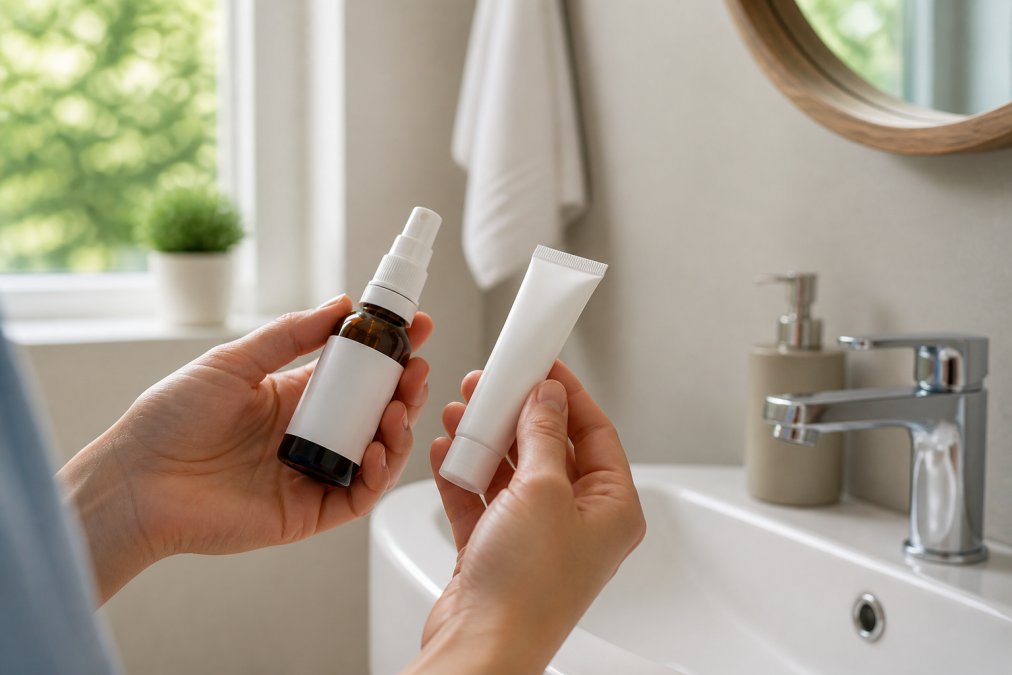
What sets it apart is the formula. It combines dual wetting agents, a dual salt blend of sodium and potassium, and natural xylitol. The wetting agents create a protective layer that traps moisture and helps keep allergens out, while the salts work with your body's own moisture control at the cellular level.
Where it falls short: at $26.95 it costs more than a basic saline bottle, and if your dryness is mild, you may not need both products. For severe, persistent dryness, though, nothing in this lineup covers more ground.
Rhinase Nasal Care Combo Pack: Best Aloe-Free Daily Kit
The Rhinase Nasal Care Combo Pack is a daily option for sensitive noses. It pairs a 1 oz nasal gel with a 1 oz saline spray, both aloe-free, dye-free, and fragrance-free.
That matters more than it sounds. Aloe is a common additive in moisturizing nasal products, and a small share of users react to it with itching or irritation. If you have ever used a "soothing" spray and felt worse afterward, aloe may be the culprit. This kit removes it entirely.
The formula is pH balanced at 6.2, which matches the nose's natural environment and avoids the stinging that off-balance sprays cause. It also contains two wetting agents plus two types of salt for efficient hydration. Doctor recommended and safe for everyday use, it is a kit for someone who just wants a gentle, no-drama routine. The only real drawback is that it is built for maintenance, not severe dryness, so heavy CPAP or oxygen users may want the X version instead.
Xynase Saline Nasal Spray: Best Budget Starter Option
Xynase is an entry point, and at $11.79 it is the least expensive way to try steroid-free nasal care. It is a single 0.75 fl oz saline spray that combines saline with xylitol for gentle relief from congestion, allergy symptoms, and sinus pressure.
The appeal is simplicity. It is non-GMO, gluten-free, and free of fillers and flow agents, with a spray tip designed to fit comfortably even in small noses. That makes it a reasonable first purchase for a child or for anyone who wants to test whether xylitol-based moisture helps before committing to a combo pack.
How to Use Nasal Wetting Agents and Saline Sprays Correctly
Many people use nasal sprays incorrectly, which can lead to a product underperforming. The technique takes thirty seconds to learn, but the details matter more than the label suggests.
The six-step method that actually works
- Blow your nose gently to clear loose mucus. Do not blow hard, which can push mucus into the sinuses.
- Shake the bottle, then prime it if it is new. A dry pump delivers a weak, uneven spray.
- Tilt your head slightly forward, not back. Aim the tip toward the outer wall of the nostril, away from the septum. Pointing at the septum is the most common cause of stinging and nosebleeds.
- Breathe in gently as you spray. Do not sniff hard, which pulls the solution down your throat instead of across the nasal lining.
- Breathe out through your mouth, then repeat on the other side. Use a fresh spray for each nostril rather than one long spray across both.
- For gel, apply a small amount inside the nostril rim and gently massage the outside of the nose. A pea-sized amount per nostril is enough; more does not hydrate better and can feel occlusive.
Device differences that change your technique
Not all nasal delivery systems work the same way, and using the wrong technique for your device wastes product.
- Metered-dose pumps deliver a fixed volume per actuation. You do not need to inhale forcefully; a gentle sniff is enough. If you feel the spray hit the back of your throat, you are aiming too far back.
- Squeeze bottles deliver a variable volume based on how hard you squeeze. Use a slow, even squeeze rather than a sharp burst.
- Gel tubes are not sprays at all. They coat the lower nasal passages and the nostril rim. Applying gel to the upper passages does nothing because the gel cannot travel there.
Frequency: consistency beats intensity
For wetting agents and gels, frequency matters less than consistency. Once in the morning and once before bed covers most people. If you are on CPAP or oxygen therapy, add a gel application right before you mask up, since airflow dries the passages overnight. A common pattern is to use a spray in the morning for a quick reset and a gel at night for longer-lasting moisture.
The integration mistake most people make
If you also use an oral antihistamine or a saline rinse, order matters. Rinse first to clear allergens and mucus, then apply your wetting agent or gel. If you apply gel first, the rinse washes it away. If you use an oral antihistamine, timing is less critical because it works systemically, but many users find that taking it about an hour before bed reduces morning congestion.
When technique still is not enough
If you have corrected your aim, your timing, and your device choice and still get no relief, the problem may be the formula rather than the method. Preservatives such as benzalkonium chloride can irritate sensitive noses, and some users react to aloe or fragrance. In that case, switching to a preservative-free or aloe-free option is the next step, not more frequent use of the same product.

Saline Nasal Irrigation Benefits and When to Add a Kit
Saline nasal irrigation is the practice of flushing the nasal passages with a saltwater solution to clear allergens, thin mucus, and restore moisture. It is drug-free, non-addictive, and safe for regular use, which is why it pairs so well with a steroid-free routine. But the real value is in how you integrate it, and most guides stop short of explaining that.
What irrigation actually does (and does not do)
The benefits are straightforward: it removes the allergens sitting on the mucosa, reduces nasal inflammation, and eases sinus pressure and post-nasal drip. For seasonal allergies and perennial allergies alike, irrigation handles the mechanical part of the problem while a wetting agent handles the moisture part.
What irrigation does not do is protect the nasal lining after the flush. Once the saltwater drains, the passages are clean but unprotected. That is the gap a steroid-free kit fills.
The integration most people miss
Irrigation clears; a kit maintains. If you irrigate and then let your passages dry out again, symptoms return within hours. Adding a gel or spray after irrigation locks in the moisture. The sequence matters:
- Irrigate with saline to clear allergens and mucus.
- Gently blow your nose to remove excess solution.
- Apply a wetting agent spray to the upper passages.
- Apply a gel to the lower passages and nostril rim.
If you also use an oral antihistamine, take it as directed by your clinician. Many users find that taking it about an hour before bed reduces morning congestion, but timing depends on the specific medication.
Long-term safety: what the labels do not tell you
Most content focuses on immediate relief. The physiological difference in long-term usage is where the real value lies. Steroid sprays suppress inflammation over time, which is why they work for chronic conditions but also why long-term use carries risks such as nasal dryness, epistaxis, and in rare cases, systemic effects. Steroid-free wetting agents and saline do not suppress inflammation; they hydrate and protect. That means they are generally safe for indefinite daily use, but they will not resolve inflammation-driven congestion on their own.
A common pattern is for users to start with a steroid spray, develop dryness, and then add a steroid-free kit to manage the side effects. That is a reasonable bridge, but it is not the same as treating the underlying condition. If your congestion is driven by inflammation rather than dryness, a steroid-free kit alone may not be enough, and that is a conversation to have with a clinician.
Ingredient sensitivity: the pain point most guides ignore
Chronic users often develop sensitivity to preservatives and inactive ingredients. Benzalkonium chloride, a common preservative in nasal sprays, can cause irritation in some people. Aloe, fragrance, and dyes are other common culprits. If you have ever used a "soothing" spray and felt worse afterward, the inactive ingredients may be the reason. Choosing a preservative-free or aloe-free kit is not just a preference; for some users, it is the difference between relief and irritation.
Pediatric vs. adult use
Most results are vague on age-appropriateness, which is a real gap for parents. Saline and xylitol-based products are generally considered gentle enough for children, but the age guidance varies by product and by delivery method. A spray tip designed for small noses is not the same as a formula approved for infants. Always confirm with your pediatrician before starting any nasal routine, and follow the age guidance on the specific product. For adults, the main consideration is whether you need a spray, a gel, or both, which depends on whether your dryness is in the upper passages, the lower passages, or both.
Frequently Asked Questions
Are there any nasal sprays without steroids?
Yes. Several over-the-counter options contain no steroids at all, including saline mists, saline gels, and xylitol-based sprays. These products work by moisturizing the nasal passages and clearing irritants rather than suppressing inflammation with medication. Rhinase and Xynase both make steroid-free formulas sold without a prescription, so you can order a steroid free nasal care kit online and skip the pharmacy counter entirely.
What ingredients should I look for in a steroid-free nasal care kit?
Check the label for sodium and potassium salts, which hydrate the nasal mucosa, and for wetting agents that hold moisture in place longer than plain saline. Xylitol is worth seeking out because it helps stop bacteria from sticking to nasal walls. Avoid kits that list aloe, dyes, or added fragrance if your nose is sensitive, since those extras can trigger irritation. Rhinase products are aloe-free, dye-free, and fragrance-free, and they are pH balanced at 6.2.
Can I order a steroid-free nasal care kit online without a prescription?
Yes. Every product in the Rhinase and Xynase lines is non-prescription and available to order directly online. Kits range from $11.79 for the Xynase Natural Saline Nasal Spray up to $26.95 for the Rhinase X Combo Pack, which pairs a 30 ml spray with a 30 g gel. Because these are drug-free formulas, no doctor visit or pharmacy pickup is required.
Is there a non-addictive nasal spray for congestion that I can use daily?
Saline and xylitol sprays are non-addictive and safe for daily use because they contain no decongestant medication. Decongestant sprays like oxymetazoline can cause rebound congestion when used more than three days in a row, but a non-addictive nasal spray for congestion works differently: it thins mucus and moisturizes tissue instead of shrinking blood vessels. The Rhinase X Value Combo Pack is labeled drug-free and safe for ages 2 and up.
Are there side effects from long-term use of steroid-free nasal sprays?
Steroid-free saline and xylitol sprays have a low risk profile for extended use. The most common complaint is mild stinging if the pH does not match your nose, which is why a pH-balanced formula such as Rhinase at 6.2 reduces that chance. Because there is no steroid, you avoid the dryness and tissue thinning linked to long-term corticosteroid spray use. Stop use and talk to a doctor if irritation persists beyond a few days.