

What Can I Use Instead of Deodorant for Sensitive Skin?
Last Updated: November 7, 2026
Quick Summary
The best deodorant for sensitive skin is aluminum-free, paraben-free, and built on magnesium hydroxide, zinc, or tapioca starch instead of baking soda or heavy fragrance. These formulas neutralize odor and absorb moisture without alcohol or essential oils that sting reactive underarms. Patch test any new stick for several days before daily use.
- Baking soda can raise underarm pH and cause a red, itchy rash in reactive skin.
- Magnesium hydroxide and zinc oxide neutralize odor without the alkaline sting of baking soda.
- Fragrance-free means no added fragrance, while unscented may still contain a masking fragrance.
- All three NaturePro scents cost $8.00 per stick and use coconut oil, shea butter, and tapioca starch.
- Apply deodorant to clean, dry skin and wait at least a few hours after shaving.
Table of Contents
- Why Standard Deodorants Irritate Sensitive Skin
- Deodorant Alternatives for Sensitive Skin: What Actually Works
- Natural Deodorant Ingredients to Avoid if Your Skin Reacts
- Best Natural Deodorant for Sensitive Skin: What to Look For
- What Can I Use Instead of Deodorant Naturally? Non-Product Options
- How to Switch from Conventional Deodorant Without the Detox Phase
- Patch Testing and Safe-Use Steps Before You Commit
- Choosing Your First Sensitive-Skin Deodorant
- Frequently Asked Questions
Why Standard Deodorants Irritate Sensitive Skin
If you have sensitive skin, the problem is rarely the sweat itself. It is usually what the product puts on your skin to control odor.
The underarm is thin, folded skin that gets shaved and rubbed against fabric all day, so it absorbs more and complains faster when a formula is harsh.
Below, we break down which alternatives work, which ingredients to avoid, and how to switch without worsening irritation.
Deodorant Alternatives for Sensitive Skin: What Actually Works
The best deodorant for sensitive skin neutralizes odor and absorbs moisture without alcohol, heavy fragrance, or baking soda. Magnesium hydroxide, zinc, and gentle starches do the real work without the sting.
Baking Soda vs. Magnesium Hydroxide vs. Zinc
Three ingredients dominate the sensitive-skin conversation, and they behave very differently.
Baking soda (sodium bicarbonate) is a classic odor neutralizer.
Magnesium hydroxide is a mineral-based alternative for people sensitive to baking soda, as Humble Brands describes in its sensitive-skin guidance. It neutralizes odor without the alkaline sting.
Zinc oxide is another mineral option that helps control odor and soothe skin.
Here is how they stack up:
| Ingredient | How It Works | Best For | Watch Out For |
|---|---|---|---|
| Baking soda | Neutralizes odor | Normal skin, short wear | Rash on sensitive skin |
| Magnesium hydroxide | Mineral odor neutralizer | Reactive, sensitive skin | Slower to absorb wetness |
| Zinc oxide | Odor control plus soothing | Irritated underarms | Can feel chalky |
| Arrowroot or tapioca starch | Absorbs moisture | Humid days, heavy sweat | Needs reapplication |
Starches That Absorb Moisture Without the Grit
A deodorant that only fights odor leaves you damp; starches handle the wetness. Arrowroot powder and tapioca starch absorb moisture without the gritty texture of older formulas. Cornstarch works too, though it can feel heavier.
Texture matters: a cream or stick built on tapioca starch glides on and disappears, while a powder-heavy formula can pill under clothing. If you sweat heavily, choose a starch-forward formula and plan to reapply once midday.
Natural Deodorant Ingredients to Avoid if Your Skin Reacts
If your skin reacts, the fastest fix is subtraction, but only if you know what you are subtracting. The ingredients below show up again and again in underarm complaints, and each fails differently, so knowing the mechanism helps you predict which formulas will bother you.
Irritation vs. Allergy: Two Different Problems
Most underarm reactions are irritant contact dermatitis, not true allergy. Irritation is a direct chemical insult: skin turns red, stings, or burns within minutes to hours, stays confined to where the product touched, and can happen on first use with no prior exposure.
Allergic contact dermatitis is an immune response. It typically appears 24 to 72 hours after contact, can spread beyond the application site, and may itch intensely or blister. Once sensitized, you react even to tiny amounts, and each re-exposure tends to worsen it.
That timing difference is your most useful diagnostic: a reaction the same evening is usually irritation, while one that blooms a day or two later is more likely allergy and warrants stopping the product and, if it persists, seeing a clinician. The American Academy of Dermatology and the North American Contact Dermatitis Group both maintain patch-test series covering common cosmetic allergens.
The Usual Suspects and How Each One Fails
- Baking soda (sodium bicarbonate). A strong alkaline buffer that raises underarm pH and, at higher concentrations, produces a burning, red rash, a "baking soda burn", in reactive skin. The mechanism is straightforward irritant contact dermatitis, which is why lower concentrations and baking-soda-free formulas solve most cases.
- Fragrance and essential oils. Fragrance mixes are among the most common causes of allergic contact dermatitis in cosmetics. Essential oils are not automatically gentler: citrus oils (limonene, linalool), mint, lavender, and tea tree oil all contain known allergens, and oxidized limonene and linalool are specifically tracked as sensitizers.
- Alcohol (ethanol, isopropyl alcohol). A solvent that strips lipids and stings freshly shaved or already-irritated skin, worsening every other irritant by compromising the skin barrier.
How to Read a Label for Fragrance-Free vs. Unscented
"Unscented" and "fragrance-free" are not the same thing, and the difference matters for reactive skin.
- Fragrance-free means no fragrance has been added and, ideally, no masking fragrance either, the safer choice for sensitive skin.
- Unscented means the product has no detectable scent, but it may contain a masking fragrance to cover the smell of raw ingredients, so it can still trigger a reaction in someone with fragrance allergy.
On an ingredient list, fragrance may appear as "fragrance," "parfum," "aroma," or as individual components such as limonene, linalool, citronellol, geraniol, and eugenol.
Watch out: "natural" on the front of a tube is a marketing term, not a safety claim. Essential oils, botanical extracts, and "clean" preservatives can all be allergens, and a short ingredient list is not automatically gentle.
Best Natural Deodorant for Sensitive Skin: What to Look For
The best natural deodorant for sensitive skin checks four boxes: aluminum-free, paraben-free, built on a gentle starch, and scented lightly or not at all. Skip any formula that leads with baking soda or a strong fragrance blend.
Here is the checklist we would use:
- Aluminum-free, so pores are not blocked
- Paraben-free and free of harsh additives
- Magnesium hydroxide, zinc, or tapioca starch as the active base
The NaturePro line is built on coconut oil, shea butter, and organic tapioca starch, and each stick is aluminum-free, paraben-free, cruelty-free, and plastic-free. You can browse the sensitive-skin deodorant line to see the full range before you commit.
A Quick Comparison of the NaturePro Line
All three NaturePro scents are priced at $8.00 per stick, so the choice comes down to scent preference.
| Scent | Key Ingredients | Best For | Price |
|---|---|---|---|
| Vanilla Rose | Coconut oil, shea butter, tapioca starch | Soft floral lovers | $8.00 |
| Cucumber Mint | Coconut oil, shea butter, tapioca starch | Fresh, clean scent | $8.00 |
| Lavender | Coconut oil, shea butter, tapioca starch | Calm, herbal preference | $8.00 |
What Can I Use Instead of Deodorant Naturally? Non-Product Options
You can manage underarm odor without any product at all, and some people with very reactive skin do exactly that.


A few practical moves:
- Wash daily with a mild, fragrance-free cleanser and dry thoroughly
- Trim underarm hair to reduce the surface where odor-causing bacteria settle
- Choose cotton or moisture-wicking undershirts, and change them after heavy activity
These steps reduce body odor at the source. They will not stop heavy sweating, and that is fine: sweat itself is odorless. The smell comes from bacteria breaking sweat down, so reducing moisture and bacteria does most of the work.
How to Switch from Conventional Deodorant Without the Detox Phase
You do not need a "detox" to switch deodorants. The itching and extra odor some people blame on detox is usually irritation from a new formula or simply the difference between an antiperspirant and a deodorant.
Our recommended transition plan:
- Week one: use your new natural deodorant on alternate days and keep your old one for the others.
- Week two: move to the natural stick daily, and wash the underarm area gently each morning.
- Week three: drop the old product entirely and reapply the natural stick once midday if needed.
- Throughout: if redness appears, stop and patch test again before continuing.
The key distinction: antiperspirants block sweat with aluminum salts, while deodorants neutralize odor. Switching to a deodorant means you will still sweat, just without the smell.
Patch Testing and Safe-Use Steps Before You Commit
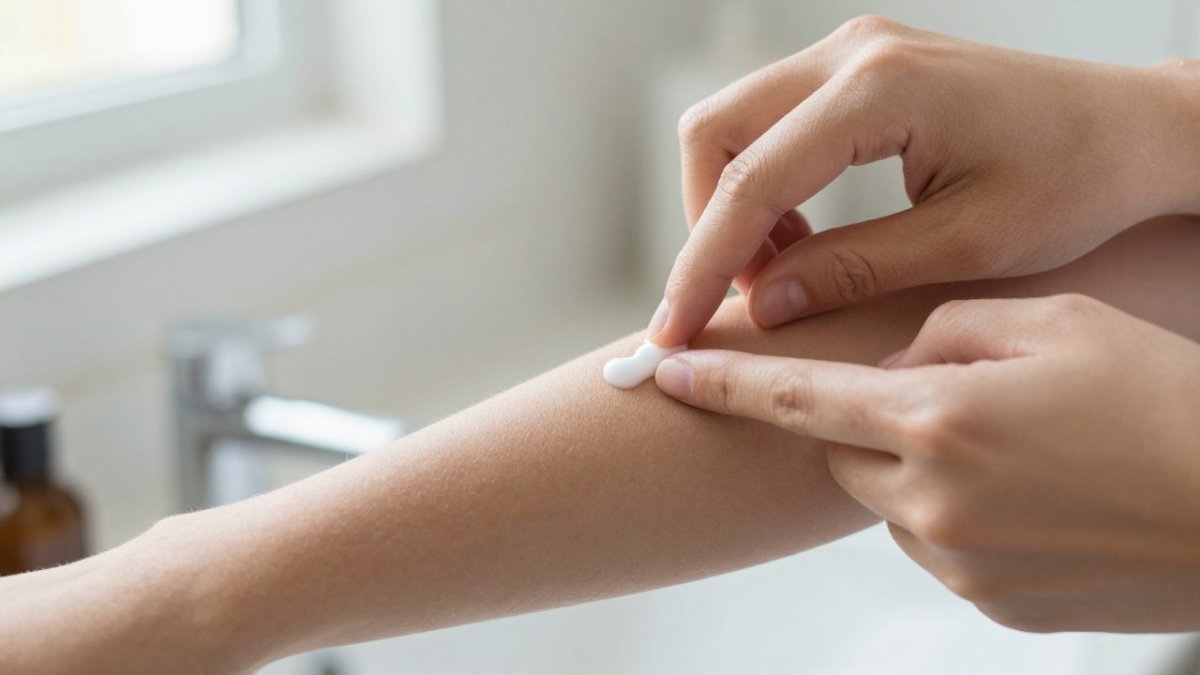
Always patch test a new deodorant before wearing it all day. A proper test takes a few days, not a few minutes, because allergic reactions can take 24 to 72 hours to appear.
A Four-Step Patch Test Protocol
- Day 1, forearm test. Apply a pea-sized amount to the inner forearm, cover loosely with a bandage if you tend to rub the area, and leave it 24 hours without washing. Note any immediate stinging; that is usually irritation, not allergy.
- Day 2, read the forearm. Remove the bandage and check for redness, swelling, itching, or small bumps. Mild pinkness that fades within an hour is usually fine; a raised, itchy, or spreading rash is a stop signal.
- Day 3, underarm test. If the forearm was clear, apply a thin layer to one underarm only, on clean, dry skin, leaving the other untreated as a control. Wait another 24 to 48 hours.
- Day 5, decide. If both sites are clear, begin normal use. If either reacted, stop and do not retry that formula. A reaction appearing on day 2 or 3 rather than day 1 suggests allergy and is a stronger reason to avoid the product permanently.
Skin Conditions That Change the Rules
- Freshly shaved skin. Shaving creates micro-cuts and removes the outer lipid layer, so anything applied immediately afterward stings more and penetrates further. Wait at least a few hours, or apply deodorant the night before you plan to shave.
- Broken or irritated skin. Do not patch test on skin that is already red, cracked, or raw. Wait until it has settled, then test on intact skin.
- Known allergies or a child with sensitive skin. If you have a diagnosed contact allergy, cross-check the ingredient list against your allergen list before testing. For children, read our guide to non-irritating skincare for kids with sensitive skin before choosing a formula.
Safe-Use Habits That Prevent Most Reactions
- Apply to clean, dry skin; damp skin increases penetration and stinging.
- Use a thin layer, more product does not mean more odor protection and does raise irritation risk.
- Stop at the first sign of a rash and let skin settle fully, usually several days, before trying another formula.
Watch out: applying a new deodorant right after shaving is the most common cause of stinging, and it can make a mild irritant look like a serious allergy. If a reaction spreads beyond the application site or does not settle within a week of stopping the product, see a clinician rather than cycling through more formulas.
Choosing Your First Sensitive-Skin Deodorant
Start with the gentlest formula you can find, patch test it, and give it a full week before judging. Most people who react to conventional deodorants do well with an aluminum-free, paraben-free stick built on tapioca starch and a light scent.
If your underarms react to everything you try, the fix is a simpler formula, not a stronger one. At Profounda Health & Beauty, our NaturePro deodorants are aluminum-free, paraben-free, cruelty-free, and plastic-free, made with coconut oil, shea butter, and organic tapioca starch in four gentle scents.
Frequently Asked Questions
What can I use instead of deodorant for sensitive skin?
Start with an aluminum-free, baking-soda-free deodorant built on magnesium hydroxide or zinc for odor control and tapioca or arrowroot starch for moisture absorption. Coconut oil and shea butter give it a smooth glide. Patch test on your inner forearm for 24 hours before applying to your underarms. If even that stings, plain witch hazel or a swipe of milk of magnesia works as a temporary stand-in while you shop.
Which deodorant ingredients can irritate sensitive skin?
Baking soda (sodium bicarbonate) is the most common trigger because its high pH can disrupt the skin barrier and cause redness or a rash. Fragrance and essential oils are the next biggest culprits, followed by alcohol-based formulas that sting on freshly shaved skin. Healthline specifically warns that people with sensitive skin may react to baking soda in underarm powders. Read the full ingredient list, not just the front label, and favor fragrance-free options when starting out.
Are aluminum-free deodorants better for sensitive skin?
They are different, not automatically gentler. Aluminum salts in antiperspirants block sweat ducts; deodorants skip aluminum and target odor instead. If your irritation comes from a fragrance or baking soda, switching to an aluminum-free deodorant only helps when that formula also drops the irritant. Look for aluminum-free, paraben-free, baking-soda-free formulas with short ingredient lists, then patch test.
Can baking soda cause an underarm rash?
Yes. Baking soda is alkaline, and underarm skin is thin and often freshly shaved, so the pH mismatch can show up as redness, itching, or a bumpy rash. The 2023 Cosmetics review of deodorant actives notes growing interest in naturally derived agents and alternatives to metallic salts, and product guidance increasingly points to baking-soda-free formulas. If you have reacted before, choose a baking-soda-free deodorant and give your skin a week to settle.
How do I switch from conventional deodorant without irritation?
Apply the new natural deodorant at night on clean, dry skin for the first two weeks, and keep your old antiperspirant for high-sweat days while you adjust. Skip shaving right before application, and stop using the new product at the first sign of stinging. Expect a short adjustment period as odor-causing bacteria shift. If irritation lasts more than a few days, switch to a fragrance-free or baking-soda-free formula.
