

Why Does CPAP Cause Sinus Congestion? 2026 Guide
Table of Contents
- Why CPAP Sinus Congestion Happens: 5 Causes Behind the Blockage
- Is a CPAP Nasal Care Routine Necessary for Congestion Relief?
- CPAP Humidifier Settings for Congestion: How to Dial In Moisture
- How to Clean a CPAP Mask to Prevent Sinus Infection
- Allergy-Specific CPAP Management: When Rhinitis Drives the Blockage
- Congestion or Sinus Infection? How to Tell the Difference
- Frequently Asked Questions
Last Updated: September 24, 2026
Why CPAP Sinus Congestion Happens: 5 Causes Behind the Blockage
Why does CPAP cause sinus congestion? Forced air dries out your nasal passages, and dry tissue swells, that's why does CPAP cause sinus congestion. When your nose can't add moisture fast enough, it blocks itself.
Five things drive that blockage:
- Dry air from forced air flow. Room air pushed at therapeutic pressure strips moisture from your nasal mucosa.
- Cold air without humidification. Unheated air irritates mucous membranes and triggers swelling.
- Air leaks around the mask. Leaks blow air into your eyes and nose, causing nasal inflammation.
- High airway resistance. A narrow nose needs more pressure, and more pressure means more dryness.
- Untreated rhinitis or allergies. CPAP doesn't cause the swelling, it exposes it.
Forced Air, Dry Mucosa, and Airway Resistance
Your nose is a humidifier, warming and moistening every breath before it reaches your lungs. CPAP overrides that system: forced air moves faster than your nose can condition it, causing dry mouth, dry nasal passages, and irritation that builds night after night.
Is a CPAP Nasal Care Routine Necessary for Congestion Relief?
Yes. A CPAP nasal care routine is necessary for most people on positive airway pressure therapy, because the machine dries tissue faster than your body can rehydrate it. Your nose needs the same nightly attention you'd give dry skin in winter.

A simple routine takes under two minutes:
- Use saline spray before bed to moisten nasal passages.
- Apply a small amount of nasal gel inside each nostril.
- Blow your nose gently in the morning.
- Repeat nightly, even on good nights.
Saline Spray and OTC Medication Safety
Not all nasal products work the same way, and one common type can backfire.
CPAP Humidifier Settings for Congestion: How to Dial In Moisture
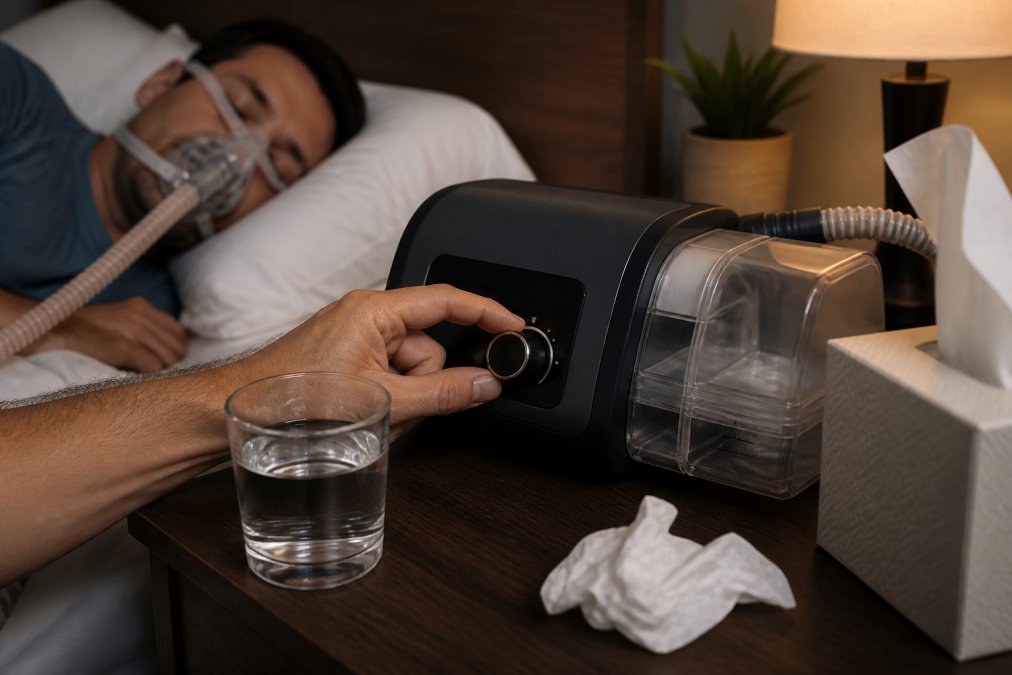
Start your CPAP humidifier at a medium setting, then increase one level at a time until you wake without dryness. Most people land between levels 3 and 5, but the right number depends on your bedroom's humidity, your machine's heated tube capability, and how dry your nose runs overnight.
A Step-by-Step Titration Method
Here is the sequence that works, night by night:
- Night 1-2: Set humidity to level 2 with the heated tube on auto (if available). Note morning dryness.
- Night 3-4: If your nose is still dry, move to level 3. Keep the tube temperature steady.
- Night 5-6: If dryness persists, move to level 4. Watch for gurgling or droplets, that means you've overshot.
- Night 7+: Settle one level below the setting that produced rainout. That is your personal ceiling.
If you hit rainout before your nose feels moist, the problem is tube temperature, not humidity level. Raise the tube temperature one step and try the same humidity level again the next night.
A Quick Diagnostic Flowchart
Use this if-then path to isolate the cause:
- Dry nose + dry mouth in the morning → humidity too low. Raise one level.
- Dry nose + wet face or gurgling at night → rainout. Raise tube temperature or lower humidity one level.
- Stuffy nose that clears within an hour of waking → dryness-driven swelling. Focus on nasal care plus humidity.
- Stuffy nose that never clears, plus itchy eyes → allergic rhinitis. See the allergy section below.
- Stuffy nose on one side only, worse when lying on that side → likely structural (deviated septum, turbinate swelling). Talk to your sleep specialist.
- Congestion that started only after a pressure increase → pressure-related. Do not self-adjust; call your clinic.
Practical Notes That Change Your Setting
- Winter air is drier. Expect to raise your setting one to two levels when indoor heating runs.
- A heated tube helps. Heated tubing keeps water vapor from cooling and pooling, which lets you run higher humidity without rainout.
- Room humidity matters. A bedroom humidifier set to 40-50% relative humidity can let you run a lower CPAP setting and reduce rainout risk.
- Distilled water only. Tap water leaves mineral buildup in the chamber and can shorten its life.
- Chamber size matters. A larger humidifier chamber holds more water and lets you run higher settings through an eight-hour night without refilling.
Rainout, Condensation, and Heated Tubing Fixes
Rainout is condensation inside your CPAP tube and mask when warm, moist air cools on its way to your face, water droplets, gurgling, or a wet face at 3 a.m.
- Raise the tube temperature if your machine allows it.
- Lower the humidifier setting one notch.
- Cover the tube with an insulating wrap.
- Place the machine lower than your head so water drains away from your face.
- Keep the bedroom cooler and the tube warmer.
- Add a room humidifier so the CPAP doesn't have to work as hard.
How to Clean a CPAP Mask to Prevent Sinus Infection
Clean your CPAP mask daily with warm water and mild soap to cut the risk of sinus irritation turning into something worse. A dirty mask and tube collect oils, dust, and bacteria that blow straight into your sinuses every night, a real risk for someone already dealing with nasal inflammation.
Rhinase Allergy Relief Lubricating →
Why Cleaning Actually Matters for Sinus Health
Most cleaning advice stops at "germs are bad." The mechanism is more specific.
- Biofilm builds on the mask cushion. Skin oils and moisture create a film where bacteria and mold can colonize within days. That film sits directly against your nostrils for eight hours.
- Residue degrades the cushion seal. Oils and soap film cause micro-leaks. Leaks blow air into your nose and eyes, which triggers the same nasal inflammation covered earlier in this article.
- A dirty humidifier chamber grows biofilm in standing water. That aerosolized water goes straight into your airway.
- A clogged filter pushes dust into the airstream. Dust is a direct nasal irritant, especially for allergy sufferers.
A Cleaning Schedule That Holds Up
| Item | How Often | Method |
|---|---|---|
| Mask cushion | Daily | Warm water, mild soap, air dry |
| Headgear | Weekly | Hand wash, air dry away from sun |
| Humidifier chamber | Daily rinse, weekly soak | Distilled water, mild soap |
| Tube | Weekly | Warm soapy water, hang to dry |
| Filters | Monthly or as directed | Replace, don't wash |
Skip scented soaps and alcohol wipes. Both leave residue that irritates mucous membranes.
A Quick Troubleshooting Flowchart for Recurring Sinus Issues
If you're cleaning on schedule and still irritated:
- Congestion returns within a week of a fresh cleaning → check for mask leaks. A leaking mask is the more likely culprit than bacteria.
- Musty smell from the tube or chamber → biofilm has formed. Replace the tube or chamber; soaking won't fully remove it.
- Symptoms improve on vacation, return at home → environmental trigger (dust mites, pets, mold). See the allergy section.
- One-sided congestion that never moves → structural, not hygiene-related. See a specialist.
- Yellow or green mucus plus facial pain → possible sinus infection. Stop self-treating and call a doctor.
When to Replace Instead of Clean
Cleaning has limits. Replace these on schedule even if they look fine:
- Mask cushion: every 1-3 months, or sooner if it feels stiff or won't seal.
- Headgear: every 6 months, or when it stretches and stops holding tension.
- Tube: every 3 months, or immediately if you see discoloration or can't remove the smell.
- Humidifier chamber: every 6 months, or when mineral scale won't come off.
- Filters: disposable filters monthly; reusable filters per the manual.
Allergy-Specific CPAP Management: When Rhinitis Drives the Blockage
If your congestion follows the pollen calendar, your CPAP isn't the cause, allergic rhinitis is, and the machine just amplifies it. Allergic rhinitis needs a different plan than simple dryness.
What helps:
- Rinse before bed. A saline rinse clears allergens from nasal passages.
- Shower at night. It removes pollen from your hair and skin before you get in bed.
- Keep pets out of the bedroom. Pet dander is a common trigger.
- Track your symptoms. If congestion spikes in spring and fall, allergies are driving it.
- Use a drug-free moisturizer. It soothes irritated tissue without adding steroids to an already inflamed nose.
Congestion or Sinus Infection? How to Tell the Difference
- Dryness congestion: clear mucus, improves after moisture, no pain.
- Allergic congestion: clear and watery, itchy eyes, seasonal pattern.
- Sinus infection: thick colored mucus, facial pain, lasts more than 10 days.
If you're coming from years of steroid sprays, expect an adjustment period. Drug-free products don't shrink tissue the way steroids do. They restore moisture so your nose can function on its own. That takes a few nights, not a few minutes.

Frequently Asked Questions
How do I get rid of nasal congestion from CPAP?
Start by raising your humidifier setting one notch at a time until you wake without dryness. Add a saline spray or gel before bed to coat the nasal passages, and check your mask for air leaks that pull moisture away. If congestion persists past two weeks, your pressure settings may need review by a sleep specialist.
Does a heated humidifier help with CPAP-induced congestion?
Yes, for most users. Heated humidification adds moisture to the forced air, which reduces dryness and irritation in the nasal mucosa. If you still wake congested, add heated tubing to prevent rainout and condensation, and keep the machine below mattress level so any water drains away from your face.
Can CPAP therapy cause chronic sinus infections?
It can contribute if equipment is not cleaned regularly. A dirty mask, tube, or humidifier chamber can harbor bacteria and mold that get pushed into the nasal passages and sinuses nightly. Wash your mask cushion daily with mild soap, replace filters on schedule, and use distilled water in the humidifier to limit mineral buildup and microbial growth.
What is the best way to clean CPAP equipment to prevent sinus irritation?
Wash the mask cushion and nasal pillows every morning with warm water and mild, fragrance-free soap, then air dry away from direct sun. Clean the tube and humidifier chamber weekly. Replace the mask cushion every one to three months and the filter monthly, or sooner if you have pets or allergies.