
Xlear vs NeilMed: Which Nasal Irrigation Wins?
Table of Contents
- Xlear vs NeilMed: Side-by-Side Comparison for Nasal Irrigation
- The Benefits of Xylitol in Nasal Spray and Rinses
- Best Practices for Nasal Irrigation: Safety First
- Steroid-Free Nasal Congestion Relief: Why It Matters
- Cost-Benefit Analysis: Daily Maintenance and Value
- Which Nasal Irrigation System Should You Choose?
- Conclusion
- Frequently Asked Questions
Last Updated: September 7, 2026
Xlear vs NeilMed: Side-by-Side Comparison for Nasal Irrigation
When you compare Xlear vs NeilMed for nasal irrigation, the core difference comes down to delivery method versus ingredient science. NeilMed centers on large-volume sinus rinses, while Xlear focuses on xylitol-enhanced sprays for daily maintenance. The answer depends on whether you need deep postoperative flushing or simple, steroid-free daily comfort.
How Each System Approaches Sinus Rinsing
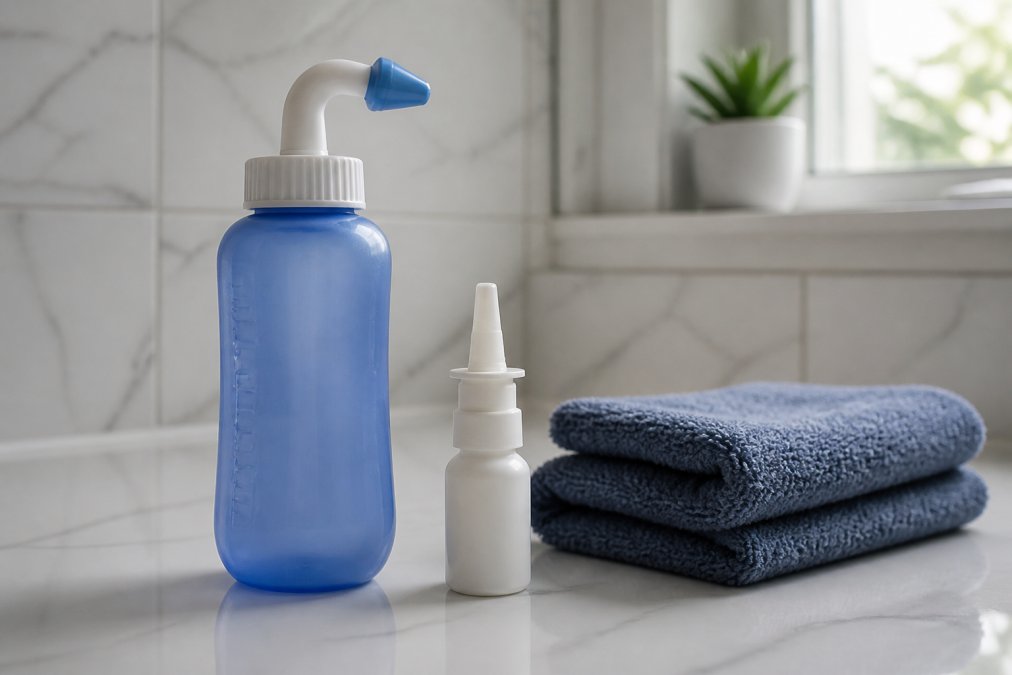
NeilMed’s signature system is the Sinus Rinse bottle, a high-volume squeeze bottle that delivers 240 mL of solution to flush the sinus cavities. This method excels at mechanical cleansing, washing away thick mucus and biofilm after surgery or during acute sinusitis episodes. Xlear takes the opposite path with low-volume sprays that coat the nasal cavity with a xylitol and saline mist, making it far more convenient for everyday use.
A sinus rinse requires mixing packets with distilled or sterile water, warming the solution, and leaning over a sink. A spray like Xlear requires one quick pump per nostril, which is why many users maintain better consistency with the spray format.

| Feature | NeilMed Sinus Rinse | Xlear Nasal Spray |
|---|---|---|
| Delivery method | High-volume squeeze bottle | Low-volume spray mist |
| Primary use | Deep flushing, postoperative care | Daily moisturizing and prevention |
| Setup time | Requires mixing solution and water | Ready to use immediately |
| Best for | Acute congestion, thick mucus | Dryness, allergies, maintenance |
| Typical volume per use | 240 mL | Fraction of a milliliter |
The Benefits of Xylitol in Nasal Spray and Rinses
Xylitol is a five-carbon sugar alcohol that has moved from chewing gum into nasal care because of a specific, well-documented effect on bacterial behavior. Unlike glucose or sucrose, which bacteria like Streptococcus pneumoniae and Staphylococcus aureus can ferment for energy, xylitol cannot be metabolized by these organisms. When bacteria absorb xylitol, they expend energy trying to process it and ultimately fail to thrive, reducing their ability to adhere to the epithelial lining. This anti-adhesion effect is the foundational reason ENT specialists began recommending xylitol rinses and sprays for recurrent acute sinusitis.
The clinical evidence points in a consistent direction. A 2016 randomized controlled trial in the American Journal of Rhinology & Allergy compared a xylitol saline rinse to a plain saline rinse in chronic sinusitis patients; the xylitol group showed greater improvement on Sino-Nasal Outcome Test (SNOT-20) scores, particularly in nasal congestion and sleep quality. A 2011 study in International Forum of Allergy & Rhinology found xylitol solutions reduced bacterial biofilm formation on sinonasal epithelial cells in vitro. Most practitioners view xylitol as an adjunct, making the nasal environment less hospitable to pathogens, not as a standalone treatment for an active bacterial infection.
Xylitol is generally well tolerated, but it is not inert. The most common adverse effect is a transient burning or stinging sensation after application, particularly in patients with raw, inflamed mucosa; this usually subsides within a minute. Less common is the osmotic effect: xylitol draws water into the nasal lumen, which helps thin mucus, but in a severely dehydrated patient or very dry climate, this can paradoxically increase nasal dryness if the spray lacks moisturizing agents like glycerin or sodium hyaluronate.
Patients with known hypersensitivity to sugar alcohols, though rare, should avoid xylitol products. Individuals with diabetes need not worry about blood sugar spikes from nasal sprays, the amount absorbed systemically is negligible. The more pressing contraindication is anatomical: a xylitol spray coats the anterior nasal cavity well but does not penetrate the osteomeatal complex or maxillary sinuses. For a patient with nasal polyps obstructing the sinus ostia, a spray will simply pool in the vestibule; a high-volume rinse is the only non-surgical option that can physically reach the affected areas.
Xlear sprays typically contain a 5% xylitol solution, aligning with the concentration used in most clinical studies. However, the total dose delivered per spray is tiny, roughly 0.1 mL per actuation, so the actual amount of xylitol reaching the mucosa is far lower than what a rinse delivers. This does not negate the spray's value for daily maintenance, but it explains why a spray alone may not suffice for active biofilm formation or thick, chronic mucus.
American Rhinologic Society patient information on chronic sinusitis
Best Practices for Nasal Irrigation: Safety First
Safety should guide every nasal irrigation decision, regardless of which system you choose. The most critical rule involves water quality: you must never use untreated tap water in a sinus rinse bottle. Tap water contains trace microorganisms that are safe to swallow but can cause serious infections if trapped in the nasal cavity. FDA guidance on nasal irrigation safety explicitly warns that only distilled, sterile, or previously boiled and cooled water should be used in sinus rinse devices.
For NeilMed users, this means purchasing distilled water or boiling and cooling tap water before each rinse. For spray users, the concern is largely eliminated because sprays use preservative systems that keep the solution sterile inside the sealed bottle.
Squeeze bottles and neti pots must be washed with soap and water, dried completely, and replaced every few months to prevent bacterial growth inside the device. Single-user spray bottles disposed of after the labeled number of uses remove this maintenance burden entirely.
Steroid-Free Nasal Congestion Relief: Why It Matters
Many congestion sufferers reach for steroid sprays or decongestants first, but these carry trade-offs. Over-the-counter decongestant sprays like oxymetazoline can cause rebound congestion, known as rhinitis medicamentosa, when used for more than three consecutive days. Steroid sprays, while effective for inflammation, can cause nasal dryness and nosebleeds with long-term use.
Xlear and NeilMed both offer drug-free pathways, but they solve different problems. NeilMed’s rinse physically removes irritants and thins mucus during an active sinus infection. Xlear’s xylitol spray addresses the underlying dryness and bacterial load that often triggers congestion. For allergy sufferers and CPAP users who need nightly relief, a steroid-free moisturizing spray is often the more sustainable choice.
Cost-Benefit Analysis: Daily Maintenance and Value
The real cost of any nasal irrigation system is not the shelf price, it is the cost per use plus the hidden costs of preparation time, device replacement, and inconsistent use. Over a 12-month horizon, the gap between a NeilMed-style rinse and a Xlear-style spray narrows, but the value equation shifts depending on your usage pattern.
NeilMed Sinus Rinse: The Per-Use Math
A NeilMed Sinus Rinse starter kit retails for approximately $12 to $15 and includes the squeeze bottle plus 50 packets. Replacement packets cost roughly $10 to $12 for a box of 100, about $0.10 to $0.12 per rinse. Add distilled water at $1.50 per gallon (a gallon yields about 16 rinses at 240 mL each), and the water cost adds another $0.09 per rinse. Total consumable cost lands near $0.20 to $0.25 per rinse session.
NeilMed recommends replacing the squeeze bottle every three months. At $8 to $10 per replacement bottle, that adds $32 to $40 per year. Total annual cost for once-daily rinsing year-round is approximately $110 to $130; for twice-daily rinsing during allergy season (roughly four months) and once daily the rest of the year, it lands closer to $95 to $115.
Xlear Nasal Spray: The Per-Use Math
Xlear's standard nasal spray (0.75 oz bottle) retails for approximately $10 to $13 and delivers roughly 200 sprays per bottle. At two sprays per nostril twice daily (eight sprays per day), one bottle lasts about 25 days, for an annual cost of approximately $145 to $190. At once-daily use (four sprays per day), a bottle lasts 50 days and the annual cost drops to $73 to $95.
There is no device replacement cost with Xlear, the bottle is disposable. There is also no water cost and no preparation time. A NeilMed rinse requires filling, mixing, warming, rinsing, and cleaning, roughly five to seven minutes per session. A Xlear spray takes about 15 seconds. Over a year of twice-daily use, the rinse user spends approximately 60 to 85 hours; the spray user spends about 3 hours.
The Biofilm and Replacement-Cost Trap
What most cost comparisons miss is the failure mode of each system. A sinus rinse bottle not dried completely after each use becomes a breeding ground for biofilm, a slimy colony of bacteria adhering to the plastic interior. Once biofilm forms, rinsing can reintroduce bacteria into your sinuses, potentially triggering the very infection you are treating. This is why the FDA and CDC recommend replacing squeeze bottles every one to three months.
Spray bottles have a different failure mode. The preservative system in Xlear (typically benzalkonium chloride) keeps the solution sterile inside the sealed bottle, but once opened and used, the nozzle tip can become contaminated. Touching the nozzle to your nostril and recapping can transfer bacteria to the tip. Most manufacturers recommend discarding the bottle after 30 days of use, regardless of how much solution remains.
The Hybrid Strategy: What the Math Actually Supports
For a patient with chronic sinusitis who needs daily maintenance plus episodic flare-up treatment, the most cost-effective approach is a hybrid. Keep a NeilMed bottle and packets for acute episodes, typically two to four weeks per year of twice-daily rinsing, costing $15 to $25 in consumables plus one bottle replacement. Use a xylitol spray like Xlear for daily maintenance during the other 48 weeks, roughly $75 to $95 per year at once-daily use. Total annual cost is approximately $95 to $125, comparable to rinse-only but with dramatically better convenience and consistency.
The Value of Consistency: A Cost Model
A 2023 survey of chronic sinusitis patients in the Journal of Allergy and Clinical Immunology: In Practice found that the single strongest predictor of symptom improvement was adherence to the irrigation regimen, not the specific solution used. Patients who irrigated at least once daily reported significantly better Sino-Nasal Outcome Test scores than those who irrigated three to four times per week. If a rinse system costs $110 per year but you only use it three times per week because setup is burdensome, your effective cost per actual use is nearly double the theoretical cost. A spray you use daily delivers better clinical outcomes per dollar spent.
CDC guidance on safe use of nasal irrigation devices
Which Nasal Irrigation System Should You Choose?
The best choice depends on your primary symptoms and tolerance for setup time. Choose a NeilMed-style sinus rinse if you are recovering from sinus surgery, battling a thick, stubborn infection, or need the mechanical force of a high-volume flush. Choose a xylitol spray like Xlear if you deal with chronic dryness, mild congestion, allergy irritation, or nosebleeds and want a product you will actually use daily.
For many users, the ideal solution is neither brand exclusively but a xylitol-based spray that combines moisturizing agents with the anti-adhesion benefits of xylitol. Profounda Health & Beauty offers a range of steroid-free, doctor-recommended nasal care products that pair xylitol with dual wetting agents and a dual salt composition of sodium and potassium. Our Rhinase X Natural Nasal Mist Spray provides hypotonic, steroid-free relief from dryness, sneezing, and congestion, while the Rhinase X Soothing Nasal Gel targets the lower nasal passages for complete coverage. For comprehensive care, the Rhinase X Combo Pack pairs both formats at $26.95.


Conclusion
Choosing between Xlear and NeilMed for nasal irrigation ultimately comes down to whether you need deep flushing power or sustainable daily care. Most patients benefit from using a rinse for acute episodes and a xylitol spray for ongoing maintenance. If your priority is gentle, steroid-free relief that fits into a busy routine, Profounda Health & Beauty offers doctor-recommended nasal mists and gels formulated with natural xylitol and dual wetting agents. Explore our range of Xynase and Rhinase X products to find a nasal care routine that keeps your passages hydrated, clear, and comfortable all year long.
Frequently Asked Questions
Is xylitol better than saline for nasal rinse?
Clinical studies indicate xylitol offers advantages over plain saline for nasal irrigation. Xylitol has been shown to reduce bacterial adhesion to nasal walls and improve mucus clearance, which can help prevent sinus infections. Plain saline mainly moisturizes and flushes debris. For daily maintenance and fighting biofilm, a rinse or spray with xylitol, such as Xynase, provides longer-lasting relief and added protection compared to saline alone.
What are the primary differences between Xlear and NeilMed sinus rinses?
NeilMed typically uses a high-volume squeeze bottle to flush the nasal cavities with a premixed saline solution, which is effective for postoperative care or severe congestion. Xlear uses a spray with xylitol to coat the nasal passages. Xynase spray combines saline and xylitol.
Can I use Xlear and NeilMed products interchangeably?
You can use them interchangeably, but they serve different purposes. NeilMed's sinus rinse is ideal for a deep, high-volume flush during acute congestion or after sinus surgery. Xlear, or a similar xylitol spray, is better suited for daily maintenance to keep nasal passages moist and prevent bacterial buildup. Many patients use a rinse when congested and switch to a daily xylitol spray like Xynase for ongoing nasal hygiene.
Are there any side effects to using xylitol in nasal irrigation?
Xylitol nasal sprays are generally well-tolerated and drug-free. Some users may feel a mild stinging or burning sensation if the nasal passages are severely dry or irritated. As with any nasal product, use sterile or distilled water if mixing your own rinse to avoid contamination risks.