
Xylitol vs Saline for Nasal Health: Complete Comparison
Table of Contents
- How Xylitol and Saline Work in Nasal Care
- Clinical Efficacy: Symptom Reduction and Patient Outcomes
- Benefits of Xylitol Nasal Irrigation for Chronic Rhinosinusitis
- Is Xylitol Nasal Spray Safe for Children
- How to Use Xylitol Nasal Spray for Maximum Effectiveness
- Safety Profile and Side Effects: What You Need to Know
- Cost-Benefit Analysis: Xylitol Solutions vs Standard Saline
- Conclusion
Last Updated: August 27, 2026
How Xylitol and Saline Work in Nasal Care
Saline and xylitol address nasal congestion and dryness through different mechanisms. Saline relies on osmotic pressure and mechanical cleansing, salt concentration creates an osmotic gradient that thins mucus and improves mucociliary clearance, helping cilia move debris and pathogens out of the sinuses. Xylitol operates differently: it inhibits bacterial adhesion to the nasal mucosa and disrupts biofilm formation. Because bacteria cannot metabolize xylitol like glucose, they cannot establish colonies on nasal tissue. Additionally, xylitol acts as a humectant, drawing water into nasal passages and holding it there for sustained hydration beyond what plain saline delivers.
Saline Solution: Mechanism and Mucociliary Clearance
Saline's primary strength lies in restoring the mucociliary clearance system. Tiny hair-like structures called cilia beat rhythmically to move mucus toward the throat, where it's neutralized by stomach acid. When nasal passages become dry or congested, this system stalls. Applying saline rehydrates the mucosa and thins secretions, allowing cilia to resume their beating pattern. This is particularly valuable for those recovering from sinus surgery or managing chronic rhinosinusitis. Isotonic saline (0.9% salt concentration) is gentle for daily use, while hypertonic saline creates a stronger osmotic pull useful for acute inflammation but potentially irritating with frequent use (the FDA). Clinical evidence supporting saline irrigation is strong, patients using it regularly report improved symptom control and reduced need for additional medications (peer-reviewed research).
Xylitol: Antimicrobial Properties and Biofilm Eradication
Xylitol disrupts bacterial biofilms, organized communities that stick to tissue surfaces and resist antibiotics and immune attacks. In chronic rhinosinusitis, biofilms perpetuate inflammation and infection. Xylitol prevents bacteria from forming the adhesive structures needed to colonize, and because it doesn't work through direct killing, bacteria don't develop resistance the way they do with antibiotics. Long-term xylitol use maintains its effectiveness, making it suitable for chronic conditions requiring sustained treatment.
Xylitol's humectant properties add another benefit. While saline hydrates temporarily, xylitol draws moisture into tissue and maintains hydration longer. This sustained moisturizing reduces nasal dryness from steroid sprays and CPAP use, and provides preventative care for those prone to nosebleeds.
Clinical Efficacy: Symptom Reduction and Patient Outcomes
Both approaches demonstrate effectiveness for different patient populations. Saline irrigation shows strong efficacy in reducing symptom severity and improving quality of life, patients report decreased congestion, improved sleep, and reduced reliance on oral decongestants. Xylitol-based formulations address biofilm-related chronic rhinosinusitis, particularly for patients who've tried saline alone without sufficient improvement.
Many practitioners recommend combining both: saline provides proven mucociliary clearance while xylitol adds antimicrobial and extended hydration properties. This dual-action approach addresses multiple nasal health challenges simultaneously, which explains why combination products like the Rhinase X Combo Pack have gained traction. For post-operative sinus surgery patients, saline irrigation remains the gold standard during immediate healing; once inflammation subsides, adding xylitol helps prevent biofilm recurrence and maintain long-term sinus health.

Benefits of Xylitol Nasal Irrigation for Chronic Rhinosinusitis
Chronic rhinosinusitis often persists despite conventional treatments. Xylitol's biofilm-disrupting property directly addresses the underlying pathology, patients with treatment-resistant cases frequently have biofilm-colonized sinuses that standard saline fails to adequately address. Introducing xylitol can prevent bacterial re-colonization between treatments.
Xylitol also reduces the inflammatory cascade triggered by chronic bacterial presence. By preventing bacteria from establishing biofilms, it reduces the constant antigenic stimulus driving inflammation, translating to fewer flare-ups and improved baseline symptom control. The extended hydration benefit matters too, chronic rhinosinusitis patients often develop secondary nasal dryness from inflammation and medication use. For individuals who've exhausted other options or are considering surgery, xylitol nasal irrigation represents a meaningful non-pharmacological intervention.
Is Xylitol Nasal Spray Safe for Children

Xylitol is recognized as safe for human use, your body naturally produces small quantities as part of normal metabolism (the FDA). When applied topically to nasal passages, xylitol doesn't enter systemic circulation in meaningful amounts; it remains localized to the nasal mucosa. The critical distinction is that xylitol toxicity in dogs applies only to ingestion, not topical nasal application in humans.
Pediatric applications focus on allergy symptom relief and nosebleed prevention. Children with seasonal allergies benefit from xylitol's ability to reduce bacterial overgrowth complicating allergic inflammation. Those prone to nosebleeds gain from sustained hydration keeping nasal tissue supple. The steroid-free formulation matters significantly for children, chronic topical steroid use raises concerns about systemic absorption and effects on growth. Products like Rhinase X Nasal Gel and Rhinase X Natural Nasal Mist Spray offer doctor-recommended alternatives without these concerns. For children with CPAP or oxygen therapy needs, xylitol nasal care prevents equipment-related dryness that can discourage compliance.

Use age-appropriate spray bottles designed for children's smaller nasal passages and teach proper technique early: gentle application without forceful sniffing.
How to Use Xylitol Nasal Spray for Maximum Effectiveness
Proper technique determines whether you receive full benefit from xylitol nasal irrigation.
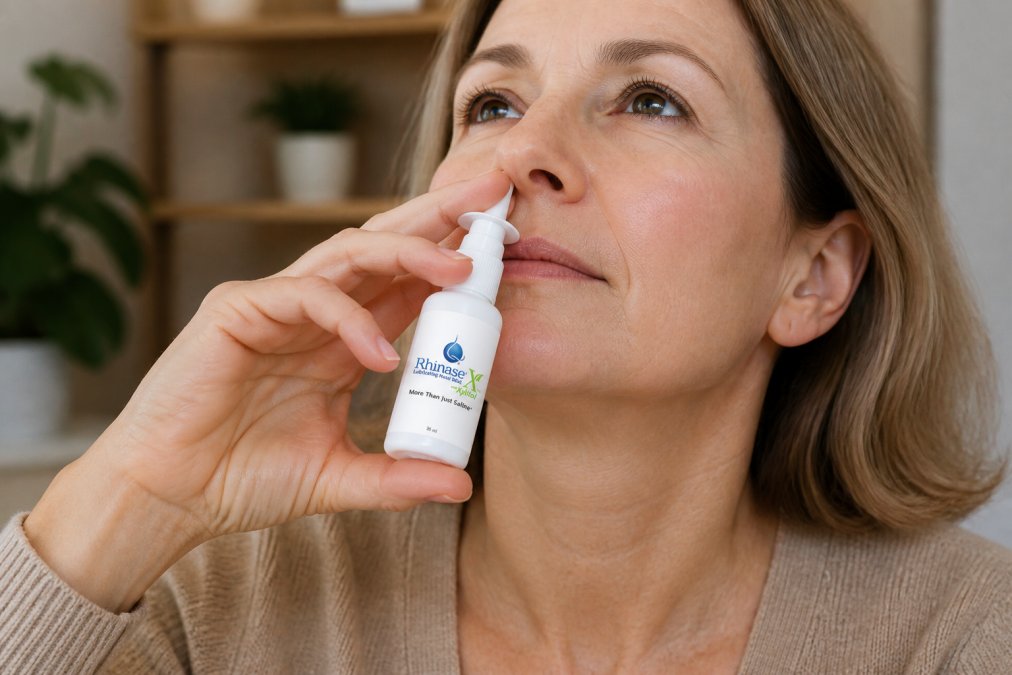
Step-by-Step Application Guide
1. Prepare your nasal passages. Gently blow your nose to clear obvious mucus and debris.
2. Position yourself correctly. Sit upright or stand and tilt your head slightly forward, about 30 degrees.
3. Insert the spray bottle tip. Place the nozzle just inside your nostril opening at the entrance, not forced deep into the passage.
4. Apply with controlled pressure. Press the pump once per nostril using steady, moderate pressure. You should feel the mist coat your nasal passage, not a strong jet.
5. Breathe normally after application. Don't sniff forcefully or tilt your head back. Breathe gently through your nose to allow the spray to settle on the nasal mucosa.
6. Wait before blowing your nose. Allow 30-60 seconds for the xylitol and saline to coat your nasal tissues before gently clearing excess liquid.
7. For gel formulations. Apply a pea-sized amount to your index finger and gently rub it along the inside of your nostril, particularly effective before bedtime.
Frequency and Long-Term Usage Considerations
Most users benefit from xylitol nasal spray applied 2-4 times daily depending on symptom severity. Morning and evening applications provide consistent baseline protection, with additional applications during high-symptom periods, allergy season, or CPAP use nights.
Long-term xylitol nasal spray use is safe and effective. Unlike steroid nasal sprays, which carry concerns about rebound congestion and potential systemic effects, xylitol doesn't create dependency or tolerance. After several weeks, many users find that reducing to once or twice daily maintains symptom control. For those managing chronic conditions like chronic rhinosinusitis or using CPAP nightly, consistent daily use remains appropriate.
| Usage Scenario | Recommended Frequency | Duration | Expected Timeline |
|---|---|---|---|
| Seasonal allergies | 3-4 times daily during season | 6-12 weeks | Symptom relief in 3-5 days |
| Chronic dryness | 2 times daily | Ongoing | Noticeable improvement in 1-2 weeks |
| CPAP-related irritation | 1-2 times daily (evening, before use) | Ongoing | Relief within first week |
| Post-sinus surgery | 2-3 times daily | 4-6 weeks | Accelerated healing, reduced inflammation |
| Nosebleed prevention | 1-2 times daily | Ongoing | Reduced bleeding episodes in 2-3 weeks |
Safety Profile and Side Effects: What You Need to Know
Xylitol nasal spray carries an excellent safety profile with minimal side effects compared to steroid nasal sprays or oral decongestants. The most common side effect is mild nasal irritation or slight burning with initial application, typically occurring in users with very sensitive tissue or those applying too forcefully. This usually resolves within 2-3 applications. Some users report temporary increased nasal drainage immediately after application, this is the product mobilizing congestion and improving mucociliary clearance, subsiding within 10-15 minutes.
Allergic reactions to xylitol nasal spray are extremely rare. There are no documented contraindications with other nasal medications or systemic medications. Xylitol nasal spray can be safely used alongside antihistamines, decongestants, or other treatments. Long-term safety data supports indefinite use, unlike steroid nasal sprays, xylitol doesn't pose risks of systemic absorption or hypothalamic-pituitary-adrenal axis effects. For individuals with recent nasal surgery, severe nasal polyps, or significant structural abnormalities, consulting a healthcare provider before starting is prudent, though these situations rarely present absolute contraindications.
Cost-Benefit Analysis: Xylitol Solutions vs Standard Saline
Standard saline nasal sprays typically cost $4-8 per bottle lasting 1-2 weeks, roughly $100-200 annually for daily users. Xylitol nasal products command a premium, Xynase Natural Saline Nasal Spray with Xylitol costs $11.79 for a single bottle, while Rhinase X Natural Nasal Mist Spray runs $17.00 for 30 ml, totaling roughly $150-250 annually.
The cost difference is real, but benefits justify the premium for specific populations. For seasonal allergies managed adequately by basic saline, standard saline remains rational. For chronic rhinosinusitis where basic saline provides insufficient control, xylitol's biofilm-disrupting properties represent meaningful intervention, if xylitol enables avoiding prescription medications or delays surgery, the cost difference becomes negligible. For CPAP users experiencing chronic irritation, xylitol's sustained hydration prevents equipment-related dryness undermining therapy compliance. For parents managing children's allergies and nosebleeds, the steroid-free formulation eliminates concerns about long-term medication effects.
The Rhinase X Combo Pack at $26.95 combines spray and gel formulations, addressing upper and lower nasal passages simultaneously. Additionally, consider indirect costs: untreated chronic nasal congestion drives increased healthcare use through doctor visits, imaging, medications, and potentially surgery. Effective preventative care through xylitol nasal irrigation reduces these downstream costs substantially.

Choosing between xylitol and saline doesn't require an either-or decision. Many benefit most from combining both approaches, using saline as the foundation for mucociliary clearance while layering xylitol's antimicrobial and extended hydration benefits. At Profounda Health & Beauty, we've designed the Rhinase X Combo Pack and Xynase formulations specifically to provide this dual-action relief, addressing nasal dryness, congestion, and post-nasal drip without steroids or pharmaceuticals. Get started with Profounda Health & Beauty's doctor-recommended xylitol and saline solutions and experience sustained nasal comfort tailored to your specific needs.
Frequently Asked Questions
Q: Is xylitol nasal spray better than saline for congestion relief?
A: Xylitol and saline serve different but complementary functions. Saline solutions work through osmotic pressure to reduce swelling and improve mucociliary clearance, providing immediate congestion relief. Xylitol adds antimicrobial and biofilm-eradication properties, making it particularly effective for chronic rhinosinusitis and preventing bacterial adhesion. Many users find combination products like Rhinase X most effective because they deliver both mechanisms. For acute congestion, saline works quickly; for long-term management and prevention, xylitol provides added benefits.
Q: Is xylitol nasal spray safe for children?
A: Yes, xylitol nasal spray is safe for children when used as directed. Unlike steroid nasal sprays, xylitol formulations are drug-free and non-habit forming, making them suitable for pediatric use. Products like Xynase and Rhinase X are specifically formulated for all ages and are doctor recommended. Always follow the dosage instructions on the label, and consult your child's doctor if they have specific medical conditions. The main consideration is ensuring proper application technique to avoid discomfort.
Q: How does xylitol help with nasal bacteria and biofilm?
A: Xylitol inhibits bacterial adhesion to nasal tissue by preventing biofilm formation, a protective layer bacteria use to resist antibiotics and immune responses. Studies show xylitol reduces bacterial colonization in the nasal cavity, making it particularly valuable for chronic sinusitis sufferers. Unlike antibiotics, xylitol doesn't create antibiotic resistance because bacteria cannot metabolize it effectively. This mechanism makes xylitol-based irrigation especially useful for post-functional endoscopic sinus surgery patients and those with recurrent infections.
Q: What's the difference between isotonic and hypotonic nasal solutions?
A: Isotonic solutions match the salt concentration of your nasal tissue (0.9% saline), causing minimal irritation and gentle relief. Hypotonic solutions contain lower salt concentrations, creating osmotic pressure that draws excess fluid from swollen tissue, providing stronger decongestant effects. Hypotonic formulas work faster for congestion but may cause mild stinging in sensitive noses. Rhinase X uses a hypotonic formula with dual salts (sodium and potassium) to maximize hydration while minimizing irritation, making it effective without the harshness of traditional hypertonic sprays.
Q: Can I use xylitol nasal spray long-term without side effects?
A: Yes, xylitol nasal sprays are safe for long-term daily use because they're non-medicated and non-habit forming. Unlike steroid sprays that can cause nasal tissue atrophy with prolonged use, xylitol actually supports nasal tissue health through hydration and antimicrobial protection. Many patients use them indefinitely for chronic dryness, post-nasal drip, or CPAP-related irritation. The key is consistent application and monitoring your nasal symptoms. If irritation develops, switch to a gentler formulation or reduce frequency, then consult your doctor.
This article was written using GrandRanker