
Is Xylitol Nasal Spray Safe for Children?
Table of Contents
- What Makes Xylitol Nasal Spray Safe for Children
- How Xylitol Supports Nasal Hygiene and Upper Respiratory Health
- Xylitol vs Saline Nasal Spray: Which Works Better for Kids?
- How to Use Nasal Spray on a Toddler Safely
- Clinical Evidence Behind Xylitol Nasal Spray for Children
- Pros and Cons of Xylitol Nasal Spray for Pediatric Use
- Choosing the Right Xylitol Nasal Spray for Your Child
- Conclusion
Last Updated: August 11, 2026
What Makes Xylitol Nasal Spray Safe for Children
Xylitol nasal spray is considered safe for children when formulated correctly. Its drug-free, non-addictive profile makes it a compelling alternative to medicated options. Xylitol is a naturally occurring sugar alcohol found in fruits, vegetables, and birch bark. In nasal spray formulations, it attracts moisture to the nasal mucosa and interferes with bacterial adhesion to nasal tissue. Unlike decongestant sprays, it contains no vasoconstrictors, steroids, or antihistamines, eliminating pharmacological risks for pediatric use.

Drug-Free and Non-Addictive: No Rebound Congestion Risk
Rebound congestion is a real problem with certain over-the-counter decongestant sprays. The nasal mucosa becomes dependent on the vasoconstricting effect, and when the spray wears off, congestion returns worse than before. This cycle, called rhinitis medicamentosa, is why physicians recommend decongestant nasal sprays for no more than three consecutive days in adults.
Xylitol nasal spray carries none of this risk. Because it is steroid-free and contains no active pharmaceutical compounds, there is no tolerance buildup, dependency, or rebound congestion. Children can use it consistently as part of a daily nasal hygiene routine without concern that stopping will worsen symptoms.
Infant Safety and Age-Specific Dosage Guidelines
The appropriate age to begin using xylitol nasal spray varies by product formulation. Always check the label and consult your child's pediatrician before starting any nasal spray routine for an infant. Many saline and xylitol-enhanced nasal sprays are formulated as gentle mists suitable from birth, but concentration and spray pressure matter.
| Age Group | Recommended Form | Frequency | Notes |
|---|---|---|---|
| 0-6 months | Saline drops or gentle mist | 1-2 times daily | Consult pediatrician first |
| 6-24 months | Low-pressure mist spray | 2-3 times daily | Lay infant flat or tilt head slightly |
| 2-5 years (toddlers) | Mist or gentle pump spray | 2-4 times daily | Upright position preferred |
| 5+ years | Standard mist or spray | 2-4 times daily | Can self-administer with guidance |
For infants, spray pressure is key. A fine mist is far safer than a forceful stream, which can cause discomfort and push fluid toward the Eustachian tubes. Products designed specifically for pediatric nasal irrigation will indicate this on the label.
How Xylitol Supports Nasal Hygiene and Upper Respiratory Health
Mucociliary Clearance and Nasal Mucosa Protection
Mucociliary clearance is the process by which tiny hair-like structures in the nasal passage, called cilia, sweep mucus, debris, and pathogens out of the airway. When the nasal mucosa dries out, this clearance mechanism slows down, allowing allergens, bacteria, and viruses to linger longer.
Xylitol helps restore this process in two ways. First, as a humectant, it draws moisture into the nasal lining, keeping the mucosa hydrated and cilia active. Second, it creates an osmotic environment inhospitable to certain bacteria without disrupting nasal tissue. According to American Academy of Allergy, Asthma and Immunology guidance on nasal irrigation, maintaining adequate nasal moisture is foundational in managing both allergic and non-allergic rhinitis. For children with allergies, a well-hydrated nasal mucosa clears pollen, dust, and pet dander more efficiently, reducing the inflammatory response that drives sneezing, congestion, and post-nasal drip.
Reducing Bacterial Adhesion and Preventing Ear Infections
Xylitol has been studied for its potential to reduce bacterial adhesion in the upper respiratory tract, particularly Streptococcus pneumoniae and Haemophilus influenzae, two bacteria commonly implicated in acute otitis media. Acute otitis media, the most common ear infection in children, typically begins as an upper respiratory infection that travels through the Eustachian tube into the middle ear. Research published through PubMed on xylitol and acute otitis media prevention has explored xylitol's potential role in reducing recurrent acute otitis media in children, with some findings suggesting benefit as a preventative treatment.
Xylitol nasal spray does not treat ear infections, but maintaining nasal hygiene with xylitol may support an upper respiratory environment that makes infections less likely. For children prone to recurrent ear infections, that is worth discussing with a pediatrician.

Xylitol vs Saline Nasal Spray: Which Works Better for Kids?
Standard saline nasal spray is an isotonic or hypertonic salt solution that rinses the nasal passage, loosens mucus, and provides temporary moisture. The limitation is that it does not actively support mucociliary clearance beyond the rinse itself and has no documented effect on bacterial adhesion.
Xylitol-enhanced saline works differently. The xylitol component adds humectant properties, meaning the moisture effect lasts longer than a simple saline rinse. More importantly, xylitol creates a surface environment that interferes with how bacteria attach to tissue. This dual action, hydration plus bacterial interference, separates xylitol-enhanced formulas from standard saline.
For children with frequent colds, allergies, or a history of ear infections, the xylitol-enhanced option is the more targeted choice. For a child who simply needs occasional nasal moisturizing, plain saline may be sufficient.
How to Use Nasal Spray on a Toddler Safely
Administering nasal spray to a toddler requires patience and consistency. With the right approach, most toddlers tolerate nasal spray well after a few sessions.
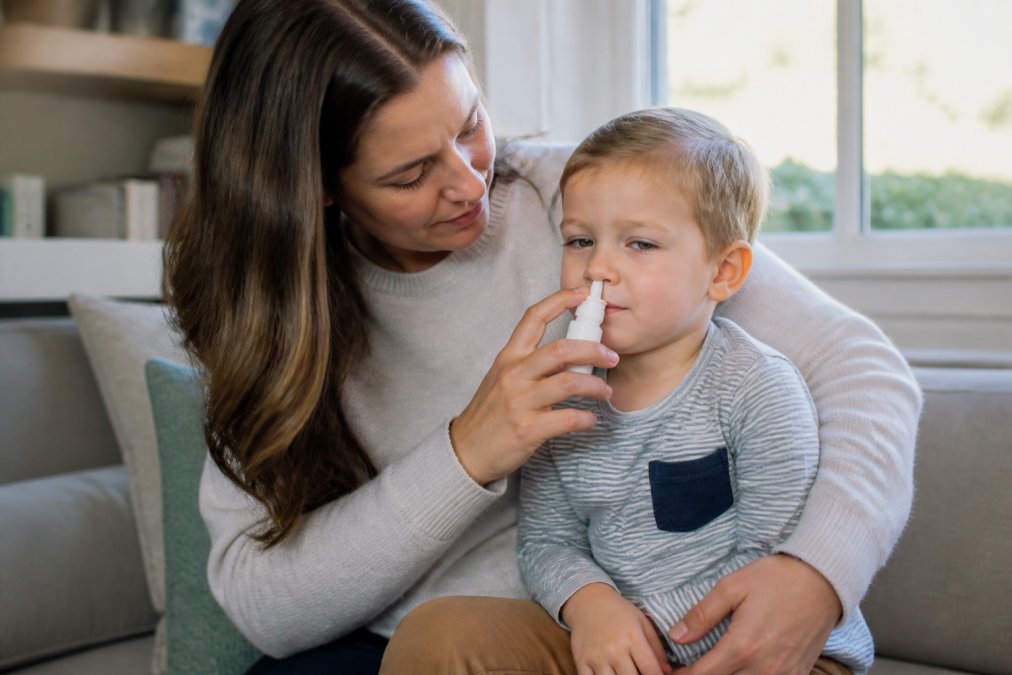
Step-by-Step Administration Guide for Infants and Toddlers
For infants (0-12 months):
- Lay the infant on their back on a firm, flat surface.
- Tilt the head very slightly to one side.
- Insert the tip of the mist spray just inside the nostril, without pressing it against the tissue.
- Administer one puff of mist.
- Turn the head gently to the other side and repeat for the second nostril.
- Use a soft bulb syringe to gently remove loosened mucus if needed.
- Keep the infant upright or semi-reclined for a few minutes after administration.
For toddlers (1-5 years):
- Seat the toddler upright on your lap, facing forward.
- Tilt their head slightly forward, not back. This prevents the spray from running down the throat.
- Distract them with a song, toy, or counting game.
- Insert the spray tip gently into one nostril, aiming slightly toward the outer wall of the nose.
- Administer one spray while the child breathes normally.
- Repeat for the second nostril.
- Praise them immediately for positive reinforcement.
Avoid administering immediately before sleep. Give it at least 10-15 minutes before a nap or bedtime.
Clinical Evidence Behind Xylitol Nasal Spray for Children
Research into xylitol's role in upper respiratory health has focused on its effect on bacterial adhesion in the nasal passage and its potential to reduce acute otitis media frequency in children. Several studies show that xylitol interferes with the ability of certain pathogens to colonize nasal and oral tissues, the mechanism behind its established use in dental care.
As documented in National Institutes of Health research on xylitol and respiratory health, xylitol's antibacterial properties in mucosal environments have been a subject of ongoing research. The evidence for nasal applications is less mature than for oral health, but the mechanistic rationale is consistent and the safety profile is well-established.
Xylitol is safe, non-irritating to nasal tissue, and effective as a humectant. The bacterial adhesion data is encouraging but should not be interpreted as a treatment claim. Xylitol nasal spray is best understood as a preventative and supportive tool. The evidence supports whether it creates a healthier nasal environment for children.
Pros and Cons of Xylitol Nasal Spray for Pediatric Use
Pros:
- Drug-free and steroid-free. No pharmaceutical risk profile, no tolerance, no rebound congestion.
- Non-addictive. Safe for daily, long-term use without dependency concerns.
- Dual-action formula. Moisturizes and supports an environment that discourages bacterial adhesion.
- Supports mucociliary clearance. Helps the nasal passage do its natural job more effectively.
- Non-GMO and natural ingredients. Xylitol occurs naturally in fruits and vegetables.
- Pediatric-friendly compliance. Gentle mist formulations are well-tolerated by most children.
- May reduce recurrent ear infection risk. Supported by mechanistic evidence and some clinical data.
Cons:
- Not a treatment for active infections. Do not substitute xylitol spray for prescribed antibiotics when an infection is present.
- Requires consistent use. Benefits are cumulative; occasional use delivers less benefit than a regular routine.
- Toddler compliance takes practice. Initial resistance is common and requires patience.
- Evidence base still growing. Clinical trial data for pediatric nasal xylitol is promising but not as extensive as for oral xylitol in dental health.
Choosing the Right Xylitol Nasal Spray for Your Child
Not all xylitol nasal sprays are created equal. Concentration, spray mechanism, additional ingredients, and pH balance all affect how a product performs and how well a child tolerates it.
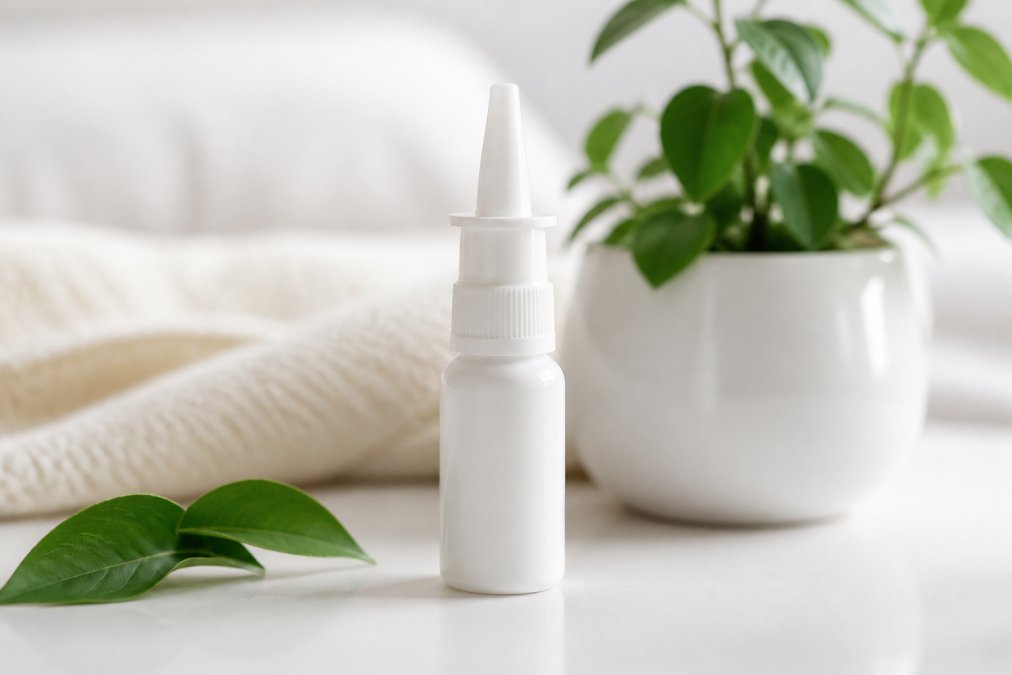
The Profounda Health & Beauty range includes two formulations that work well for pediatric nasal care. The Xynase® Natural Saline Nasal Spray with Xylitol combines natural xylitol with a saline base in a gentle mist format designed for all ages, including children. At $11.79 for a single bottle or $31.05 for a three-pack, it is a practical everyday option for families managing allergies, congestion, or dry nasal passages.

For children and adults who need a more intensive moisture solution, the Rhinase X Natural Nasal Mist Spray with Xylitol delivers a hypotonic, dual-moisturizing formula that is steroid-free and doctor recommended. Its hypotonic formulation is gentler on nasal tissue than isotonic or hypertonic alternatives.
When choosing a xylitol nasal spray for a child, look for these criteria:
- Fine mist delivery. Low-pressure spray mechanisms are safer and more comfortable for children.
- Minimal ingredient list. Fewer additives mean less potential for irritation.
- Hypotonic or isotonic formulation. Hypertonic solutions can sting sensitive nasal tissue.
- No preservatives like benzalkonium chloride. Some preservatives can irritate the nasal mucosa with repeated use.
- Doctor recommended. Third-party clinical endorsement adds reassurance for parents.
According to FDA guidance on over-the-counter nasal products, nasal sprays marketed for general use must meet safety standards, but not all formulations are equivalent in tolerability for pediatric nasal tissue.
| Consideration | What to Look For | Why It Matters |
|---|---|---|
| Spray mechanism | Fine mist, low pressure | Comfort and safety for small nasal passages |
| Formulation | Hypotonic or isotonic | Reduces stinging and irritation |
| Preservatives | Preservative-free preferred | Protects mucociliary function with daily use |
| Xylitol concentration | Present and listed | Confirms humectant and bacterial adhesion benefits |
| Age guidance | Labeled for children or all ages | Ensures appropriate safety testing |
| Doctor recommendation | Clearly stated | Third-party clinical endorsement |
Nasal care for children does not have to mean choosing between effective and safe. Xylitol nasal spray offers a drug-free, non-addictive path to better nasal hygiene that supports upper respiratory health without the risks associated with medicated alternatives. For families dealing with allergies, congestion, or recurrent ear infections, it represents a first-line option worth taking seriously.
Get started with the Profounda Health & Beauty Xynase® Natural Saline Nasal Spray with Xylitol, a doctor-recommended, steroid-free formula combining natural xylitol with saline for gentle, effective nasal care your child can use every day.
Frequently Asked Questions
At what age can children start using xylitol nasal spray?
Xylitol nasal spray is generally considered safe for infants and toddlers, though always check the specific product labeling for the manufacturer's minimum age recommendation. Most xylitol-based nasal sprays designed for pediatric use can be used from infancy onward under parental supervision. Because these sprays are drug-free and steroid-free, they carry a low risk profile for young children. When in doubt, consult your child's pediatrician before starting any nasal hygiene routine for infants under two years old.
Is xylitol better than saline nasal spray for kids?
Xylitol nasal spray offers advantages beyond basic saline. Standard saline primarily moisturizes and flushes allergens from nasal passages. Xylitol adds a layer of protection by reducing bacterial adhesion to the nasal mucosa, which may help lower the frequency of ear infections and upper respiratory infections in children. For kids prone to recurrent acute otitis media or sinus congestion, a xylitol-enhanced formula may provide more preventative benefit than saline alone, while remaining equally gentle and drug-free.
What are the potential side effects of xylitol nasal spray in kids?
Xylitol nasal spray is well-tolerated by most children. Reported side effects are rare and typically mild, such as minor nasal passage irritation or temporary sneezing after application. Because xylitol nasal sprays are drug-free and contain no steroids or decongestants, they carry no risk of rebound congestion or systemic side effects. Children with known xylitol sensitivities should avoid use. If your child experiences persistent irritation or discomfort after use, discontinue and speak with a pediatrician.
How often should a child use a xylitol nasal spray?
Usage frequency depends on the child's symptoms and the specific product instructions. For general nasal hygiene and allergen clearance, one to two applications per nostril, two to three times daily, is a common recommendation. During peak allergy season or when a child has a respiratory infection, more frequent use may be appropriate. Because xylitol nasal spray is non-addictive and drug-free, there is no risk of dependence from regular use. Always follow the product label and consult a pediatrician for personalized guidance.
This article was written using GrandRanker